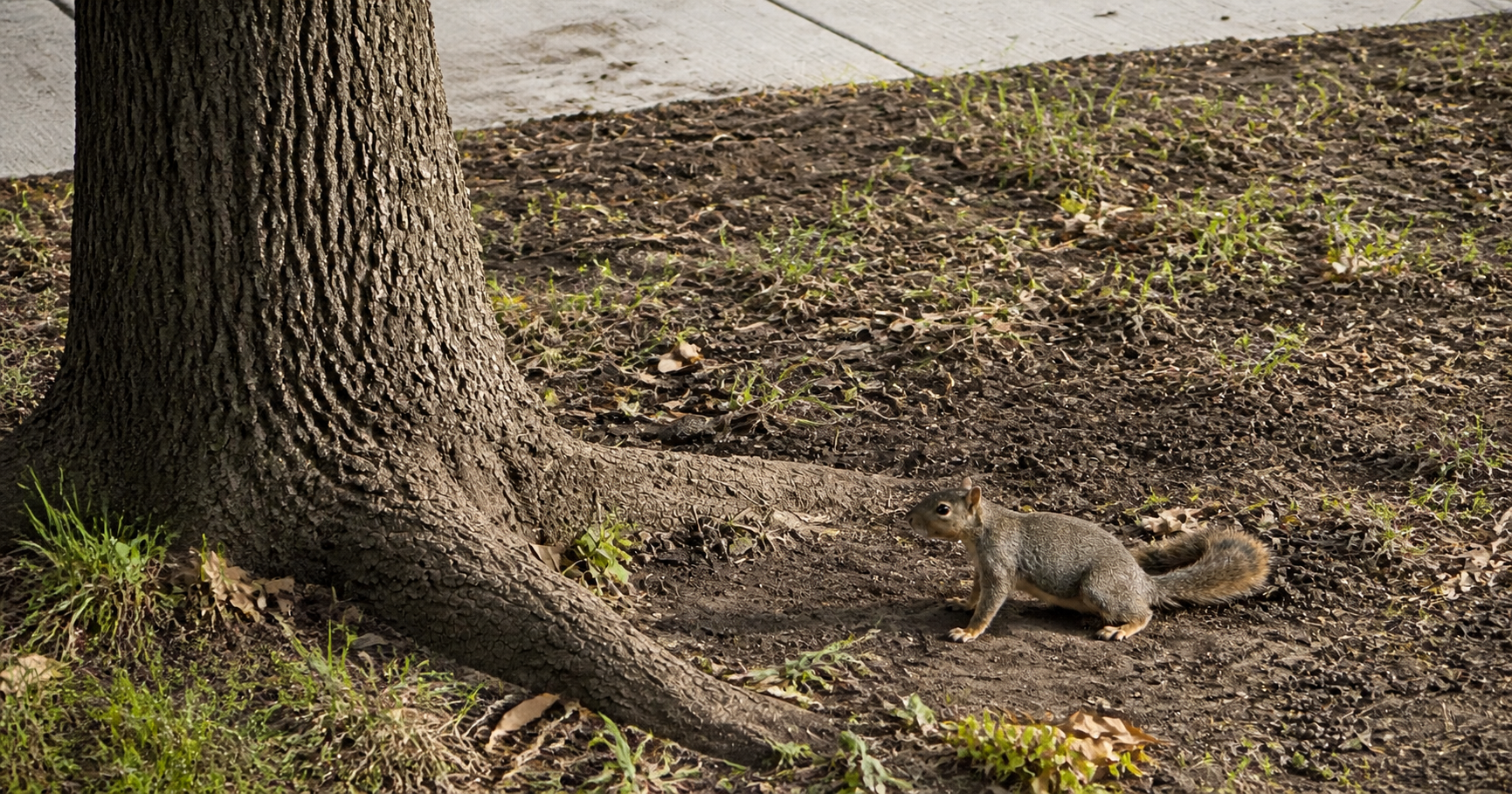
If you have noticed squirrels running along your roofline, chewing at fascia boards, or making noise above the ceiling, the best time to act is before they establish themselves inside the attic.
At Preferred Pest Management, we have already seen an increase in squirrel-related calls around Rowlett. That does not mean every home has an active attic infestation. It does mean homeowners should take visible roofline damage, gaps, and repeat squirrel activity seriously before a manageable exclusion project turns into a removal, monitoring, and repair project.
Request a Complimentary Exterior Rodent-Exclusion Quote
TL;DR
Preventing squirrels from entering a Rowlett home is usually much less expensive than removing squirrels after they are already in the attic. A smaller, accessible home may qualify for a preventative rodent-exclusion seal-up starting around $1,000 to $1,500 plus tax, while larger homes or steep rooflines may be $2,000 to $2,500 or more.
Once squirrels are active inside, the project can require one-way exits, trapping or monitoring when appropriate, return visits, final sealing, and possible attic-related repairs. That can easily make an active squirrel project two or three times the cost of prevention. For a preventative exterior quote, homeowners often do not need to be home as long as we can safely access the outside of the property.
The Simple Message for Rowlett Homeowners: Prevention Costs Less
We have the same conversation with homeowners all the time after squirrels are already inside:
“I wish I had known this could have been prevented.”
That is the heart of this article. Squirrel removal can be involved because the goal is not simply to close a hole and hope for the best. If squirrels are using an attic, we have to determine how they are getting in, whether activity is still present, whether a one-way exit is appropriate, and when it is safe to complete the final sealing work.
A preventative exclusion service is different. We inspect the accessible exterior areas of the home, identify vulnerabilities that squirrels, rats, mice, and other animals may use, and provide a written scope for sealing those points before an animal gets inside.
Texas A&M AgriLife notes that tree squirrels can become urban pests when they nest in attics. Their squirrel-control resource is a useful reminder that an attic is not just a noise issue—it can become a property-protection issue.
Why We Are Talking About Squirrel Prevention Now
Homeowners should not wait for a “perfect” season to think about exclusion. Squirrels can investigate rooflines, vents, soffits, fascia gaps, and other weak spots whenever they find an opportunity.
The early calls we are receiving are a good reminder to look for conditions such as:

- Squirrels repeatedly traveling onto the roof from trees, fences, or utility lines
- Chewed or damaged fascia, soffit, trim, or vent covers
- Gaps behind gutters or at roof returns
- Loose, torn, or poorly protected attic-vent screening
- Daylight visible from an attic
- Daytime scratching, scurrying, or gnawing above the ceiling
- Nesting material, droppings, or disturbed insulation
Squirrels are often more noticeable during the day, while rats and mice are commonly heard at night. That is only a clue—not a diagnosis. An inspection is the right way to determine what animal is involved and what should happen next.
What Can Happen Once Squirrels Get Inside a Home?
A squirrel in the attic is not automatically an emergency, but it should not be ignored. Active squirrels can damage insulation, wood, vent materials, and other accessible building components. Gnawing can also affect wiring.
If you see damaged or exposed electrical wiring, contact a qualified electrician in addition to addressing the wildlife issue. The goal is to solve the access problem before repeated activity creates more damage or more expensive repair decisions.
The biggest mistake is sealing an opening without first confirming whether an animal is still using the attic. That can create a different problem instead of solving the original one.
What a Preventative Rodent-Exclusion Inspection Includes
For a prevention-only quote, we can often inspect the exterior without the homeowner being present, provided we have safe access around the property.
We take one or two laps around the home and look for accessible entry points and vulnerable areas, including:
- Roof returns and roofline construction gaps
- Soffits, fascia boards, and eave gaps
- Attic, gable, and roof vents
- Gaps behind gutters
- Utility and air-conditioning penetrations
- Garage corners and garage-door gaps
- Exterior wall gaps and damaged screens
- Other accessible openings that rodents or wildlife may use
Afterward, we provide a detailed, no-obligation quote showing the recommended scope of work. The purpose is simple: button up the entry points before squirrels, rats, mice, or other wildlife turn them into a way inside.
Learn more about our rodent exclusion and home-sealing service.
What Squirrel Prevention Typically Costs in Rowlett
Every home is different, so these are planning ranges—not a substitute for an inspection and written quote.
| Situation | Typical planning range |
|---|---|
| Smaller home with accessible preventative seal-up work | About $1,000–$1,500 plus tax |
| Larger home, steeper roofline, or more complex accessible entry points | Often $2,000–$2,500 or more |
| Active squirrel issue requiring removal steps plus exclusion | Can be double or triple the cost of prevention-only work |
The difference comes down to labor, access, timing, equipment, and follow-up.
A prevention project focuses on identifying and sealing approved accessible entry points. An active squirrel project may also require one-way exits, monitoring, return visits, trapping when appropriate, final sealing after activity has stopped, and possible attic or repair recommendations.
That is why we encourage homeowners to think about exclusion as a home-maintenance decision, not merely a pest-control expense.
What Changes When Squirrels Are Already Inside?
When squirrels are active in an attic, we do not want to simply seal them inside.
Depending on the situation, the process may include:
- Inspecting accessible exterior and attic areas when available
- Identifying the likely entry point or points
- Assessing the evidence of current activity
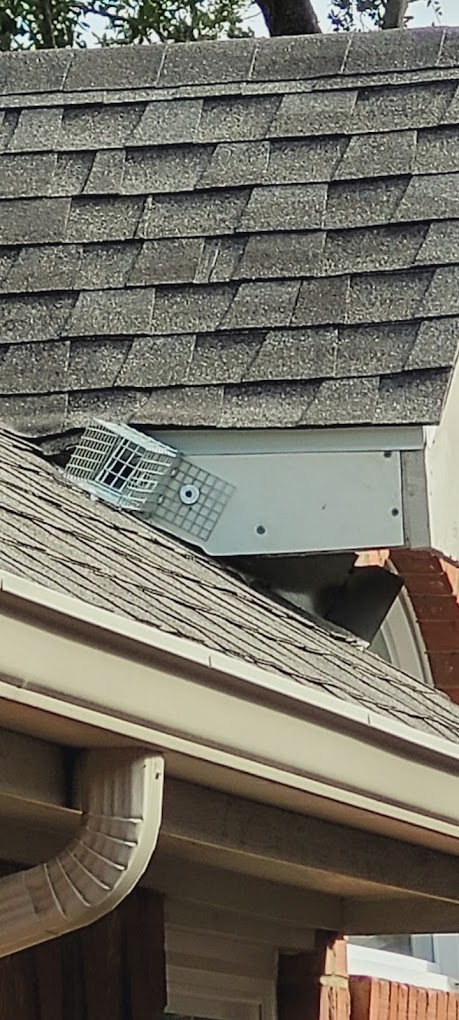
- Installing a one-way exit where appropriate
- Monitoring or returning to confirm activity has stopped
- Completing final exclusion work after the animal has vacated
- Discussing attic cleanup, damaged insulation, or repair needs if applicable
A one-way exit is designed to let an animal leave while reducing the ability to re-enter through the same opening. It is not a one-size-fits-all device. Proper timing, placement, and follow-up matter.
If you already hear activity or see signs of attic damage, visit our squirrel-removal service for Rowlett homeowners. That page is designed for active squirrel concerns. This article is about avoiding that larger project whenever possible.
What You Can Check From the Ground Today
You do not need to climb onto a roof or attempt to seal a suspected wildlife entry point yourself.
From the ground, you can:
- Watch whether squirrels are repeatedly using the same roofline area
- Look for visible chewing, loose trim, damaged soffits, or missing screens
- Check whether tree limbs provide an easy path directly onto the roof
- Store bird seed and pet food in sealed containers
- Keep exterior clutter reduced around the home
- Take photos of visible damage before it worsens
- Call for an inspection before closing a hole that may still be active
Physical exclusion is widely recognized as a long-lasting, nonlethal wildlife-management approach because it removes access to the protected space the animal wants to use. Extension guidance on vertebrate pest management describes exclusion as a physical barrier that denies entry and redirects animal behavior.
A Complimentary Rodent-Exclusion Quote for Rowlett Homeowners
For homeowners who want prevention, Preferred Pest Management offers a complimentary exterior rodent-exclusion quote in Rowlett.
If the concern is preventative and we can safely access the property exterior, you may not need to be home. We can inspect the accessible areas, document the recommended work, and provide a detailed quote with no obligation.
Qualifying exclusion work includes written warranty terms. The exact scope, coverage, and any renewal requirements will be explained before you approve the work.
Request Your Complimentary Rowlett Exterior Quote
You can also call 214-978-3877 and let our team know whether you are seeing active squirrel activity or simply want to prevent it before it becomes expensive.
Frequently Asked Questions About Squirrel Prevention in Rowlett
How do I know whether I have squirrels or rats in my attic?
Daytime movement, louder scurrying, and visible roofline activity can suggest squirrels, while rats are often more active at night. However, sounds alone are not enough for a reliable identification. An inspection can determine whether the evidence points to squirrels, rats, mice, or another animal.
Can I just seal the hole where squirrels are getting in?
Not if you suspect an animal is currently inside. Sealing an active entry point without confirming the attic is clear can trap an animal inside or cause it to search for another way out. A professional should assess the activity and recommend the correct sequence.
How much does squirrel prevention cost in Rowlett?
A smaller, accessible prevention-only seal-up may be around $1,000 to $1,500 plus tax. Larger homes, steeper roofs, multiple accessible entry points, and difficult roofline conditions may place the project closer to $2,000 to $2,500 or more. We provide a complimentary exterior quote before work begins.
Is squirrel removal more expensive than squirrel prevention?
Usually, yes. Active squirrel work can require one-way exits, follow-up visits, monitoring, trapping when appropriate, final sealing, and possible attic-related recommendations. Those additional steps can make active squirrel service double or triple the cost of prevention-only exclusion.
Do one-way squirrel exits work?
They can be effective when they are used at the right entry point, at the right time, and with the right follow-up. We inspect first, explain the recommended approach, and do not treat a one-way exit as a substitute for final exclusion work.
Do I need to be home for a preventative exclusion quote?
In many prevention-only situations, no. If we can safely access the outside of the property, we can inspect the exterior and provide a detailed quote. We will let you know if attic access or an in-person discussion is needed.
Does rodent exclusion prevent only squirrels?
No. Exclusion work is designed to reduce accessible entry points that squirrels, rats, mice, and other wildlife may use. The specific work depends on the home’s construction and the conditions found during the inspection.
Protect the Home Before Wildlife Gets Inside
The most affordable squirrel-removal project is the one you never need.
A preventative seal-up will not make a home invincible, and no responsible company should promise to seal every conceivable opening on every structure. But sealing the approved accessible entry points around a home can dramatically reduce the opportunities squirrels and other animals have to get inside.
For more general help with household pests and wildlife concerns, visit our Pest Control Rowlett, TX page. For a prevention quote, contact Preferred Pest Management today.
