
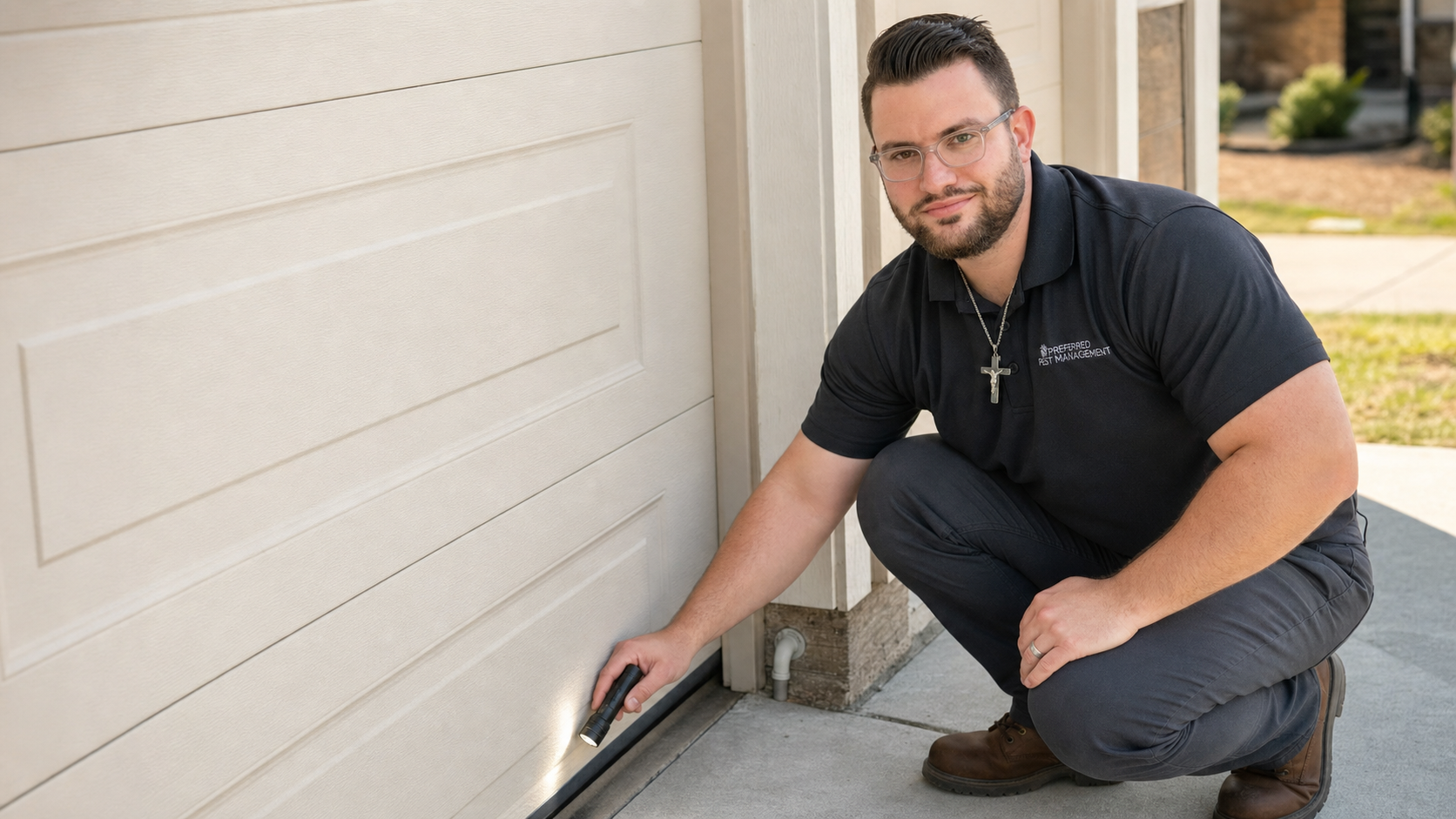
TL;DR: Mice can get into newer Sachse garages through small gaps around garage-door seals, utility lines, vents, trim, and construction joints. Start by checking and repairing obvious door-sweep or threshold damage, but recurring droppings, attic or wall noises, gnaw marks, or multiple entry points may require a professional inspection, trapping, and rodent exclusion plan.
Finding mouse droppings, chewed pet-food bags, or scratching sounds in a garage can feel especially frustrating when the home is relatively new. A newer home is not automatically rodent-proof. Garages connect the outdoors to wall voids, utility lines, attic areas, stored belongings, and food sources, so a small gap can become an easy entry point for mice.
For Sachse homeowners, the right next step is not to assume every sign is a mouse problem or to start sealing openings blindly. First identify the activity, then locate the entry point, remove active rodents, and close the accessible gaps that allowed them in. If you need help identifying the problem, start with Pest Control in Sachse, TX or schedule a rodent inspection with Preferred Pest Management.
The Short Answer: Small Gaps Around a Garage Can Be Enough
Mice do not need a large opening to enter a structure. The CDC notes that a mouse can fit through an opening about the width of a pencil—roughly 1/4 inch. That means a worn garage-door sweep, an unsealed pipe opening, a gap at a utility line, or a small break in weatherstripping can be enough for entry.
A garage may then provide shelter, nesting material, water, pet food, bird seed, cardboard, clutter, and access to other parts of the home. The goal is to determine whether the evidence is actually from mice, rats, squirrels, or another animal before choosing the treatment.
Five Garage Entry Points to Check First
1. Gaps below the garage door
A door can look closed from a distance while still leaving a gap at one corner or along an uneven surface. Check the bottom seal, side weatherstripping, and where the door meets the slab. A damaged sweep should be repaired, but sealing the door alone may not address other exterior access points.
2. Utility lines and wall penetrations
Garages commonly have openings for electrical conduit, plumbing, HVAC lines, cable, and other utilities. Look closely around each penetration from both inside and outside. Small gaps can be difficult to notice behind stored items or near the ceiling.
3. The side entry door and door frame
Check for daylight around the side door, worn weatherstripping, a damaged threshold, or a loose door sweep. These issues can create an entry path for rodents and also affect energy efficiency and moisture control.
4. Shared walls, attic access, and roofline connections
A garage may connect to wall voids, attic spaces, soffits, fascia, roof returns, or other elevated areas. If you hear movement above the garage or find evidence near the ceiling, the entry point may be outside the garage itself. This is when a more complete rodent inspection is more useful than setting a few traps.
5. Stored food, clutter, and nesting materials
Mice are drawn to accessible food and protected hiding places. Pet food, bird seed, grass seed, cardboard, fabric, paper, and cluttered storage can make a garage easier to use after rodents have entered. Removing those attractants helps, but it does not substitute for finding and sealing the actual entry point.
Why a Newer Home Can Still Have a Mouse Problem
New construction reduces some risks, but it does not eliminate the small openings created around doors, utilities, rooflines, and transitions between building materials. Materials can also shift with normal use, weather, and settling. A garage is particularly vulnerable because it has large moving doors, multiple utility penetrations, and frequent access to the outdoors.
That does not mean a builder made a major mistake, and it does not mean every opening should be filled with foam. The right repair depends on the location, material, accessibility, drainage, ventilation, fire-safety requirements, and whether rodents are still active inside the structure.
How to Tell Whether You Have Mice, Rats, or Another Animal
Mouse droppings are generally smaller and more pointed than rat droppings, but homeowners should not rely on one sign alone. Look for fresh droppings, gnaw marks, disturbed insulation, grease marks, nesting material, sounds at night, or damaged food packaging. A technician can inspect the evidence and determine whether it is consistent with mice, rats, squirrels, or another animal.
This distinction matters. The inspection, trapping approach, exclusion materials, and follow-up plan may differ based on the animal and where it is active.
What You Can Do Before a Rodent Inspection
Store pet food, bird seed, and grass seed in sealed containers. Remove cardboard or clutter around the garage perimeter. Check that the garage door closes evenly, and note where you have seen droppings, gnawing, or movement. Avoid moving traps, bait stations, or materials that could disturb active rodents before an inspection.
If you need to remove rodent droppings, do not sweep or vacuum them while dry. Follow CDC guidance for safe cleanup, including wetting contaminated material with an appropriate disinfectant before removal.
When Traps Help—and When They Are Not Enough
Traps can help remove rodents already inside a garage or structure. But trapping alone does not prevent the next mouse from entering through the same gap. The CDC similarly recommends checking how rodents got inside and sealing holes to help prevent a new infestation.
A complete plan may include inspection, trapping or monitoring, secured exterior stations when appropriate, and rodent exclusion to seal approved accessible entry points. The exact service depends on the evidence found, the type of rodent, and the construction of the property.
Traps can help remove rodents already inside, but they do not stop new mice or rats from entering through the same openings. If you are hearing activity in the garage, attic, or walls, Preferred Pest Management provides rat removal and rodent control in Sachse, including inspection, targeted trapping, exclusion recommendations, and follow-up options.
When to Call Preferred Pest Management
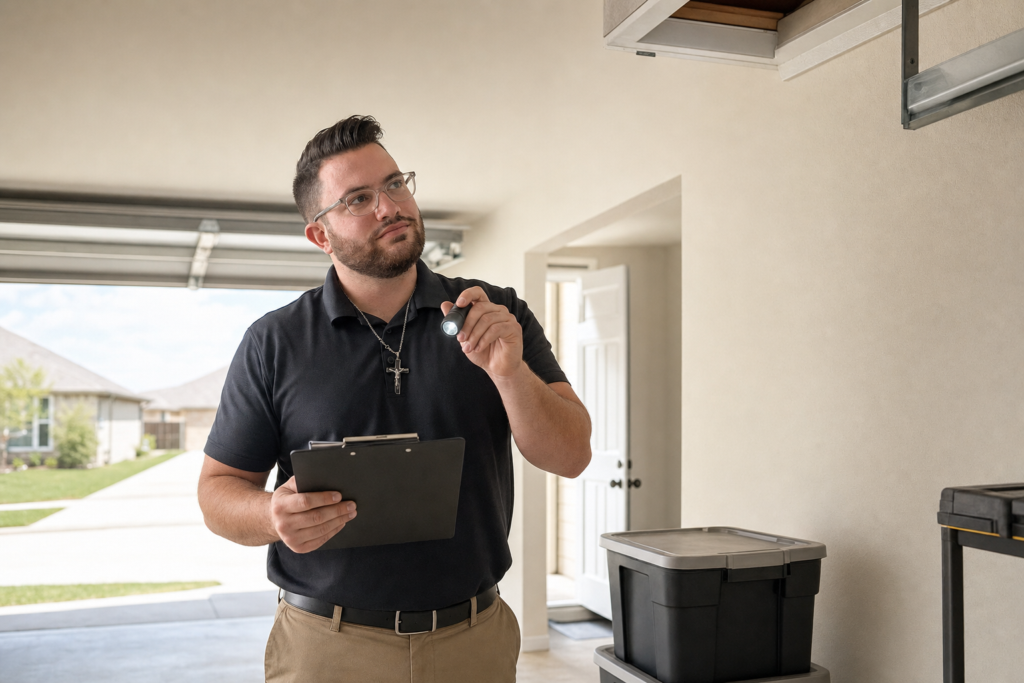
Contact Preferred Pest Management when you are finding recurring droppings, hearing activity in walls or above the garage, noticing gnaw damage, or seeing signs that extend beyond a simple garage-door sweep issue. We can inspect the relevant areas, identify likely entry points, recommend trapping or monitoring if needed, and explain whether rodent exclusion is appropriate.
If the issue is limited to a damaged door, threshold, or structural defect outside the approved scope of rodent exclusion, you may also need a qualified garage-door or repair contractor. A clear inspection helps you avoid paying for the wrong solution first.
Related Services
For a broader local overview, see Pest Control in Sachse, TX. If active mice or rats are already inside, see our Rat and Mouse Control service. To understand how entry points are sealed after inspection, visit our Rodent Exclusion Service page.
Frequently Asked Questions
Can mice get into a garage through the garage door?
Yes. A worn or uneven bottom seal, damaged side weatherstripping, or a gap at the corner of the door can allow mice to enter. The door should be inspected, but garages should also be checked for utility, wall, roofline, and ventilation gaps.
Why would mice enter a newer home?
A newer home can still have small gaps around doors, utility lines, vents, rooflines, and construction transitions. Garages also provide shelter and may contain food, clutter, cardboard, or nesting material. Newness does not rule out a rodent-entry issue.
Are traps enough to solve a mouse problem in a garage?
Traps can remove rodents currently inside, but they do not prevent future rodents from using the same opening. Long-term control usually requires identifying and sealing the accessible entry points after active rodents are addressed.
Should I seal every gap with spray foam?
No. Some gaps need a different exclusion material, and some openings are part of necessary ventilation or building systems. Sealing an active entry point without a plan can also create problems if rodents are still inside. An inspection helps determine the right material and scope.
How do I know whether the problem is mice or rats?
Droppings, gnaw marks, noises, nesting material, and travel paths can provide clues, but identification is not always obvious. A professional inspection can determine the likely animal and recommend the correct control and exclusion approach.
Does rodent exclusion include garage-door repair?
Rodent exclusion is designed to seal approved accessible entry points identified in the service scope. A worn garage-door sweep may be included when appropriate, but major door adjustment, structural repair, or specialized contractor work may be separate. Your technician should explain the scope before work begins.
Garage traps may remove an individual mouse or rat, but they do not close the opening that allowed it inside. If droppings, gnawing, or nighttime movement continues, Preferred Pest Management provides rat removal and rodent control in Sachse with inspection, trapping, exclusion recommendations, and follow-up options.
