Mosquito Control Dallas-Fort Worth
Mosquito Control for Dallas-Fort Worth Homes and Businesses
Mosquitoes can make patios, backyards, pools, outdoor dining areas, and other spaces difficult to enjoy. Preferred Pest Management provides mosquito control across Dallas-Fort Worth with recurring barrier treatments and In2Care® mosquito-station options designed to reduce mosquito activity around your property.
We begin by learning where mosquitoes are most active, reviewing the areas that may be contributing to the problem, and recommending a service plan that fits the property. Whether you need help at a home, apartment community, office, restaurant patio, or other commercial property, our team can help you choose the appropriate next step.
Schedule Your Mosquito Treatment
Mosquito Control That Helps You Use Your Outdoor Space Again
Mosquito activity often increases around shaded landscaping, dense vegetation, covered patios, fence lines, drainage areas, standing water, and places where irrigation leaves moisture behind. Mosquitoes can also fly in from neighboring properties, greenbelts, ponds, and nearby drainage areas.
Professional mosquito control is most effective when recurring treatment is combined with practical property maintenance. Our service focuses on the areas where adult mosquitoes commonly rest, while also helping customers identify conditions that can support mosquito breeding.
No responsible mosquito company can promise to eliminate every mosquito from an outdoor property. The goal is to meaningfully reduce mosquito activity and make your outdoor space more comfortable to use.
Mosquito Treatment Options
Recurring Mosquito Barrier Treatment
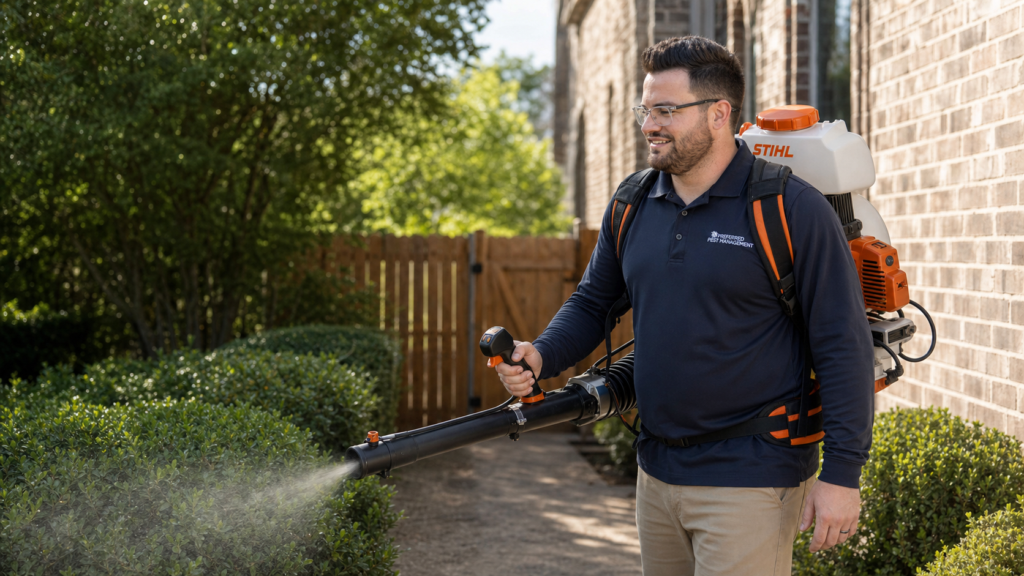
Recurring barrier treatments are designed to reduce adult mosquito activity around the exterior of the property. Technicians focus on likely resting areas, including shaded shrubs, landscaping, vegetation, fence lines, areas beneath decks, and other protected outdoor spaces.
This option is often a practical choice for homeowners who want ongoing mosquito reduction during the active season. Your recommended visit schedule will depend on the selected plan, the property, weather conditions, and seasonal mosquito pressure.
Barrier Treatment Plus In2Care Mosquito Stations
For properties that need broader mosquito management, we may recommend combining barrier treatments with In2Care mosquito stations. These stations are placed in appropriate locations around the property and are intended to supplement adult mosquito treatment by addressing mosquito breeding activity.
The best approach depends on the layout of the property, vegetation, available breeding areas, nearby mosquito pressure, and the level of outdoor use. We will explain what each option includes before service begins.
Learn More About The In2Care Mosquito Treatment From Our YouTube Channel
How Our Mosquito Control Process Works
1. Review Mosquito Activity and Property Conditions
Tell us where mosquitoes are most noticeable and when activity is worst. We will consider features such as patios, pools, vegetation, drainage areas, outdoor seating, pet areas, and nearby standing water.
2. Treat Appropriate Adult-Mosquito Resting Areas
Mosquito barrier treatments focus on the exterior areas where adult mosquitoes commonly rest during the day. Treatment locations vary by property and may include vegetation, shrubs, shaded landscaping, fence lines, and protected outdoor areas.
3. Add In2Care Stations When Appropriate
If your property is a good fit for an In2Care program, we can recommend stations as part of a broader mosquito-control plan. Stations require ongoing maintenance and are not a substitute for reducing standing water around the property.
4. Reduce Standing Water Around the Property
Mosquitoes can breed in very small amounts of water. Between services, inspect and empty water from containers such as flowerpot saucers, toys, buckets, tarps, birdbaths, clogged gutters, and other items that collect rain or irrigation runoff.
See the North Texas seasonal pest calendar
What Affects Mosquito Activity in Dallas-Fort Worth?
Mosquito pressure can change quickly based on rainfall, irrigation, temperature, landscaping, construction activity, drainage, nearby water sources, and conditions on surrounding properties. A well-maintained yard can still experience mosquitoes when nearby conditions are favorable for them.
You can help your mosquito service perform better by:
- Emptying standing water at least once a week.
- Keeping gutters clear and draining properly.
- Trimming dense shrubs and vegetation near patios and walkways.
- Correcting unnecessary irrigation runoff.
- Keeping screens in good repair.
- Letting us know about new mosquito activity around pools, drains, planters, or outdoor gathering spaces.
For many properties, ongoing service provides more consistent results than a single treatment because mosquitoes can continue entering from nearby areas.
What to Expect After Mosquito Treatment
Mosquito activity may begin decreasing after treatment, but results depend on the property, weather, surrounding mosquito pressure, and available breeding conditions. Heavy rainfall, irrigation, new standing water, or mosquitoes entering from neighboring properties can affect how long results last.
If you are enrolled in recurring mosquito service and notice continued activity, contact us so we can review the situation and determine whether a return visit or service adjustment is appropriate under your plan.
Please keep children and pets away from treated areas until applications have dried or for any additional time specified by your technician. Let us know before service if you have birds, fish, reptiles, sensitive pets, or other household concerns.
Mosquito Control for Homes, Businesses, and Multifamily Properties
Residential Mosquito Control
Recurring mosquito service can help homeowners enjoy patios, pools, yards, outdoor kitchens, play areas, and other outdoor spaces with less mosquito activity. We will recommend treatment based on the size of the property, landscaping, mosquito pressure, and selected service option.
Commercial and Multifamily Mosquito Control
Mosquitoes can affect customer comfort, tenant satisfaction, employee work areas, outdoor dining, pool areas, common spaces, and property use. Preferred Pest Management provides commercial mosquito-control options for restaurants, offices, multifamily communities, churches, retail properties, and other facilities across Dallas-Fort Worth.
Explore commercial pest control services
Serving Dallas-Fort Worth Communities
Preferred Pest Management provides mosquito-control service throughout Dallas-Fort Worth and surrounding North Texas communities. For general pest-control information, local service details, and specialty pest options, visit your city page:
- Pest Control in Plano
- Pest Control in Dallas
- Pest Control in Frisco
- Pest Control in Garland
- Pest Control in Richardson
- Pest Control in Sachse
- Pest Control in Rowlett
- Pest Control in Wylie
View all Preferred Pest Management service areas
Mosquito Control Resources
Learn more about mosquito behavior, treatment options, and ways to make mosquito service more effective:
- Benefits of In2Care for mosquito services
- Why combine In2Care stations with mosquito spray treatments?
- Why daytime mosquitoes are common in North Texas backyards
- North Texas seasonal pest calendar
- Benefits of Using In2Care for Mosquito Services in Plano
- Everything You Need to Know About Mosquitoes in the Winter in Plano, TX
Frequently Asked Questions About Mosquito Control
How often should mosquito treatments be performed?
Many properties benefit from recurring treatment during mosquito season because mosquitoes can continue entering from nearby properties and breeding areas. The recommended schedule depends on the selected service plan, property conditions, weather, and mosquito activity.
Do mosquito barrier treatments really work?
Professional barrier treatments can reduce the number of adult mosquitoes resting around treated areas of a property. Results are strongest when service is combined with removal of standing water and regular property maintenance. Because mosquitoes can fly in from nearby areas, no treatment can responsibly promise a completely mosquito-free yard.
What is the difference between mosquito barrier treatment and In2Care stations?
Barrier treatments target areas where adult mosquitoes rest, such as shaded vegetation and protected exterior areas. In2Care stations are placed around appropriate properties to supplement mosquito management by addressing breeding activity. Some properties benefit from one option, while others are better suited to a combination.
How can I reduce mosquitoes between services?
Empty standing water from buckets, toys, planters, birdbaths, tarps, gutters, and other containers. Keep landscaping maintained, correct unnecessary runoff, and report new mosquito hot spots to your technician.
Will rain wash away my mosquito treatment?
Light rain after a treatment has dried does not automatically make the service ineffective. However, heavy rainfall, flooding, irrigation runoff, and new standing water can increase mosquito activity and affect conditions around the property.
Are mosquito treatments okay around children and pets?
Products are selected and applied according to their labels. Children and pets should stay away from treated areas until they have dried or for any additional time specified by the technician. Tell us about pets, aquariums, birds, reptiles, and sensitivities before treatment so we can provide appropriate instructions.
Do you provide mosquito service for commercial properties?
Yes. We provide mosquito-control options for businesses, multifamily communities, restaurants, outdoor gathering spaces, offices, retail properties, and other commercial facilities. The service plan is based on the property layout, outdoor-use areas, mosquito pressure, and operational needs.
To get rid of mosquitos, call 2149783877 today!
Request Mosquito Control Service
Ready to spend more time outside with less mosquito activity? Tell us about your property, where mosquitoes are most active, and whether you are interested in recurring barrier treatment, In2Care stations, or a combined program.