Thin or uneven insulation
Gaps, displaced material, and inconsistent coverage can justify a closer assessment.
An attic can need better insulation, targeted cleanup, or a larger restoration. The right recommendation starts with the actual condition of the space.
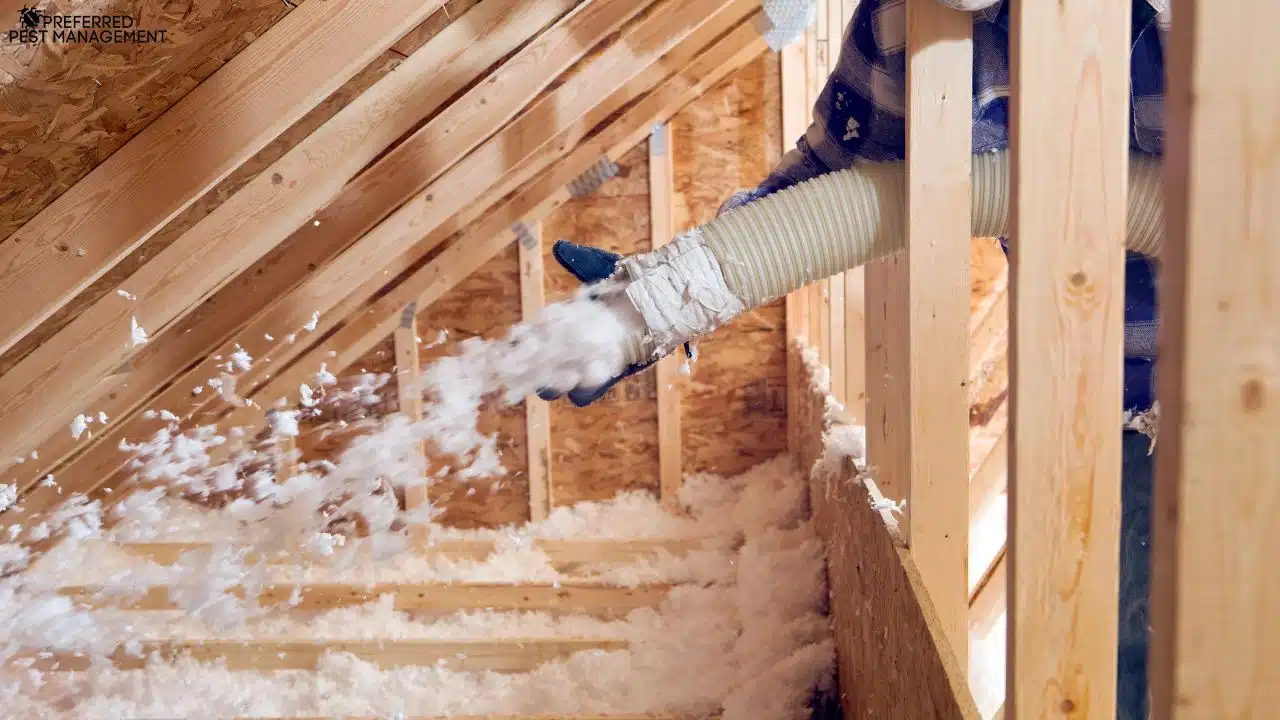
Preferred Pest Management evaluates accessible attic conditions and recommends appropriate insulation or rodent-damage work. Options can include targeted cleanup, removal of affected insulation, and replacement or additional blown insulation where warranted.
Property-specific recommendations. Clear service scope and pricing before you approve work.
 Assess the attic. Define the work.
Existing depth, coverage, moisture, contamination, access, and active animal activity all influence the next step. A few disturbed areas and widespread damaged insulation are different situations. We explain the evidence and whether a targeted or more extensive scope is appropriate.
Tell us what you’ve noticed ↗Gaps, displaced material, and inconsistent coverage can justify a closer assessment.
Nesting material, droppings, or compressed travel paths may call for cleanup and a condition review.
A roof leak, condensation, or another moisture source needs attention before new insulation is added.
Wiring, ducts, ventilation, roof damage, and difficult access may require separate qualified repair.
An attic project should explain the existing condition, the proposed material, and what happens before installation.
Review accessible coverage, contamination, moisture, active pest concerns, and the work area.
See what the assessment considers ↗Targeted cleanup or removal of affected material may be appropriate. Complete removal is not automatically necessary after every rodent issue.
Address active rodent activity ↗Discuss TAP or Greenfiber blown-insulation options where appropriate, including material, coverage goals, and access requirements.
See the project sequence ↗New insulation does not repair a leak, remove active rodents, or fix damaged wiring. The sequence should protect the value of the work.
Active rodent activity and approved entry routes should be addressed before extensive restoration. Otherwise new animals can affect the attic again.
Wet areas, ventilation issues, wiring, ducts, and structural damage may need separate assessment or repair before insulation work.
Review the selected insulation, installation area, target coverage, and limitations. Do not assume every material controls every pest or guarantees a particular energy saving.
Tell us whether the concern is insulation coverage, rodent damage, odor, moisture, or a combination. Include any active pest or leak issue so we can discuss the right sequence.
Request an attic and insulation assessment for your Plano-area property. Our team will contact you to discuss the details.
By submitting, you’re asking Preferred Pest Management to contact you about this service request. Submission does not book an appointment.
The recommendation follows the evidence and the property. Here is how we work through it with you.
Review accessible insulation, evidence, moisture, building conditions, and project goals.
Coordinate rodent control, approved exclusion, moisture correction, or separate repairs where needed.
Carry out included cleanup, removal, and insulation work with access and material requirements explained.
Discuss installation coverage, limitations, follow-up, and any remaining property repairs.
Attic-project cost depends on accessible area, existing material, amount of contamination or damage, removal needs, installation material, coverage, and access. A top-up, localized cleanup, and full removal-and-replacement project have different scopes. We assess the attic before recommending a final project price.
Request my property quote ↗Company-wide Google reviews cover different services across North Texas. They are not limited to attic & insulation services customers.
Review our local pest-control pages and contact the team to confirm attic & insulation services availability for your address.

We’re a locally and family-owned North Texas business serving our communities since 2020. We explain what we find, what the recommended service includes, and how to prepare for it.
Tell us about the building, previous service, and any access or scheduling needs. Your property details help us recommend an appropriate starting point.
Direct answers about service, preparation, pricing, and follow-up.
No. The amount, location, and condition of affected material matter. A localized concern may call for targeted work, while widespread contamination or damage may justify more extensive removal and replacement.
Active animal activity and approved entry routes should be addressed before extensive restoration. Otherwise the attic can be affected again after the new work is complete.
We can discuss appropriate TAP and Greenfiber blown-insulation options based on the attic and project. The proposal identifies the selected material, installation area, and coverage goals.
It may be appropriate when existing material and attic conditions allow it. Moisture, contamination, damage, access, and compatibility need to be considered before adding material.
Those are separate building issues. Roof, electrical, duct, structural, or ventilation repairs may require another qualified contractor and should be addressed in the project sequence.
A specific saving cannot be promised from insulation alone. Building conditions, air leakage, equipment, weather, use, and the actual installation all affect performance.
No. Insulation is not a substitute for active pest treatment, rodent exclusion, or a termite protection program. Discuss the selected material’s actual label and limitations rather than assuming universal pest coverage.
The quote depends on attic area, access, material condition, removal or cleanup needs, selected insulation, and installation scope. An assessment helps distinguish a smaller project from full restoration.
Address active attic rodents
Explore rat removal ↗Review approved entry-point work
Explore rodent exclusion ↗Investigate another attic visitor
Explore squirrel removal ↗Understand when a condition assessment is useful.
Learn more ↗Consider practical changes around the structure.
Learn more ↗Share conditions, access, and repair history.
Learn more ↗Tell us about your attic project. We’ll help you move forward.
