Restaurant roach control is one of those decisions that gets expensive fast when you choose the wrong company. In a restaurant, a bad hire does not just mean a few extra bugs, it can mean failed inspections, lost customers, and a problem that keeps coming back because nobody fixed the source. This guide walks through what to ask, what to compare, and what should make you walk away before you sign anything.
Why Vetting a Roach Control Company Matters More for Restaurants
A lot of pest control companies can spray. Far fewer can solve a restaurant roach problem in a way that holds up under real-world pressure.
That distinction matters because restaurants have almost no margin for error. One sighting can trigger complaints, refund demands, ugly reviews, or staff panic. A health inspector does not care that a company was cheap or available same day. They care whether the problem is under control and whether you can show a credible system for keeping it that way.
Roaches are also stubborn. They hide deep in equipment voids, wall gaps, drains, and warm motor compartments. If the provider treats only what is visible, the infestation survives. Then you pay again, lose more time, and end up hiring someone else anyway.
Why restaurant roach problems are different from home infestations
Homes can have serious infestations, but restaurant conditions are different in ways that change the treatment plan. Commercial kitchens generate grease, heat, moisture, crumbs, cardboard clutter, and constant movement of food and deliveries. Late-night cleanup and early-morning prep create long windows of activity, which means roaches often have everything they want, all day long.
German roaches are the usual nightmare here. They reproduce quickly, stay hidden near food and water, and spread through equipment, storage areas, and wall voids before staff realize how bad things are. According to the National Pest Management Association, cockroaches can spread 33 kinds of bacteria, which helps explain why a restaurant infestation carries much more than a nuisance factor.
The same high-risk logic applies in mixed-use buildings and multi-unit properties. If you manage restaurants below apartments, shared retail bays, or food-service tenants in a commercial strip, one bad unit can affect the rest. That is why understanding how home and business infestations differ can help you spot providers who actually know commercial work from those who mostly handle houses.
What a Qualified Restaurant Roach Control Provider Should Actually Offer
Before you compare prices, you need a baseline for what competent service looks like. Good restaurant roach control is not built around one visit or one product. It is built around inspection, species identification, targeted treatment, documentation, and follow-up.
A qualified provider should sound methodical. They should be able to explain why the infestation is happening, where activity is concentrated, what treatment tools fit that setting, and what cooperation they need from you. If all you hear is “we’ll spray and take care of it,” keep looking.
Experience with commercial kitchens, not just general pest control
Commercial kitchen experience is not a nice extra. It is the difference between a company that knows where roaches actually live and one that treats the perimeter and hopes for the best.
Restaurants have floor drains, grease traps, server stations, beverage lines, dish pits, dry storage, warm compressors, and crowded prep zones. A provider who works these environments regularly will know how to inspect under, behind, and inside likely harborages without creating food-safety problems. They should also understand the difference between occasional outdoor invaders and breeding indoor populations, especially German roaches.
This is also where licensing and commercial qualifications matter. If you want a better filter than marketing claims, review what to verify before trusting a company’s credentials. It is a simple way to screen out operators who sound polished but cannot back it up.
A clear inspection and treatment plan
Serious providers do not guess. They inspect first, then explain what they found in plain English.
You should hear specifics: where the nesting zones appear to be, what conditions are supporting the infestation, whether neighboring spaces may be involved, what products will be used, and how service will be sequenced. In restaurant roach control, that often includes crack-and-crevice treatment, gel baits, insect growth regulators, monitoring devices, and scheduled rechecks. It rarely means one broad spray and done.
The plan should also include prep expectations. If staff need to empty certain cabinets, move portable items, improve sanitation in one station, or report sightings by location, that should be part of the conversation from the start.
Documentation, communication, and compliance support
A good pest control company treats documentation as part of the service, not an afterthought. For restaurants, that means service reports that show findings, treatment areas, products used, trend notes, and next steps. For property managers, it can also mean unit histories, escalation notes, and recommendations that create a paper trail.
That paperwork helps with health inspections, internal audits, tenant disputes, and follow-up accountability. It also tells you whether the provider is paying attention over time or just checking a box. If you want a clearer picture of what quality reporting should look like, this guide to the records Dallas businesses should ask for is worth reading before you compare contracts.
Questions to Ask Before You Hire a Restaurant Roach Control Company
This is the part that separates good vendors from smooth talkers. Ask direct questions, then listen for direct answers. A qualified company will not be annoyed by scrutiny. Honestly, they should welcome it.
“What species are you seeing, and how does that change treatment?”
Species identification is not trivia. It changes the whole plan.
If the company suspects German roaches, you should expect a more aggressive, layered approach with follow-up visits and tight attention to harborages near heat, moisture, and food. If they are seeing larger American or smokybrown roaches, the focus may shift more toward drains, entry points, moisture, and exterior conditions. A provider who cannot explain the difference is telling you they may not be diagnosing the problem well.
“What’s your process for inspection, treatment, and follow-up?”
This question reveals whether they have a system or just a sales script.
Good answers mention inspection, monitoring, targeted applications, recheck timing, and how they measure progress. They may talk about glue boards to track activity, gel baits in hidden zones, insect growth regulators to interrupt reproduction, and careful crack-and-crevice treatment rather than careless blanket spraying. They should also explain what happens after the first visit, because entrenched infestations are rarely solved in one shot.
If a company keeps pushing a single visit for a restaurant with an established infestation, that should raise concerns. In most cases, why a one-and-done approach often falls short becomes obvious the moment you look at how fast roaches reproduce.
“How do you handle food-safe treatment in active kitchens?”
This question matters more than people think. You are not hiring someone to kill roaches at any cost. You are hiring someone to control them without creating new risks.
A competent provider should explain treatment timing, food-contact precautions, product placement, staff prep, reentry guidance, and how they avoid contaminating prep surfaces, utensils, or stored goods. They should be comfortable coordinating around service hours and explaining which areas need clearing before treatment. Vague reassurances are not enough here.
If you want a general reference point for how restaurant-focused programs are structured, this overview of cockroach control for food-service environments shows the kind of commercial context providers should understand.
“What results should I expect, and on what timeline?”
Honest companies do not promise miracles by tomorrow morning. They give you a realistic timeline tied to infestation level and site conditions.
You may see activity increase briefly after treatment as roaches are flushed from harborages or encounter bait. Then numbers should trend downward with follow-up visits and sanitation correction. A provider should be able to tell you what progress looks like after the first week, the first month, and ongoing service if needed.
What you want is candor. Fast relief is possible, but complete control in a busy kitchen usually takes more than one visit, especially if there are structural gaps, drain issues, or neighboring sources.
“What happens if the roaches come back?”
This is where contracts get real. Ask exactly what retreatment is included, what voids the warranty, how quickly they respond, and whether the terms are written into the agreement.
Some companies talk big about guarantees but bury exclusions in the fine print. Others offer retreatments only if you stay in a long contract, buy extra services, or meet vague “sanitation compliance” standards they never documented clearly. Reviewing what warranty language really covers before you sign can save you from that trap.
Red Flags That Should Make You Keep Shopping
Bad pest control companies tend to reveal themselves early. You just have to know what to notice.
Vague answers, one-size-fits-all plans, or instant-quote pricing
Roach control without a real inspection is mostly guessing. If someone gives you a firm treatment plan or a too-good-to-be-true quote before seeing the kitchen, the storage areas, and the activity pattern, they are skipping the hard part.
That often leads to cheap service on paper and expensive failure in practice. The infestation does not care that the estimate was fast.
Heavy contract pressure without clear service terms
Be careful with companies that push long agreements before explaining scope, follow-up schedule, cancellation terms, or retreat rights. Pressure is not proof of quality. Usually it is covering for weak details.
A strong provider can explain why ongoing service may make sense without cornering you into a commitment you do not understand. If the promise is verbal but the contract is vague, trust the contract.
Overpromising, underexplaining, or blaming the customer for everything
Sanitation matters. So do moisture control, maintenance, and staff habits. But there is a big difference between honest guidance and using “cleanliness” as a lazy excuse for bad service.
A qualified provider will tell you what your team needs to fix and what they will handle themselves. If every callback gets blamed on the customer, even when there is poor documentation or no meaningful follow-up, that is not accountability. That is deflection.
Understanding Treatment Methods So You Can Ask Better Questions
You do not need to become a technician. But you should know the basics well enough to tell whether the company’s explanation makes sense.
Baits, insect growth regulators, dusts, and targeted residuals
Gel baits are often a backbone of German roach control because they work where roaches hide and feed. Insect growth regulators disrupt development and reproduction, which matters when you are dealing with a fast-breeding population. Dusts can be useful in voids and inaccessible spaces where liquid products are a poor fit. Targeted residuals may help in cracks, crevices, and other non-food-contact areas when used correctly.
The point is not that one method is best. The point is that layered treatment usually beats a single-product mindset. If a provider talks only about spraying, they may be behind the curve or oversimplifying the job.
Monitoring tools and exclusion recommendations
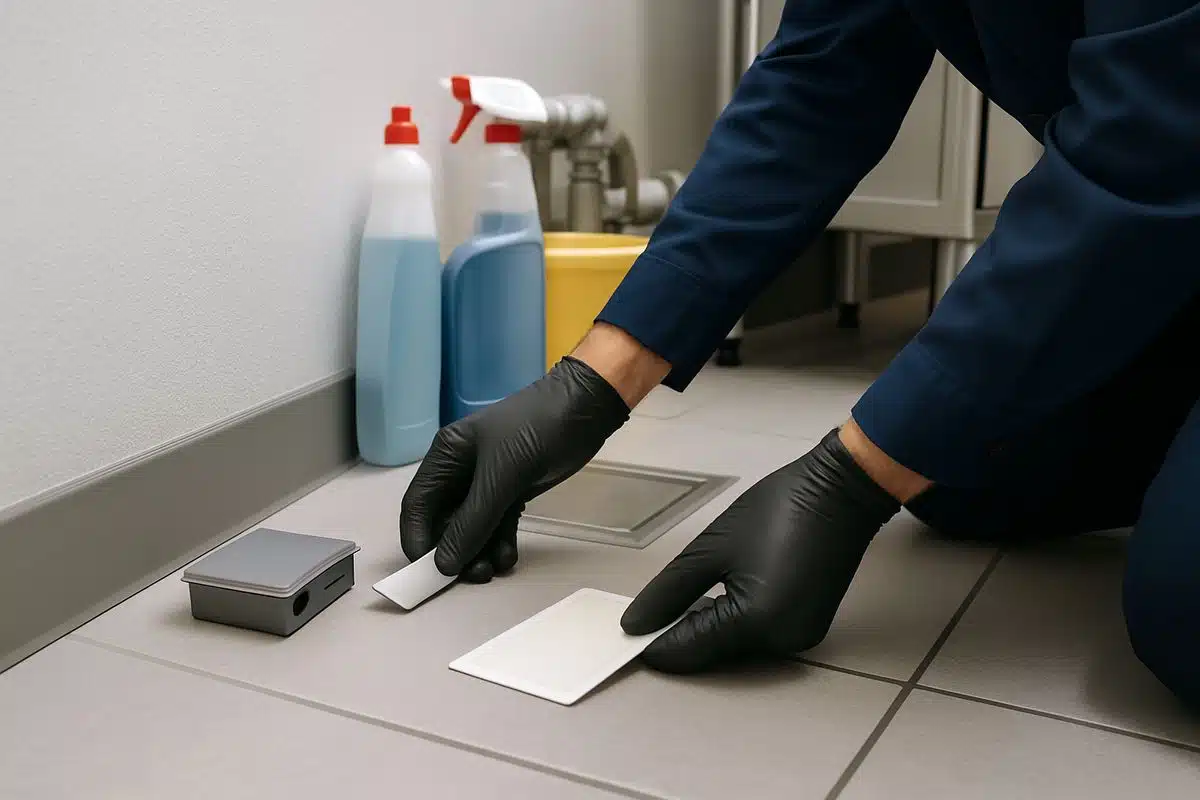
Glue boards and other monitors help track where activity is strongest and whether treatment is working. They also keep the conversation grounded in evidence instead of guesswork.
Exclusion and correction matter too. Sealing gaps, fixing leaks, improving drain sanitation, reducing cardboard storage, and addressing harborage around equipment can make a huge difference. According to the EPA’s integrated pest management guidance, long-term pest control works best when inspection, monitoring, sanitation, and targeted treatment are combined. That is exactly the mindset you want from a restaurant provider.
How to Compare Estimates Without Falling for the Cheapest Option
Once you have two or three bids, the temptation is to compare the bottom line and call it a day. That is how people end up rehiring six weeks later.
A better comparison looks at scope, frequency, documentation, response time, and what happens if the first round does not hold.
What should be included in a roach control estimate
A useful estimate should spell out the inspection findings, treatment areas, products or methods, number of visits, follow-up cadence, prep requirements, and warranty terms. If you manage a restaurant or multi-unit property, it should also explain who gets reports and how ongoing issues are documented.
If those basics are missing, you are not really comparing estimates. You are comparing sales styles.
When a higher quote may be worth it
A more expensive bid can be the better deal if it includes deeper inspection, better follow-up, faster response times, after-hours flexibility, stronger documentation, and a more realistic treatment schedule. Restaurant-specific experience also carries value because it reduces mistakes and shortens the path to control.
The cheapest option often looks cheap because something is missing. Usually it is time, labor, follow-up, or accountability.
Questions to ask before signing the service agreement
Before you sign, ask how cancellation works, what triggers extra charges, how fast callbacks happen, whether after-hours service is available, and how retreatment is handled if activity continues. Ask whether sanitation or maintenance recommendations will be documented in writing, because verbal advice is easy to deny later.
If the company recommends ongoing service, make sure you understand why. In some cases, it is justified. In others, it is a default sales motion. This breakdown of recurring service versus a one-time approach can help you judge whether the recommendation fits your situation or just the company’s revenue model.
Choosing the Right Provider for Your Property Type and Use Case
The best vendor for one property is not always the best for another. Restaurant roach control stays the main issue here, but your building type and operating model still matter.
Best fit for independent restaurants and small food-service businesses
Independent operators usually need quick response, flexible scheduling, and clear communication that does not waste time. You want a company that can work around prep and service hours, explain findings plainly, and give staff practical instructions they can actually follow.
Small businesses also benefit from providers who understand the budget pressure without cutting corners. Good communication matters a lot here because owners are often managing food, labor, vendors, and compliance all at once.
Best fit for multi-unit properties and property managers
For property managers, the right provider has to think beyond one unit. Roaches move through shared walls, utility lines, and common conditions. That means coordinated treatment, recurring monitoring, reporting by unit or suite, and escalation rules when one tenant’s issue starts affecting others.
The company should also know how to communicate with both management and occupants. In multifamily settings, what tends to work best across apartments and shared structures often comes down to consistency, documentation, and treating adjacent risk areas instead of chasing complaints one by one.
Best fit for homeowners dealing with high-risk or recurring infestations
Some homeowners want the same thoroughness a restaurant or property manager would demand, especially in large homes, luxury properties, or houses with repeated infestations. In that case, look for the same traits: detailed inspection, strong reporting, realistic follow-up, and discreet service.
The setting changes, but the buying logic does not. You are still looking for a provider who diagnoses well, explains clearly, and stands behind the work.
Common Hiring Mistakes That Lead to Repeat Roach Problems
Most repeat infestations are not random. They trace back to a few predictable buying mistakes.
Choosing based on price alone
Low-cost service can be the most expensive option if it misses the breeding sites, lacks follow-up, or causes business disruption when the problem resurfaces. Saving a few hundred dollars means very little if the kitchen still has activity during your next inspection window.
Good restaurant roach control costs money because it takes time, skill, and repeat evaluation. That is just reality.
Skipping the paperwork review
A lot of bad surprises live in paperwork. Guarantee exclusions, prep requirements, response times, auto-renewal language, and cancellation terms all matter. Read them before service starts, not after something goes wrong.
If a sales rep promised something, make sure it appears in writing.
Expecting treatment alone to solve a structural or sanitation problem
Even the best pest control company cannot seal every gap, fix every leak, or change how a kitchen stores cardboard and food debris. Treatment is part of the solution, not the whole solution.
The best outcomes happen when the provider handles the technical pest work and the property addresses the conditions that keep supporting the infestation. In restaurants, especially, those two pieces have to work together.
Frequently Asked Questions
How often should a restaurant get roach control service?
It depends on the level of activity and the property’s risk factors, but active infestations usually need multiple visits close together at first. After control improves, many restaurants stay on a recurring schedule for monitoring and prevention.
Can a restaurant roach problem be fixed in one treatment?
Sometimes a very small issue can be knocked down quickly, but established infestations usually need follow-up. German roaches reproduce fast and hide deep in equipment and wall voids, so expecting one visit to solve everything is usually unrealistic.
What should I do before the pest control company arrives?
Follow the company’s prep instructions exactly. That may include clearing certain cabinets, improving access around equipment, storing food properly, and making sure staff report where activity has been seen most often.
Are roach treatments safe around food-prep areas?
They can be, when the company uses the right products in the right places and follows food-safety procedures. Ask how they handle product placement, prep requirements, surface protection, and reentry timing in active kitchens.
What’s the difference between a warranty and a retreat policy?
A warranty is the broader promise, while a retreat policy explains what happens if activity returns. You want both spelled out clearly, including response times, exclusions, and whether extra charges apply.
Should I choose ongoing service or a one-time fix?
For restaurants, ongoing service is often the smarter choice because risk never fully disappears in a food environment. The real question is whether the ongoing plan is tailored to your site and documented clearly, not whether the company calls it a program.
Choosing a restaurant roach control company should feel less like a gamble and more like a checklist. If a provider can explain the problem clearly, document the plan, set realistic expectations, and put the service terms in writing, you are probably talking to the right kind of company. If they cannot, keep shopping.
