
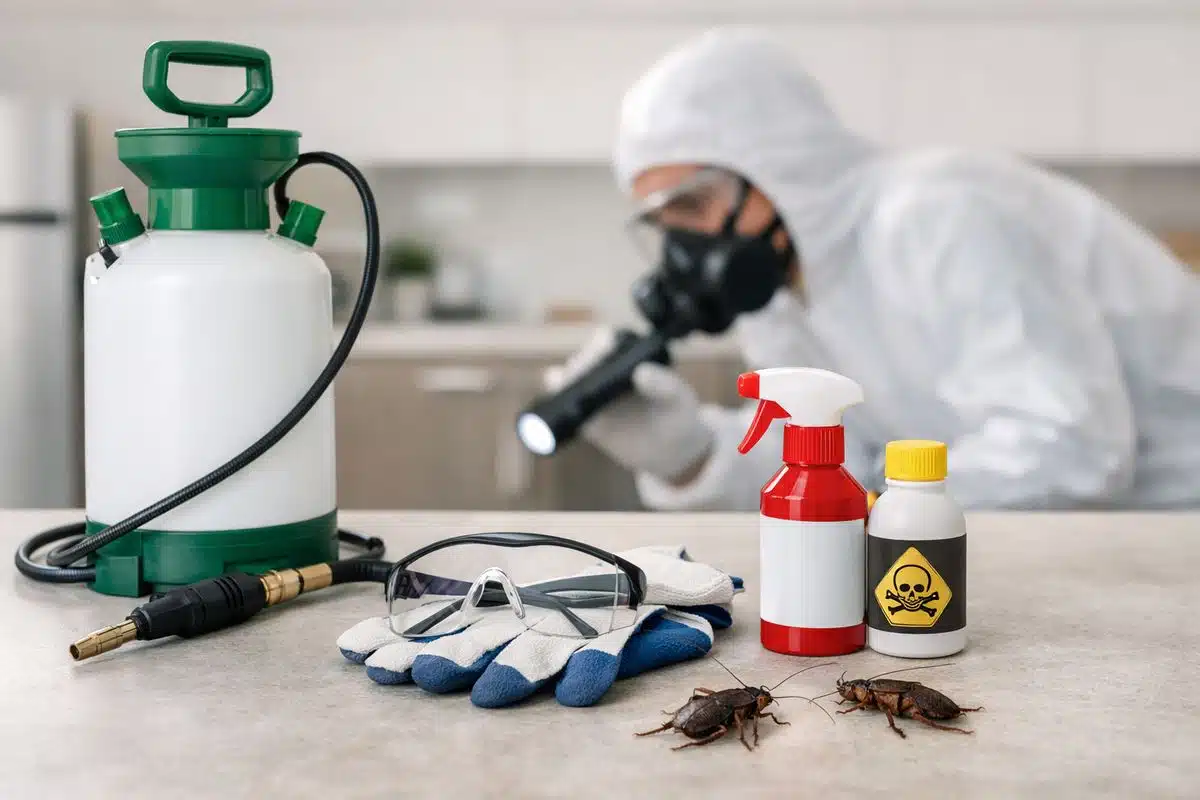
Hiring a German roach exterminator gets stressful fast because every company says some version of the same thing: fast service, proven treatment, guaranteed results. But German roaches are not a basic pest call, and the wrong hire can leave you right back in the kitchen at 11 p.m., flicking on the light and seeing movement near the coffee maker.
Why German Roaches Need a Different Kind of Exterminator
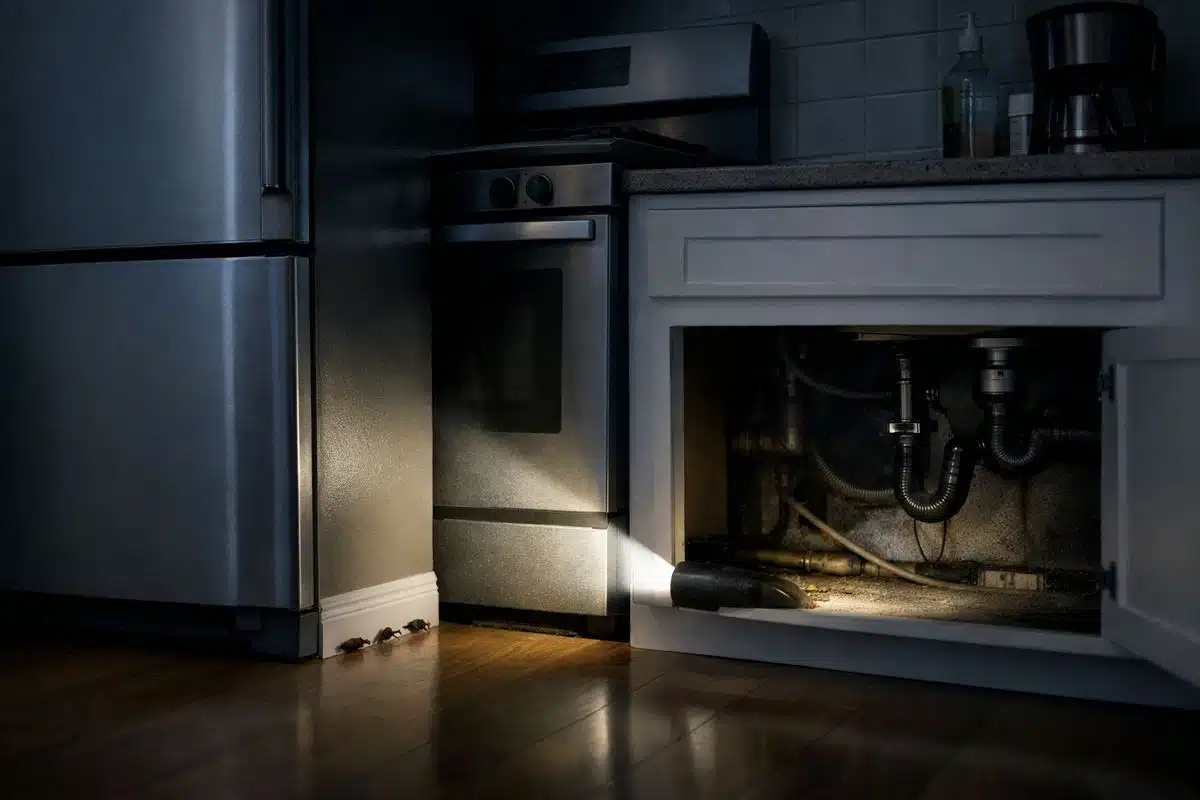
German roaches are a category of problem all by themselves. They are small, fast, and built to stay hidden. In fact, they spend about 75% of their lives in hiding, usually tucked into tight spaces close to food and moisture. That means a company that mostly handles occasional outdoor roaches, ants, or general spray service may not be the right fit for this job.
The bigger issue is reproduction. German roaches multiply at a pace that turns a “small issue” into a building-wide headache before you even finish collecting bids. A single female can produce hundreds of offspring in a lifetime, and the population often includes a large number of nymphs, which are the immature roaches hiding deep in cracks, cabinet voids, appliance gaps, and wall penetrations.
That is why this is not a quick spray problem. It is a management problem. You need a company that knows how to inspect, map activity, bait correctly, monitor results, and adjust the plan when the first round does not finish the job. If a vendor sounds focused mainly on showing up fast, that may feel reassuring in the moment, but speed is not the same as having a real German roach process.
Know What “Works” Before You Compare Companies
Before you compare prices, guarantees, or service windows, get clear on what success should actually look like. A German roach exterminator that works should correctly identify the species, inspect the right places, build a treatment plan around baiting and monitoring, and schedule follow-up visits instead of treating the first appointment like the finish line.
Here’s the direct claim: any company selling a one-and-done spray for German roaches is the wrong fit.
Effective service usually includes inspection first, targeted treatment second, then follow-up based on what is still active. If you want a deeper look at why this pest needs a different playbook, this breakdown of why the process has to be different lays it out clearly.
Signs the infestation is bigger than a basic service call
Some clues mean you are well past a routine visit. Daytime sightings are one of the biggest. German roaches usually stay hidden, so seeing them out in the open during the day often signals a very large infestation. The same goes for activity in more than one room, especially if you are seeing them in both kitchens and bathrooms.
If roaches are showing up in a restaurant, break room, leasing office, or shared-wall property, the stakes go up even more. In those settings, the problem is rarely isolated to one visible spot. Warm equipment lines, drains, storage areas, and plumbing chases give roaches plenty of places to spread and regroup.
Another tell is repeat activity after recent service. If you already paid for treatment and still see fresh droppings, live roaches, or nymphs a week or two later with no change in strategy, that is not “just part of the process.” That is a weak process.
Why German roaches often come back after “treatment”
Most comeback stories have the same few causes. The first is missed harborage, meaning the company treated surfaces you can see but ignored the places roaches actually live. Behind refrigerators, under microwaves, inside cabinet hinges, under sinks, and around plumbing penetrations matter more than a broad pass along the baseboards.
The second is no follow-up. German roach control usually takes repeated evaluation. Rutgers guidance recommends follow-up bait applications every 2 to 4 weeks until activity stops for a sustained period. One visit with no monitoring is rarely enough.
The third is using the wrong chemistry the wrong way. Repellent sprays can push roaches deeper into hiding or into neighboring units. Careless spraying can also contaminate bait placements and make the whole plan weaker. Add moisture problems, food debris, wall gaps, and untreated nearby units, and you get the classic result: temporary improvement, then a rebound.
The Best Exterminators Start With Inspection, Not Chemicals
The quality of the inspection tells you almost everything you need to know about the company. A serious German roach exterminator does not walk in, glance around, and quote a treatment from the doorway. The job starts with figuring out where roaches are living, how heavy the infestation is, and what conditions are helping it continue.
That matters because German roaches are usually not coming from outside landscaping or random exterior entry points. They are indoor hitchhikers, spread through people, boxes, appliances, deliveries, and shared structures. So the winning plan is almost always built from inside out.
What a real German roach inspection should include
A real inspection goes straight to warm, tight, dark areas. Think behind the refrigerator and stove, under sinks, around pipe openings, inside cabinet corners and hinges, bathroom vanities, utility closets, dishwasher gaps, and wall voids around plumbing or electrical lines. In a restaurant, add equipment legs, prep stations, storage shelving, and drain areas.
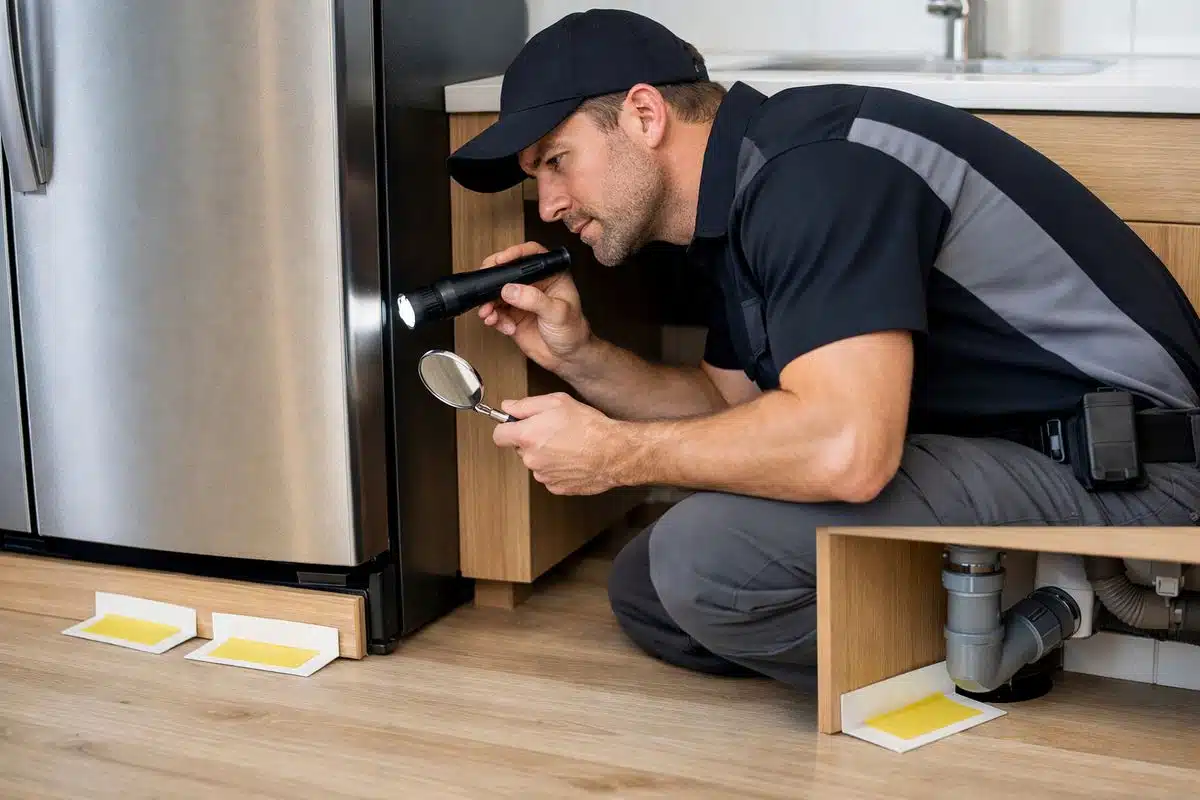
The tools matter too. Good inspectors use a flashlight and often a small mirror to look behind and beneath things instead of guessing. Public health guidance specifically recommends tools like a flashlight and mirror to find egg cases, speckling, shed skins, and active harborage.
A rushed quote sounds generic. A real inspection sounds specific. You want to hear things like, “activity under the kitchen sink and behind the fridge,” not “looks like a standard interior treatment.”
If you want to know what a proper visit should cover before treatment begins, it helps to review what should be checked before any product goes down.
Why monitoring matters as much as treatment
Treatment without monitoring is guesswork. Sticky traps help show where roaches are active, how activity changes over time, and whether one area is improving while another is getting worse. In larger homes, apartment units, and food businesses, this becomes even more useful because visible sightings rarely tell the whole story.
The best setups use traps that are dated, placed strategically, and checked on follow-up visits. Research supports dated sticky traps placed near food prep areas, structural edges, and heat-generating equipment because that gives a cleaner picture of movement and pressure.
This is where a lot of cheap service falls apart. If nobody is measuring anything, nobody knows whether the plan is actually working.
Treatment Methods That Actually Make Sense
You do not need to become a pest control technician to choose well. But you do need to recognize the methods that make sense for German roaches versus the methods that sound busy but accomplish very little.
In plain English, the best plans usually rely on targeted baiting, insect growth regulators, direct treatment into hiding places, monitoring, and practical corrections around food, water, and access. The old-school idea of “spray everything and hope” is not enough here.
Baits usually beat broad spray treatments
German roaches hide in cracks and crevices and forage from those hiding spots. That is why bait usually outperforms broad spray work. Properly placed gel bait or bait stations get close to where roaches are actually traveling, instead of coating exposed areas that roaches may barely touch.
Public health and university guidance has been saying this for years. Cockroach baits replaced spraying as the routine standard because bait placed close to harborages works better for long-term control. Newer research has backed that up again, with liquid and gel baits showing strong kill rates while older spray-heavy approaches lagged.
The catch is placement. Good baiting is not one blob in the middle of a cabinet. It is many small placements in the right hidden edges, corners, and travel routes. And if a company sprays heavily right over those areas, bait performance can drop.
Ask about insect growth regulators, vacuuming, and crack-and-crevice work
These terms sound technical, but they are easy to understand. Insect growth regulators, usually called IGRs, interfere with development so immature roaches do not mature and reproduce normally. That helps break the life cycle instead of only knocking down what is visible that day.
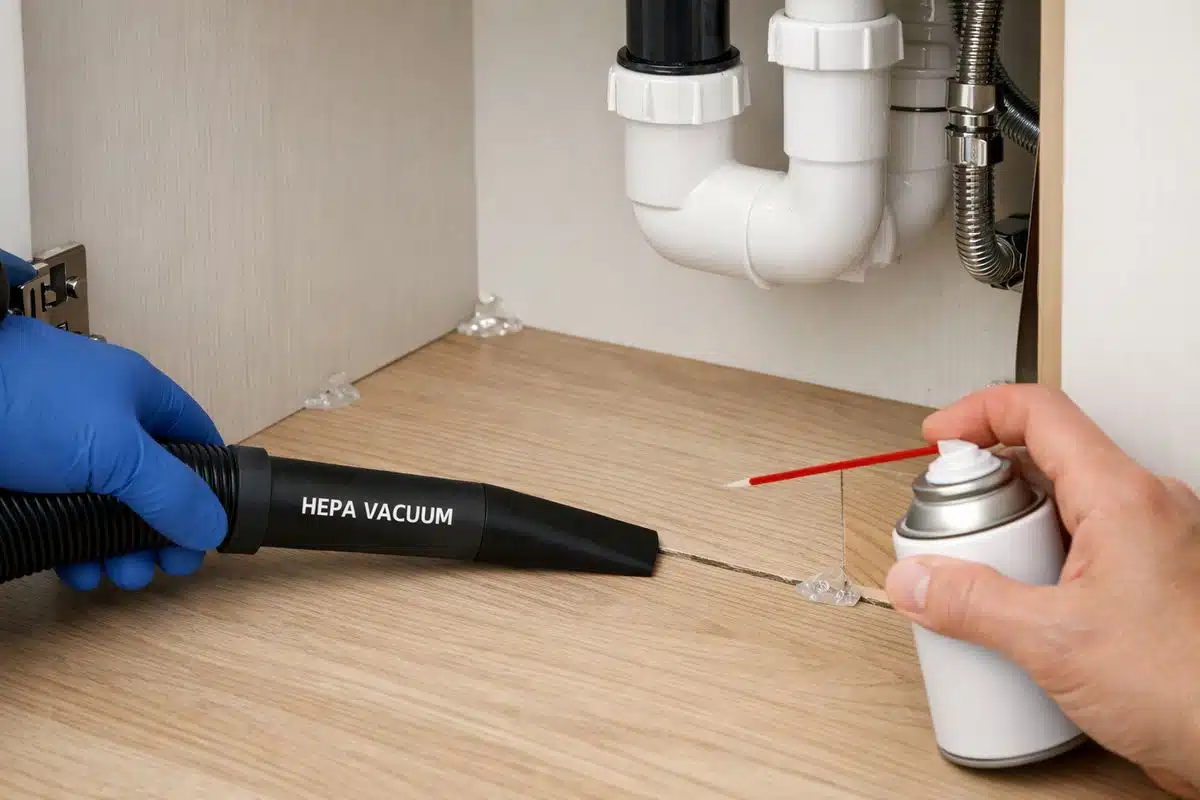
HEPA vacuuming is another good sign, especially in heavy infestations. It helps remove live insects, egg cases, debris, and allergen-heavy material before or alongside treatment. That is useful in homes, but it matters even more in restaurants, childcare settings, and high-density housing.
Crack-and-crevice treatment means the company is targeting the actual hiding places instead of fogging open space. That is what you want. If a proposal mentions only perimeter spray, ask for more detail.
When resistance and bait aversion should be part of the conversation
German roaches are famous for adapting. Some populations stop responding well to the same active ingredients over time, and some develop bait aversion, meaning they start avoiding certain formulations. A stronger company talks about this plainly.
You want to hear that the plan can change if results flatten out. That may mean rotating active ingredients, changing bait types, or shifting placement based on trap counts and follow-up findings. Research on product rotation supports this because repeating the same thing over and over can make resistance problems worse.
If a company uses the exact same treatment every visit for every property, that is not consistency. That is laziness.
Questions to Ask Before You Hire a German Roach Exterminator
Price matters, but the answers to a few direct questions matter more. A good company should be able to explain the process in plain language without getting defensive or vague.
“What exactly is your process after the first visit?”
This question gets right to the point. You want the timeline, the follow-up schedule, how progress is measured, and what changes if activity continues. Ask how many visits are typical, how soon traps are checked, and what happens if you still see daytime activity after service.
A strong answer includes a sequence, not a shrug. It should sound like a plan with checkpoints.
“Do you treat German roaches with an IPM approach?”
IPM means integrated pest management. In regular language, that is inspection, targeted treatment, sanitation guidance, monitoring, and fixing the access or harborage issues that keep the infestation alive. It is not a fancy word for “we spray carefully.”
Listen for substance. The company should talk about inspection findings, bait placement, follow-ups, moisture issues, sanitation trouble spots, and sealing gaps. If the answer is just “yes, absolutely, we do IPM,” with no explanation, keep pushing.
“Who handles repairs, exclusion, and sanitation guidance?”
This question matters more than most people expect. German roach control often depends on fixing leaks, closing gaps around pipes, securing loose escutcheon plates, sealing cabinet voids, and improving storage or cleaning routines. But not every pest company handles those corrections directly.
You need to know what is included, what is only recommended, and what gets handed off to you, your maintenance team, or a contractor. In a house, that could be a minor plumbing leak under the sink. In an apartment building, it could be open utility penetrations between units. Those gaps should not be treated like side notes.
“What experience do you have with my kind of property?”
A single-family home in Frisco is not the same as a restaurant kitchen in Plano or a shared-wall complex in Dallas. Property type changes the plan. Restaurants need tighter documentation, more aggressive monitoring, and off-hours coordination. Multi-unit housing needs building-wide thinking. Larger homes may need more discreet placement and more coverage across utility spaces, secondary kitchens, or pool bath areas.
If you run a food business, it also helps to compare vendors against guidance built for commercial kitchen pest decisions. The more your situation resembles a high-pressure environment, the less you want a generic answer.
How to Compare Quotes Without Getting Tricked by the Cheapest Option
A cheap quote can get expensive fast if it leaves you repeating service for months. When you compare estimates, compare scope first and price second.
What should be included in the estimate
A solid estimate should mention what the inspection found, where treatment will happen, what treatment types are being used, how follow-up works, and what improvement timeline is realistic. It should also tell you what prep is actually needed and what exclusion or sanitation corrections are recommended.
If you are sorting through prices across DFW, it helps to understand what fair local pricing usually includes. The useful comparison is not lowest number versus highest number. It is lowest accountability versus highest accountability.
Red flags in vague or overly simple proposals
Watch for phrases like “full spray treatment” with no explanation. Watch for no mention of baiting, no mention of follow-up, or promises to wipe out a heavy infestation in one visit. Be careful with unusually low prices that seem to cover everything but do not spell out what “everything” means.
Another red flag is refusal to explain methods. You do not need trade secrets. You do need clarity.
If a company points you to a general sales page like this local roach control overview but cannot explain how the actual treatment plan changes for German roaches, keep looking.
What guarantees actually mean
A real guarantee tells you what happens if activity continues. It should explain retreat terms, timelines, limits for multi-unit buildings, and what conditions can void the coverage. In apartments and condos, a guarantee on one unit may mean less if neighboring units are untreated and roaches are moving through shared plumbing and wall voids.
No honest company should promise instant elimination for a heavy infestation. Improvement can start fast, sometimes within days, but elimination usually takes repeat evaluation and follow-up.
Choosing for Your Situation: Home, Restaurant, or Multi-Unit Property
The right exterminator depends in part on where the infestation is happening. Same pest, different demands.
If you’re hiring for a home
For a home, you want a company that can balance thorough treatment with normal life. Ask how kitchen and bathroom areas will be handled, what products go where, and how much prep is truly necessary. Honestly, some companies ask for far too much. In many cases, a good plan does not require turning your house upside down.
If children or pets are in the home, ask where baits are placed and how access is managed. Good answers are specific, calm, and practical.
If you’re hiring for a restaurant or food business
Restaurants need tighter control and better documentation. Ask about off-hours service, coordination with inspections, treatment around prep areas, drain and equipment-line monitoring, and what records you will receive after each visit.
German roaches in a food business are not just annoying. They threaten operations, reputation, and compliance. You need a company that treats the kitchen like a working system, not just another residential-style stop.
If you’re hiring for apartments, condos, or other shared buildings
Shared buildings are where weak vendors get exposed. Treating one unit alone often fails because German roaches move through wall voids, plumbing gaps, and utility lines. Successful control depends on coordination, communication, common-area checks, and unit-to-unit planning.
Ask how the company handles neighboring units, tenant communication, trap mapping, and gaps around shared pipes. If the answer ignores building spread, the plan is incomplete.
Common Hiring Mistakes That Cost You Time
A lot of wasted money in roach control comes from buyer mistakes that are easy to avoid once you know what to look for.
Picking based on speed or ad visibility alone
The first company to answer the phone is not automatically the best German roach exterminator. Big ad presence means marketing budget, not necessarily better process. What matters is depth: inspection quality, bait strategy, follow-up schedule, and property-specific experience.
Assuming cleaning alone will solve the problem
Cleaning helps, absolutely. But it does not replace treatment in an established infestation. German roaches can survive on tiny resources, even things like glue, soap residue, and toothpaste. So if a company makes you feel like the whole problem is just housekeeping, that is a bad sign.
Sanitation should support the plan, not substitute for the plan.
Waiting too long to escalate a failing service
If you still have daytime sightings, no documented monitoring, no trap data, and no meaningful improvement after follow-ups, stop repeating the same service out of habit. A weak vendor rarely becomes a strong one by visit number five.
That is especially true in restaurants and multi-unit buildings, where delay gives the infestation more room to spread.
Your Shortlist: The 5 Things to Confirm Before You Book
Before you book, confirm five things. One, the company starts with inspection, not a generic spray quote. Two, the plan is bait-based and targeted to hiding spots. Three, follow-up visits are scheduled, not optional afterthoughts. Four, the company has experience with your property type. Five, monitoring and exclusion are part of the conversation, not left out because they are less flashy.
That short list will filter out most bad fits.
Try one thing this week: call every company still on your shortlist and ask, “What exactly changes after the first visit if trap counts or sightings stay high?” The company worth hiring will have a real answer.
Frequently Asked Questions
How long does it take a German roach exterminator to work?
You may notice improvement within a few days, but full elimination usually takes more than one visit. Heavy infestations often need several weeks of baiting, monitoring, and follow-up before activity stops consistently.
Is spray treatment enough for German roaches?
Usually not. German roaches hide deep in cracks, voids, and appliance gaps, so broad spray alone often misses the core infestation. Baiting, monitoring, and follow-up are usually much more effective.
Do you need to empty cabinets before treatment?
Not always. Some situations need light prep for access, but a good company should explain exactly what is necessary and why. If the prep list feels extreme, ask whether it is truly required for the treatment method being used.
What should you do if roaches come back after service?
Ask for the trap data, inspection notes, and the revised plan. If the company is repeating the same treatment without adjusting bait placement, monitoring, or exclusion work, it may be time to switch vendors.
Are German roaches worse in apartments and condos?
Yes, often. Shared walls, plumbing lines, and utility penetrations make unit-to-unit spread much more likely. That is why single-unit treatment in a shared building often falls short.
What is the biggest red flag when hiring a German roach exterminator?
A promise to eliminate a serious infestation in one visit is the biggest one. For German roaches, real control is a process, not a magic trick.
