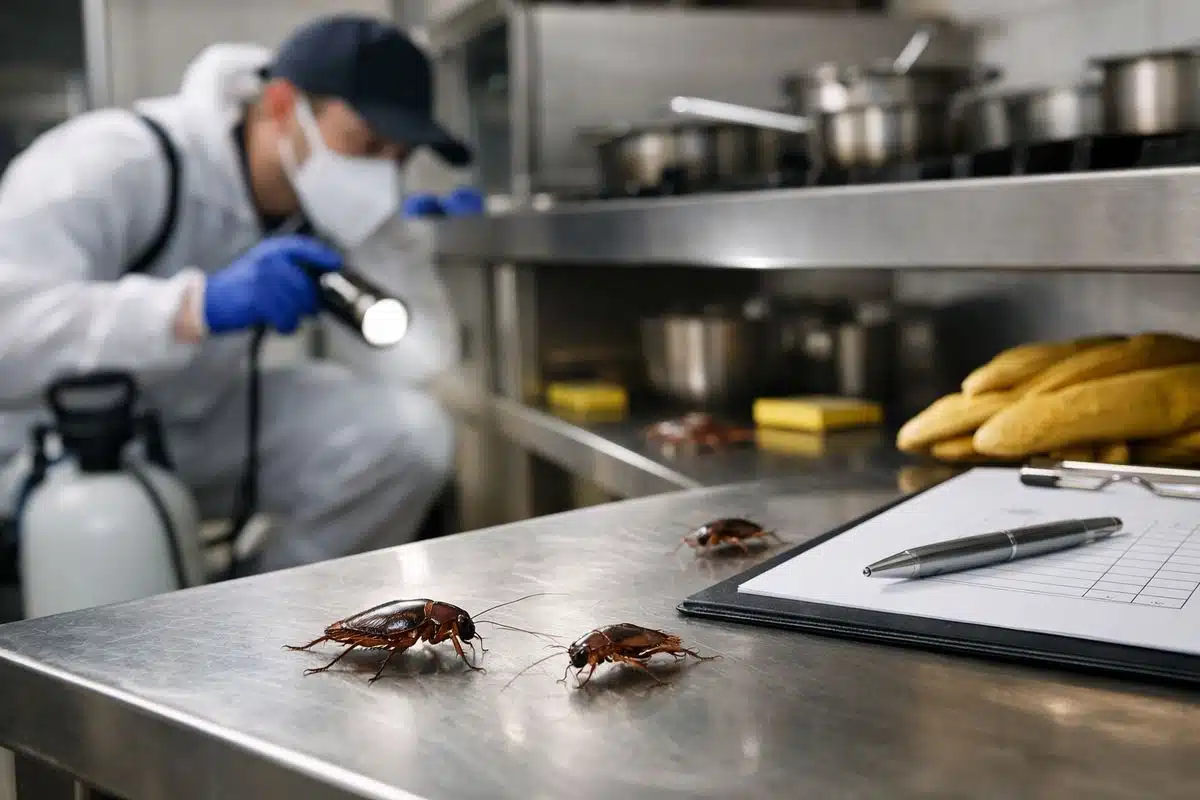
Hiring for restaurant roach control gets stressful fast because every company sounds confident on the phone, and confidence is cheap. What matters is whether the plan actually fits a working kitchen, catches the hidden activity, and holds up after the first visit.
Why restaurant roach control is a different kind of hire
A restaurant roach problem is not the same as a one-time spray around a house. In a food-service space, roaches can turn into inspection issues, staff complaints, customer reviews, and lost business in a hurry. That is why the cheapest bid is often the most expensive fix. If it misses the source, you pay twice.
Roaches are not just gross. They are a food-safety problem. Research has found 96.6% of cockroaches in one study carried bacteria, including E. coli. In a restaurant, that matters every time pests move from drains, grease, or trash areas toward prep surfaces.
What makes restaurants so hard to treat
Restaurants give roaches exactly what they want: heat, grease, water, hiding spots, and plenty of nighttime activity. Dish stations stay damp. Floor drains hold residue. Equipment creates warm voids. Cardboard in storage gives cover. Even a clean kitchen can still have compressor heat, pipe gaps, and cracks behind the cook line.
The usual hotspots are predictable once you know where to look. Under sinks, around grease traps, behind refrigeration units, at wall penetrations, near mop closets, and around dishwashing areas tend to show up again and again. A public inspection report from West Chester documented a multigenerational infestation concentrated near the three-bay sink, hand sink, and grease trap. That pattern is not unusual.
Why “spray and go” usually fails
Surface spraying sounds satisfying, but it often misses where roaches actually live. Most stay tucked deep in cracks, voids, motor housings, drains, and equipment seams, then come out when the kitchen goes quiet. Kill a few visible ones and the nest keeps going.
The better approach is IPM, short for integrated pest management. That means inspection, monitoring, targeted treatment, sanitation corrections, moisture control, and sealing entry points. If a company never brings up IPM, or at least describes that kind of plan in plain English, keep looking.
Ask how the inspection works before asking about price
Price matters, but not before inspection. A real inspection should feel detailed, specific, and a little nosy. That is a good thing.
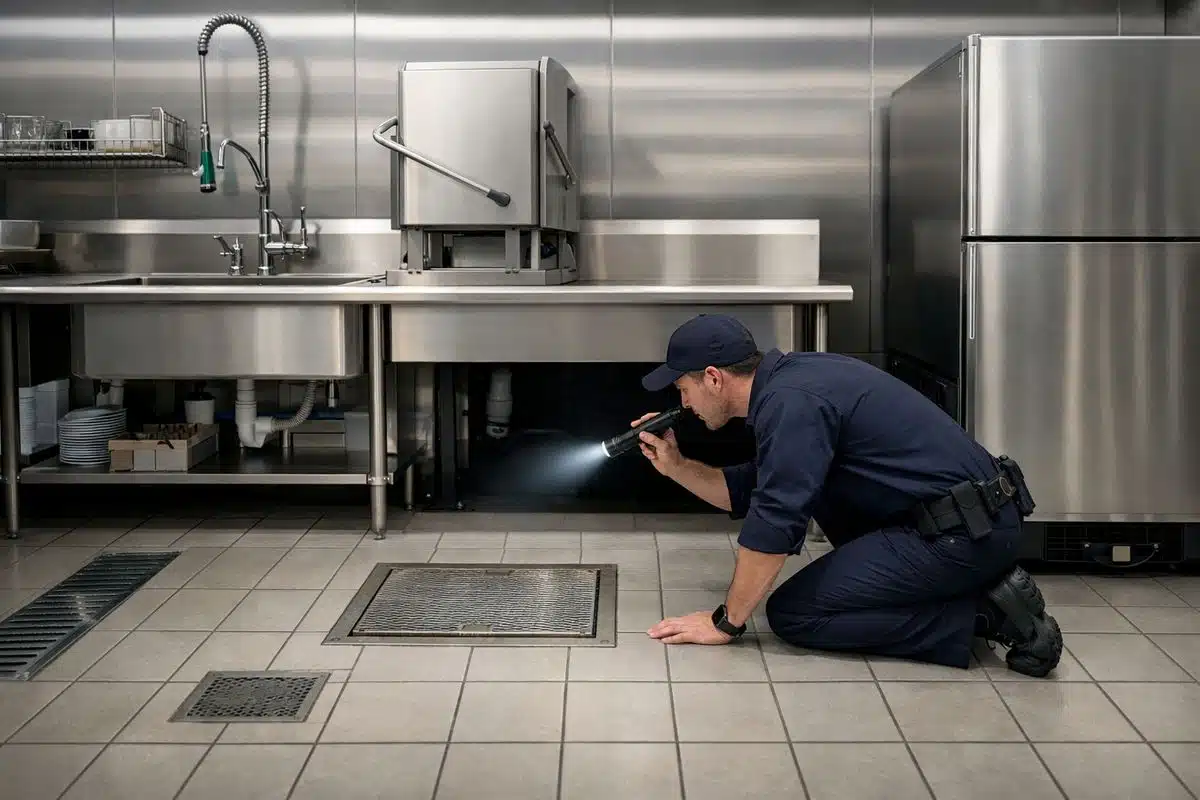
If a company gives a confident quote without checking drains, equipment, wall voids, and utility penetrations, treat that as a warning sign. The better question is not “How much?” right away. It is “What exactly are you going to inspect, and how long will it take?” If you want a deeper baseline for that part, it helps to know what a proper inspection should include before comparing bids.
Which areas will you inspect first?
A qualified provider should be able to name the high-risk zones without any prompting. Under sinks. Dish areas. Floor drains. Mop closets. Behind and under appliances. Dry storage. Dumpster areas. Bar stations. Employee break spaces.
That answer tells you a lot. If the company jumps straight to baseboards and open floors, that is not enough. Roaches like edges, voids, moisture, and hidden warmth. The inspection should follow those conditions, not just the easiest walking path through the building.
Do you use monitors or traps to confirm activity?
Visual checks alone miss light infestations. Roaches are mostly active at night, which is why monitors matter so much. Sticky traps and insect monitors help confirm where activity is happening, how heavy it is, and whether treatment is working after the first visit.
A strong provider should talk about monitor placement with some detail. Near walls, corners, shelving, drawers, beverage stations, storage, compressor areas, and other protected edges. Not dropped randomly in the middle of a floor like an afterthought. Here’s the thing: if a company cannot show you how it measures progress, it is asking you to trust guesswork.
Will you document findings in a way I can actually use?
Good documentation is more than “treated kitchen.” You want mapped hotspots, likely entry points, sanitation notes, moisture issues, treatment locations, and a follow-up plan. That record helps with internal accountability, staff training, property oversight, and inspection readiness.
It also tells you how organized the service is likely to be. Neat paperwork usually goes with neat field work. Sloppy notes often do not.
Ask exactly how treatment will work in a food-service environment
This is where sales talk gets exposed. The right treatment plan in a restaurant should sound targeted, controlled, and practical. Not dramatic.
A solid company should explain what gets used where, what is avoided near food-contact areas, and how the schedule fits a live kitchen. General promises like “strong chemicals” or “industrial treatment” are not reassuring. Honestly, those phrases usually mean nothing.
What treatment methods do you use besides sprays?
Sprays have a role, but they should not be the whole plan. Better providers usually combine baits, crack-and-crevice treatments, dusts for dry voids, insect growth regulators, drain treatments where appropriate, traps, and monitors. Different tools solve different parts of the problem.
That mix matters because restaurant infestations rarely behave the same way in every zone. A damp drain line, a dry wall void, and a greasy compressor area do not respond the same way. Research and field guidance both point toward targeted baits over sprays for many roach situations, especially when the goal is to reach hidden activity instead of just knocking down visible insects.
How do you handle bait resistance and recurring infestations?
This is one of the smartest questions you can ask. Roaches can stop responding to the same bait formula over time. If the provider keeps applying the exact same product, visit after visit, the program can stall out.
Ask whether bait types are rotated and whether tactics change when activity continues. Ask what happens after two or three visits if monitors still show pressure. If recurring activity is centered around German roaches, it helps to understand why that species takes a different strategy, because those infestations often expose weak service plans fast.
How do you protect food, prep areas, and service hours?
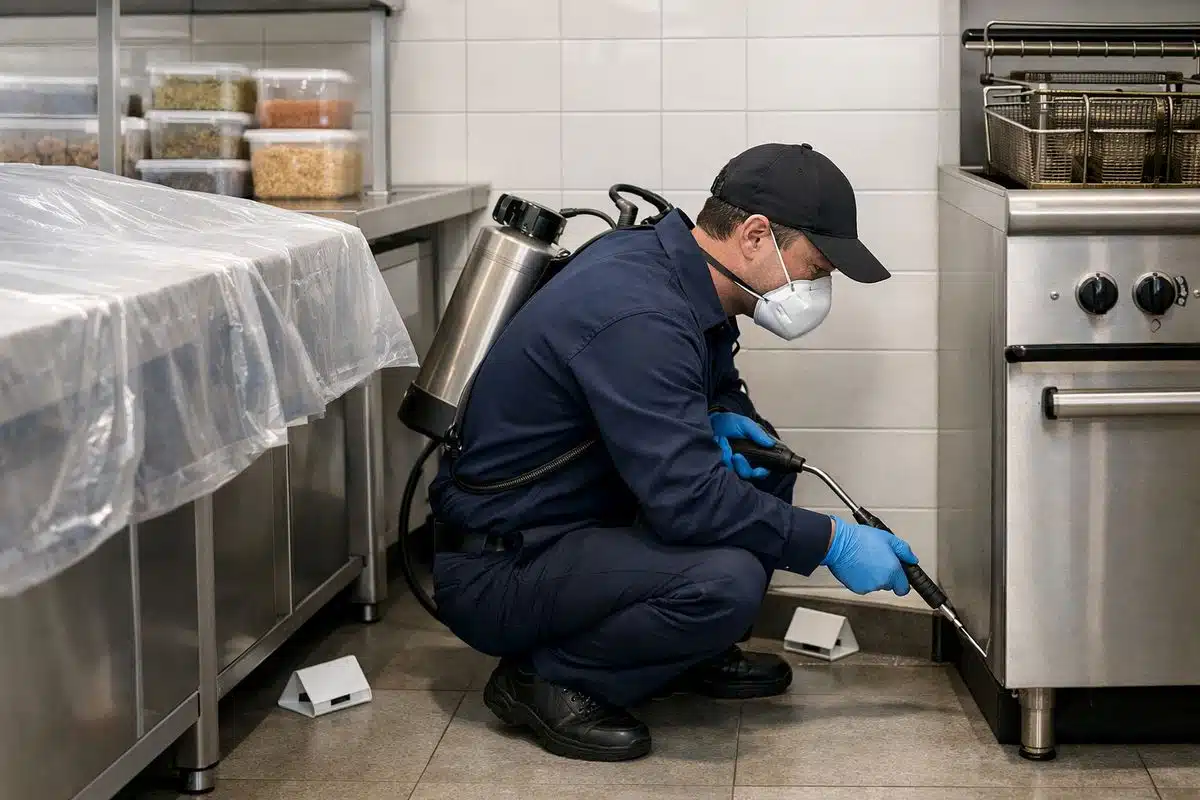
Any company worth hiring should be comfortable explaining food-safe application practices. That includes protecting exposed food, covering or clearing prep zones when needed, giving clear reentry instructions, and coordinating timing with management.
Early morning service is often a smart fit because equipment is easier to access before everything heats up and the kitchen gets busy. The catch is communication. If the company seems vague about food-contact rules or cannot explain what your staff needs to do before treatment, that is not a small issue.
Ask what part of the problem you’ll still need to fix
Chemicals alone do not solve a restaurant infestation. A good provider will say that plainly.
That does not mean shifting all blame onto housekeeping. It means being honest about what keeps the infestation alive. Roaches need food, water, shelter, and access. If those conditions stay in place, control gets harder and callbacks get more likely.
What sanitation and moisture issues are keeping the infestation alive?
Ask for specifics. Leaks under sinks. Standing water near dish stations. Grease buildup under equipment. Food debris in hard-to-reach corners. Overflowing trash. Cardboard clutter. Drain residue.
A serious provider should connect those conditions to actual pest activity, not just lecture about cleanliness. For example, if monitor counts spike near a mop sink or under a prep cooler, the sanitation or moisture note should match that finding. Cause and effect. Simple as that.
Do you handle exclusion, or just point it out?
Exclusion just means sealing the ways roaches get in or move around. Gaps around pipes, loose escutcheon plates, cracked base joints, missing door sweeps, and wall penetrations all matter.
Some companies handle minor sealing. Some coordinate with maintenance. Some only leave a repair list. Any of those can work, as long as you know which one you are getting. If you are also comparing service structure, this is where one visit versus ongoing protection starts to matter, because exclusion and follow-up usually decide whether the problem stays gone.
What should staff change starting this week?
A good answer here should be practical, not preachy. Staff should report sightings right away, clean under equipment more consistently, manage mop water, rotate stock, reduce overnight food sources, and check incoming boxes before storage.
Think of it like tightening the lid on a cooler. Small changes help the whole system work. The best providers leave you with a short list your team can actually follow this week.
Ask about follow-up, guarantees, and what happens if roaches show up again
The first visit is just the opening move. Active infestations live or die on follow-up.
This is where vague “guaranteed” language falls apart. You want to know what happens next, how fast, and under what conditions.
How often will service happen at the start?
An active restaurant infestation often needs tighter follow-up at the beginning, not a casual monthly stop. Service frequency should match the layout, severity, and number of risk zones.
If the kitchen has drains, cook lines, bars, storage, and shared walls with adjacent tenants, the plan should reflect that complexity. A strong provider explains why the first phase is weekly, biweekly, or otherwise adjusted, then what would justify tapering off later.
What does your guarantee actually include?
Ask what the guarantee covers in plain English. Retreatments? Response time? Emergency calls? Hidden fees? Sanitation-related exclusions? Weekend calls?
The best answer is specific and boring. That is a compliment. “If activity continues, here is when you call, here is when somebody returns, and here is what is included” is much more useful than “100% satisfaction guaranteed.”
What will you do if activity continues after the first few visits?
This question separates problem-solvers from repeat sprayers. The right answer should include deeper inspection, shifting bait strategy, adding monitors, checking hidden harborage, reviewing sanitation and moisture notes again, and coordinating repairs if needed.
If the answer is basically “we’ll spray again,” move on.
Ask for proof that the company knows restaurants, not just pests
Restaurant work comes with pressure. Inspections are public. Reviews stick around. A single sighting near the bar on a Friday night can become a Monday headache.
So yes, pest knowledge matters. But restaurant-specific experience matters just as much.
How much restaurant-specific experience do you have?
Ask about accounts similar to yours: independent restaurants, bars, ghost kitchens, cafeterias, or multi-tenant food spaces. Years in business sound nice, but what you really want is relevant experience solving repeat problems in active kitchens.
The best answers sound concrete. Not “lots of restaurants.” More like “full-service kitchens with floor drains, shared tenant walls, and late-night cleanup challenges.” That kind of detail shows real familiarity.
Can you share licenses, insurance, and service records?
This part should be easy for the company. State licensing, technician credentials, insurance, and service documentation should be ready to send without delay.
Organized paperwork is not just administrative polish. It usually signals a company that runs clean routes, tracks visits properly, and takes accountability seriously.
Can you show recent results or references from similar accounts?
Useful proof is specific. Monitoring trends that improved over time. Reviews mentioning responsiveness. References from restaurant managers. Before-and-after notes from difficult accounts.
You are not looking for perfection. You are looking for evidence that the company can respond, adjust, and communicate when things get messy.
Red flags that should make you keep looking
Some warning signs show up early. Save yourself the headache and treat them seriously.
Vague answers, instant quotes, and one-size-fits-all plans
If the company prices the job before inspection, promises a fast spray fix, or cannot explain how it handles drains, equipment voids, or follow-up, that is enough reason to pass.
No mention of IPM, monitoring, or exclusion
If inspection, monitors, sealing, moisture, and sanitation never come up, the plan is incomplete from the start. In restaurant work, incomplete plans fail loudly.
Guarantees that sound great until you read the fine print
Watch for callback fees, weak response times, and guarantees that shift every responsibility onto housekeeping while offering no corrective path. A guarantee should clarify service, not dodge it.
A simple hiring checklist you can use on your next call
By this point, the pattern is clear. You are not hiring the best ad. You are hiring the clearest process.
The 10 questions worth asking every company
Use this shortlist on your next call:
- Which areas will you inspect first?
- Do you use monitors to confirm activity?
- How will you document findings?
- What methods do you use besides sprays?
- How do you handle bait resistance?
- How do you protect food and prep areas?
- What sanitation or moisture issues need fixing?
- Do you handle exclusion or leave a repair list?
- How often will follow-up happen at the start?
- What restaurant references can you share?
How to compare answers side by side
Score each company on thoroughness, clarity, restaurant experience, follow-up plan, documentation, and willingness to address root causes. Price still matters, of course, but only after the plan makes sense.
Try one thing this week: ask every company to walk through its inspection and follow-up plan in plain English before talking price. The right hire usually becomes obvious within five minutes.
Frequently Asked Questions
How long does restaurant roach control usually take?
Visible improvement can start quickly, sometimes within days, but full control usually takes longer. Active infestations often need multiple visits, monitoring, sanitation changes, and sealing work before the problem is truly under control.
Are roach treatments safe around food?
They should be, if the company uses the right methods and follows food-service rules carefully. Ask exactly how prep areas are protected, what needs to be removed or covered, and when staff can safely return to treated areas.
What if roaches only show up at night?
That is common. Roaches are mostly nocturnal, which is why inspection and monitoring matter so much. A company that relies only on daytime visual checks can miss light or hidden activity.
Can cleaning alone fix a restaurant roach problem?
Usually not. Better sanitation helps a lot, but it does not remove roaches hiding in wall voids, drains, equipment seams, and other protected spaces. Lasting control usually needs targeted treatment plus sanitation and exclusion.
How often should a restaurant get follow-up service after an infestation?
It depends on activity level and layout, but active infestations often need more frequent visits at the start than routine preventive service. The right provider should explain the schedule and tell you what would justify adjusting it later.
What is the biggest mistake when hiring for restaurant roach control?
Choosing based on price before understanding the inspection and follow-up plan. Cheap service that misses drains, voids, and recurring pressure is not cheap for long.
