Why Do Bugs Come Back After Pest Control Treatment?
You had your home treated for pests. Everything looked good for a few days, and then you spotted another ant in the kitchen, a cockroach in the garage, or a spider in the bathroom.
Does that mean the pest control treatment didn’t work?
Not necessarily.
Seeing pest activity after a treatment can be frustrating, but there are several reasons it happens. Some are a normal part of eliminating an existing pest population. Others indicate that pests are continuing to enter the home because the conditions that attracted them haven’t changed.
Understanding the difference can help North Texas homeowners know when to give a treatment time to work and when continued activity deserves another look.
Pest Control Isn’t an Invisible Force Field
One of the biggest misconceptions about professional pest control is that a treatment creates an impenetrable barrier around the house.
It doesn’t.
Your home remains part of the surrounding environment. Ants can travel across lawns. Spiders follow insects. Cockroaches search for moisture. Rodents investigate structures looking for food and shelter.
Professional pest management is intended to control pest populations and reduce the conditions that allow them to establish themselves in and around a home. It cannot prevent every insect from ever crossing your property.
An occasional pest and an established infestation are two very different things.
Seeing Pests Immediately After Treatment Can Be Normal
Depending on the pest and treatment method, homeowners may temporarily notice more activity after a service.
Treatments can disturb pests hiding in cracks, wall voids, landscaping, cabinets, plumbing areas, and other protected locations.
Instead of remaining hidden, they may begin moving through areas where homeowners can see them.
That doesn’t necessarily mean there are suddenly more pests. You may simply be seeing pests that were previously concealed.
Treatments Don’t Always Kill Pests Immediately
Different pest control products work differently.
Some treatments are designed to act quickly. Others work gradually so pests have time to contact the treatment and potentially transfer it to other members of a colony or population.
The appropriate approach depends on the pest being treated.
Expecting every insect to disappear immediately after treatment can create the impression that a service failed when the treatment is actually still working.
Eggs Can Survive the Initial Treatment
Another common reason pests appear after treatment is their life cycle.
Some pest eggs are protected inside capsules, nests, cracks, or other locations that make them difficult to reach during the initial service.
Those eggs may hatch afterward.
This can create a second wave of visible activity even though many of the adult pests were eliminated.
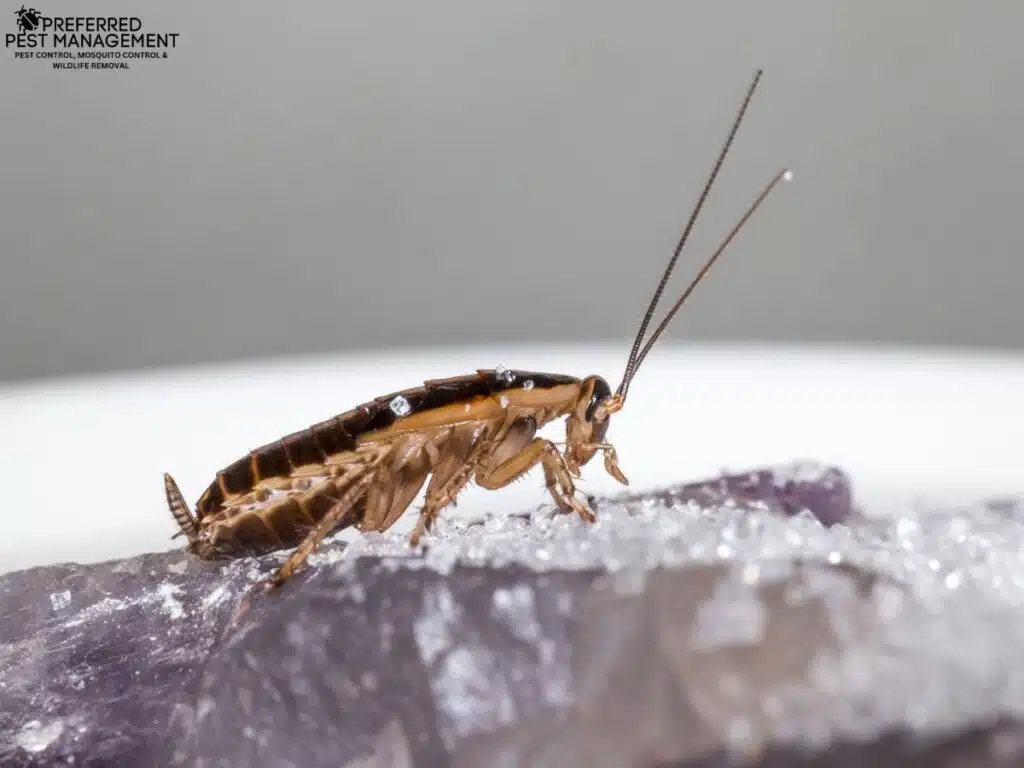
Cockroaches are a good example. Their egg cases can contain multiple developing young, and eliminating an established population may require breaking the reproductive cycle rather than simply killing the insects visible during the first visit.
Fleas present another challenge because different stages of their life cycle may be present throughout the home.
This is why pest management often focuses on the entire life cycle rather than only the pests you can see.
The Visible Pests May Be Only a Small Part of the Problem
Homeowners usually notice pest problems when insects enter visible living areas.
But the actual population may be somewhere else.
Ant colonies may be outdoors or inside wall voids.
Cockroaches may be behind appliances, inside cabinets, or around plumbing.
Rodents may spend most of their time in an attic or wall cavity.
Spiders may be feeding on insects around exterior lighting before occasionally entering the house.
Treating only the individual pests that appear in living spaces doesn’t necessarily address the source.
Professional pest management attempts to determine where pests are coming from and why they’re there.
New Pests Can Enter After Treatment
Sometimes the pest you see isn’t part of the original infestation at all.
It’s a new arrival.
North Texas homes are constantly exposed to pest pressure from the surrounding environment. Lawns, neighboring properties, drainage areas, greenbelts, parks, wooded areas, and construction sites can all support pest populations.
New insects can simply wander onto the property after a treatment.
This becomes especially noticeable during periods of high seasonal activity.
North Texas Weather Can Change Pest Activity Overnight
Weather has a major influence on pest behavior throughout Plano, Murphy, Richardson, Sachse, Rowlett, and surrounding communities.
Heavy Rain
Rain can flood ant colonies and other underground nesting areas, pushing insects toward homes and other dry structures.
Standing water can also increase mosquito breeding.
Extreme Heat
Long periods of North Texas heat can drive cockroaches, ants, and other pests toward shaded areas and indoor moisture sources.
Drought
When natural water sources become scarce, insects and rodents may move closer to homes looking for moisture.
Cold Fronts
Falling temperatures frequently increase rodent pressure as mice and rats search for protected places to shelter.
A successful pest treatment cannot stop weather from creating new pest pressure around a property.
Your Landscaping May Be Working Against You
Sometimes recurring pest activity has less to do with the treatment and more to do with the environment immediately surrounding the house.
Common examples include:
- Shrubs touching exterior walls
- Tree limbs reaching the roof
- Heavy mulch against the foundation
- Leaf litter around the house
- Firewood stored against exterior walls
- Overwatered landscaping
- Standing water
- Dense ground cover
- Bird feeders near the house
- Pet food left outdoors
These conditions provide pests with food, moisture, shelter, or convenient pathways toward the structure.
Pest control works considerably better when these conditions are addressed.
Structural Openings Can Keep Letting Pests Inside
A house can have dozens of potential pest entry points.
Common examples include:
- Damaged door sweeps
- Garage door gaps
- Utility penetrations
- Plumbing openings
- Foundation cracks
- Gaps around windows
- Damaged screens
- Roofline openings
- Attic vents
- Expansion joints
Brick homes also contain weep holes that are intentionally left open to allow moisture to drain from behind the brick veneer. They shouldn’t simply be filled with caulk or foam to stop insects.
When pest activity repeatedly occurs in the same area, identifying how pests are entering can be just as important as treating them.
Food and Water Sources Matter
Pests don’t enter homes randomly.
They’re usually looking for one or more basic resources:
Food. Water. Shelter.
Even small amounts can sustain pest populations.
Examples include crumbs underneath appliances, grease around cooking areas, pet food, improperly stored pantry products, leaking pipes, condensation, overflowing garbage, and standing water.
Removing these resources doesn’t guarantee that pests will disappear, but it makes the environment much less favorable for them.
Why Ants Can Be Especially Frustrating
Ant problems illustrate why simply killing visible insects isn’t always enough.
The ants walking across your countertop may represent only a small fraction of a colony.
Worker ants leave the nest to search for food and water. Killing those workers doesn’t necessarily affect the queen or the rest of the colony.
Depending on the species, inappropriate treatment can even cause colonies to relocate or split.
Successful ant management begins with identifying the ant and understanding its behavior.
Why Cockroaches May Require Follow-Up
An established cockroach population can be difficult to eliminate in a single visit.
Cockroaches reproduce quickly, hide in extremely small spaces, and may remain concealed during daylight hours.
Control may involve a combination of:
- Targeted treatments
- Baits
- Monitoring
- Sanitation
- Moisture correction
- Follow-up inspections
Seeing occasional activity shortly after treatment isn’t necessarily unexpected. Continued heavy activity is another matter and should be evaluated.
Why Spiders Keep Appearing
Recurring spiders can sometimes indicate another pest problem.
Spiders go where food is available.
If insects are gathering around exterior lights, windows, patios, garages, or landscaping, spiders have a reason to remain nearby.
Reducing spider activity therefore often involves reducing the insects they feed on as well as removing webs and addressing entry points.
Pest Control and Pest Exclusion Are Different
This distinction is particularly important with rodents.
Pest control addresses the pest.
Exclusion addresses how the pest got inside.
A rodent problem can return if mice or rats are removed but openings remain around the structure.
The same principle applies to many insects.
Treatment may reduce the current population, but correcting entry points and environmental conditions can help reduce future pest pressure.
When Should You Be Concerned?
The answer depends on the pest, treatment, infestation level, and conditions around the property.
However, homeowners should contact their pest management provider when:
- Pest activity remains consistently high.
- Activity increases rather than gradually declining.
- The same problem repeatedly returns to the same location.
- New evidence of an infestation appears.
- Rodent noises, droppings, or damage continue.
- The treatment timeline provided by the technician has passed without meaningful improvement.
A good pest management company should be able to explain what level of post-treatment activity is expected and when follow-up is appropriate.
Treatment Failure vs. Continued Pest Pressure
These aren’t necessarily the same thing.
Treatment failure means the intended control method isn’t producing the expected result.
Continued pest pressure means new pests are continually being introduced from surrounding conditions.
A home next to a greenbelt, creek, wooded area, lake, construction site, or poorly maintained neighboring property may experience more outside pest pressure than another home several blocks away.
Understanding the source helps determine the appropriate solution.
What Homeowners Can Do After Treatment
Professional treatment works best when homeowners and technicians address the problem from both sides.
After service:
- Follow any instructions provided by the technician.
- Avoid removing treatment products unless directed.
- Keep food properly stored.
- Repair plumbing leaks.
- Reduce unnecessary moisture.
- Empty standing water outdoors.
- Keep landscaping maintained.
- Inspect door and garage seals.
- Monitor where pests are appearing.
- Report continued activity accurately.
Knowing exactly where and when you’re seeing pests can provide valuable information during a follow-up inspection.
The Goal Is Control, Not Pretending Bugs Don’t Exist
North Texas has a warm climate, long pest seasons, and abundant insect populations.
No legitimate pest management strategy can guarantee that a homeowner will never see another bug.
A better measure of success is whether pest populations are controlled, infestations are prevented or eliminated, and recurring problems are investigated rather than repeatedly sprayed without understanding their cause.
Effective pest management combines treatment with inspection, prevention, exclusion, sanitation, moisture management, and homeowner awareness.
That’s how long-term pest problems are solved.
Frequently Asked Questions
Is it normal to see bugs after pest control?
Some pest activity can be normal immediately following treatment. The amount and duration depend on the pest, treatment method, and severity of the original problem.
Why am I seeing more bugs after treatment?
Treatments can disturb pests hiding in protected areas, causing them to become more visible temporarily.
How long should pest control take to work?
There isn’t one universal timeline. Some treatments act quickly while others are intentionally designed to work gradually. Your technician should explain what to expect for the specific pest being treated.
Does seeing one bug mean I still have an infestation?
No. An occasional insect can enter from outdoors. Repeated sightings, concentrated activity, droppings, nests, damage, or other evidence are more indicative of an established problem.
Why do ants keep returning?
The ants you see are typically workers from a larger colony. Successful control may require identifying and addressing the colony rather than simply killing visible ants.
Can weather make pests return?
Absolutely. Heavy rain, drought, extreme heat, and cold fronts can all cause sudden changes in pest behavior.
Should I spray bugs myself after professional treatment?
Ask your pest management provider first. Applying additional products can sometimes interfere with an existing treatment strategy.
What if the same pest problem keeps returning?
Recurring problems deserve investigation. Entry points, moisture, landscaping, sanitation, neighboring pest pressure, or an unidentified source may be contributing to the problem.
Preferred Pest Management
Preferred Pest Management provides pest control and prevention services for homeowners throughout Plano, Murphy, Richardson, Sachse, Rowlett, and surrounding North Texas communities.
Rather than simply addressing the pest you can see, effective pest management means understanding where pests are coming from, what is attracting them, and what can be done to reduce the likelihood of the problem returning.