If you’re comparing pest companies in Dallas and all you’ve got are quotes, promises, and a glossy website, you’re missing the part that actually protects you: pest control documentation. Good documentation shows what was found, what was done, why it was done, and what happens if the problem comes back, which is exactly what separates a serious provider from a company that simply cashes the invoice and moves on.
Why Pest Control Documentation Matters More Than a Cheap Quote
A cheap quote feels good for about five minutes. Then the roaches come back, your tenant complains again, your kitchen gets flagged, or you realize the “guarantee” was mostly sales language.
That’s why paperwork matters so much. Pest control documentation is the proof behind the promise. If a company says it inspected, monitored, treated, identified the pest correctly, or guaranteed results, there should be records to back that up. Without records, you’re trusting memory and marketing.
This matters even more now because the industry is big, crowded, and getting more formal. The U.S. pest control industry is expected to reach $29.7 billion in 2026, and 34,076 pest control businesses are operating in 2026. In a market with that many providers, documentation becomes a credibility filter.
For Dallas businesses and property owners, it’s also a risk tool. If you run a restaurant, manage apartments, or own a high-value home, poor service doesn’t just mean annoyance. It can mean failed inspections, resident issues, wasted treatments, and repeat costs. Good records make it much easier to spot whether a vendor is actually managing the problem or just repeating the same visit over and over.
The Core Documents Every Dallas Client Should Ask to See
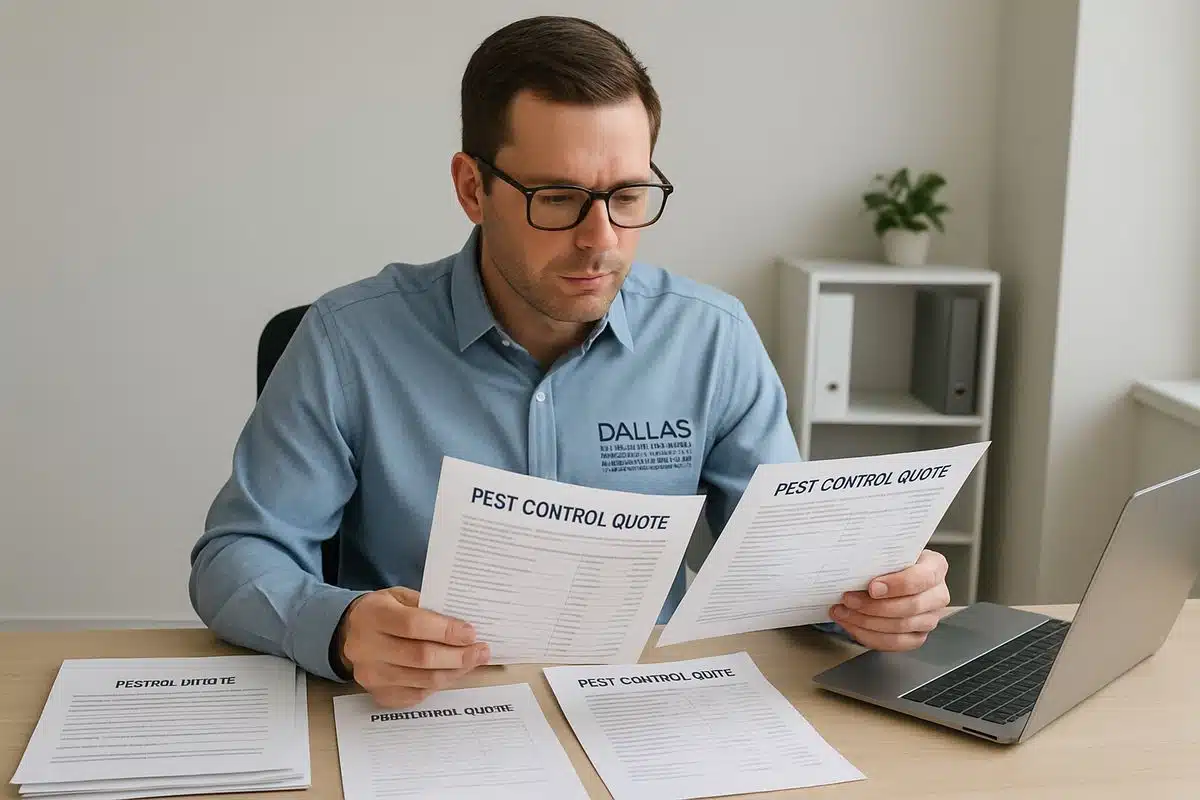
Before you get buried in jargon, start with a simple rule: a real pest control provider leaves more than an invoice. At minimum, you should expect a service report, written inspection findings, treatment details, and follow-up notes that explain what changed.
If a company can’t show you sample documentation before you sign, that’s already telling you something.
Service Reports
A proper service report should answer basic questions without making you chase the office for details. It should include the service date, the property address or serviced area, the findings, pest activity observed, treatment performed, technician name, and what happens next.
That sounds obvious, but plenty of reports are still vague. “General pest service completed” is not a useful record. Neither is “sprayed interior and exterior.” If you’re dealing with roaches, you need to know where activity was seen, how heavy it was, and which areas were treated.
The best reports also note access issues, sanitation concerns, or areas that couldn’t be serviced. That matters later if the company tries to deny a callback by saying the property was not properly prepared.
Inspection Findings and Pest Identification
This is where many buyers get fooled. A company says you have “bugs” or “general roach activity,” and then jumps straight to treatment. That’s sloppy.
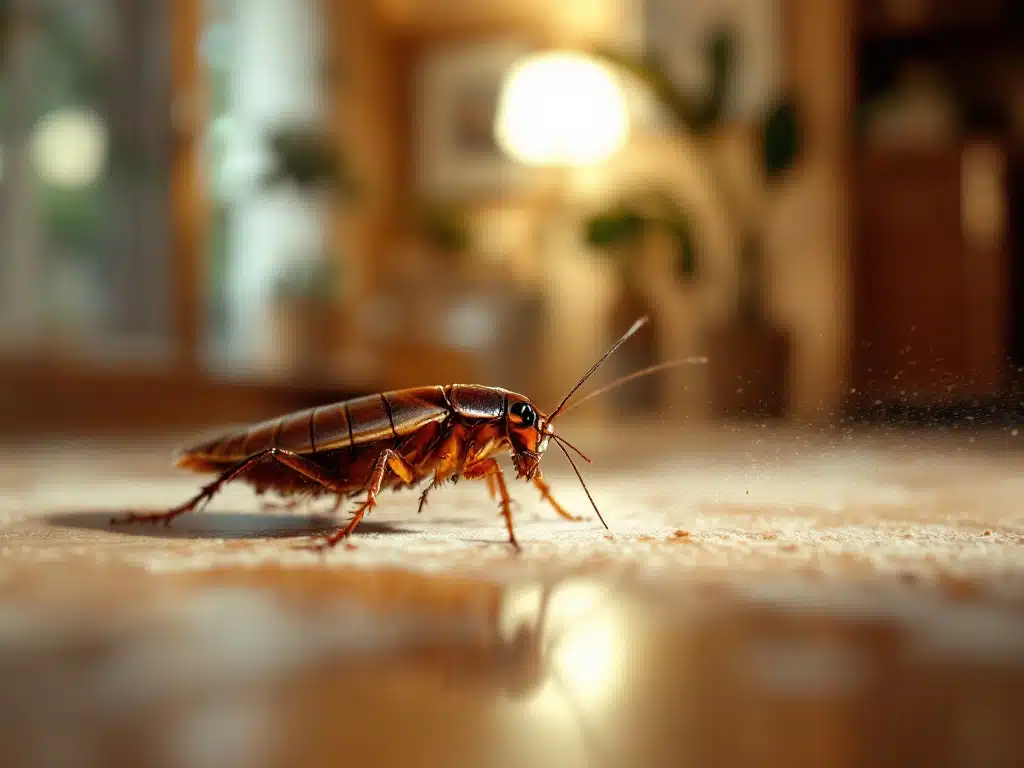
You want written inspection notes and clear pest identification. German cockroaches, American cockroaches, and smokybrown cockroaches do not behave the same way, and treatment strategy should change based on the species, the environment, and the level of infestation. The EPA says IPM depends on monitoring for pests and identifying them accurately so the wrong pesticide isn’t used and unnecessary treatments are avoided.
In plain English, a misidentified pest often leads to wasted money.
For example, a restaurant with German roaches in warm equipment areas needs a very different plan than a warehouse seeing occasional large roaches near dock doors. If the paperwork doesn’t name the pest, you can’t tell whether the treatment fits the problem. For a closer look at how treatment changes by setting, it helps to see the difference between home and business roach service needs.
Treatment Logs and Product Details
“We sprayed” is not documentation. It’s a shrug.
Treatment logs should list the product name, active ingredient, where it was applied, and any quantity or application detail that matters for the site. You should also be able to request safety instructions, especially if the property is occupied by residents, employees, customers, pets, or food-handling staff.
This matters because the pest control industry includes everything from standard insect control to fumigation and heat treatments. Those are not interchangeable services, and the records should clearly reflect which method was used and why.
Good logs also help when one technician says one thing and the next says another. If the product history is clear, you can track whether the company keeps changing methods randomly or following a plan.
Follow-Up and Corrective Action Notes
Strong pest control documentation shows more than one visit. It shows progress, or lack of progress.
After treatment, the next record should explain what changed. Was activity reduced? Were live roaches still found? Were monitors still active? Did the technician recommend sanitation changes, sealing gaps, or plumbing repair? If none of that appears in the notes, you’re probably looking at a spray-first routine instead of real pest management.
This is especially important with roach issues, which usually need follow-up and correction, not just one application. If you’re sorting out service expectations, it helps to understand when recurring service beats a single visit.
What Strong Documentation Looks Like in an IPM-Based Program
IPM stands for Integrated Pest Management. That phrase gets tossed around a lot, but the idea is simple: use evidence, start with prevention and targeted methods, and avoid unnecessary blanket pesticide use.
The EPA describes IPM as a four-step process: set action thresholds, monitor and identify pests, prevention, and control. If a company claims to follow IPM, its records should reflect those four steps. Not just the control part.
Monitoring and Action Thresholds
Monitoring means the company is tracking where pests are found, how much activity exists, and whether the level is severe enough to trigger treatment. In food service, multifamily housing, and other sensitive settings, that’s a big deal.
The EPA says an action threshold is the point at which pest populations or conditions indicate control must be taken. In real life, that means the paperwork should show why treatment happened now, not just that treatment happened.
For a restaurant, that might mean repeated monitor activity behind a prep line. For apartments, it could mean recurring sightings in adjacent units that suggest spread. For an office, maybe it’s activity concentrated in a break room or janitorial closet. The threshold may differ, but the reasoning should still be documented.
Prevention Before Blanket Spraying
Here’s where you find out whether a company is thoughtful or lazy.
The EPA says prevention is the first line of pest control in IPM, and when control is needed, less risky methods should be chosen before broadcast spraying, which is a last resort. So the records should show non-chemical steps when appropriate: sealing gaps, cleaning food debris, reducing moisture, improving storage, adjusting trash practices, or using targeted bait placement.
If every record says some version of “sprayed baseboards,” that’s not IPM. That’s habit.
And honestly, for roaches, blanket spraying is often less impressive than it sounds. Good bait placement, monitoring, sanitation correction, and exclusion usually tell you much more about whether the provider understands the job. If you want a broader framework for that distinction, the difference between residential and commercial service models is worth understanding.
Proof That the Method Matches the Problem
A good service record lets you check the logic. Did they choose baiting for a crack-and-crevice German roach problem? Did they focus on drains, harborage areas, equipment voids, or exterior entry points where that made sense? Did they escalate or de-escalate based on results?
That’s what strong documentation does. It connects the method to the pest, the site, and the severity.
And there’s a practical reason this matters. Pest control now faces stricter pesticide regulations and reporting requirements in 2025, so credible companies should be getting better at documenting not just what they used, but why they used it.
Dallas Businesses With Higher Stakes Should Demand More
Not every property needs the same amount of paperwork. A small, low-risk office may not need the same reporting depth as a restaurant or apartment complex.
But higher-risk properties should absolutely expect more than basic visit notes. If the consequences of failure are bigger, the records need to be stronger.
Restaurants and Food Service Facilities
Restaurants need documentation that can stand up during an inspection. That usually means logbooks, recurring service records, trap or monitor checks, trend notes, product details, and corrective-action recommendations tied to sanitation or structural issues.
A food service vendor should be able to show recurring observations, not just recurring billing. If monitor counts spike in the same area every week, the documentation should show that pattern and the response to it. If a kitchen manager fixed a gap under a sink or improved dry storage practices, that should be noted too.
This is one place where generic reporting falls apart fast. For more specific hiring criteria in that setting, what to verify before bringing in a roach vendor for food service can help.
Apartments, HOAs, and Multi-Unit Properties
Multifamily service needs records at the unit level, not broad statements about the building. Roaches spread. If one provider treats Unit 104, ignores Unit 105, and leaves no prep notes or follow-up trail, the infestation often just moves sideways.
Good documentation here should include unit-by-unit findings, common-area observations, tenant prep issues, missed-access notes, callback history, and recurring hot spots across the property. The property manager should be able to see patterns over time, including which buildings or stacks keep generating complaints.
This is also where documentation protects you from finger-pointing. If a resident says no one came, or the vendor says access was denied, the record should settle that quickly. For multifamily-specific treatment expectations, what usually works best in apartment roach service gives useful context.
Offices, Warehouses, and Retail Spaces
Commercial spaces without food prep still have risk areas. Loading docks, break rooms, employee lockers, vending areas, restrooms, janitorial closets, cardboard storage, and receiving zones often tell the real story.
A good vendor documents those zones clearly and tracks recurring entry points or sanitation problems over time. In warehouses, for example, exterior pressure near dock doors may call for one set of measures, while break room activity points to another. If the records blur those together, you lose the ability to fix the source.
That’s the bigger theme here: documentation should help management act, not just archive a visit.
Licenses, Insurance, and Compliance Records You Should Verify
Service reports tell you how the job is handled. Qualification documents tell you whether the company should be handling it at all.
A reputable pest control provider should be able to share current credentials without acting offended that you asked.
State Licensing and Technician Credentials
Ask for proof of company licensing and technician credentials relevant to the work being performed. If you’re managing a commercial site, don’t assume residential experience automatically translates.
Licensing matters more in a growing, fragmented market. The number of pest control businesses rose from 18,349 in 2005 to 34,076 in 2026, and more competition means more variation in quality. You need proof, not vibes.
For Dallas commercial buyers, it’s smart to review what to verify on the licensing side before you sign. A good company should make this easy.
Insurance Coverage and Claims Protection
Proof of insurance is not optional. You want current general liability coverage, and for companies with field technicians, workers’ compensation matters too.
Why? Because if there’s a misapplication, property damage, chemical drift issue, or an injury on-site, you need to know the contractor has actual coverage in place. If they hesitate or send expired certificates, that’s a problem.
This is one of those boring documents that suddenly becomes very exciting when something goes wrong.
Safety Data and Label Access
If a company is applying products on your property, you should be able to request Safety Data Sheets and product label information. That’s especially true in workplaces, restaurants, schools, health-adjacent properties, and resident-facing environments.
The more professional providers already have this organized. That makes sense because more pest control companies are using software to store digital logs and stay audit-ready, and 41% now use mobile tools to manage jobs in the field. In other words, fast access to safety and treatment records should not be hard in 2026.
The Documentation Behind Any Real Pest Control Guarantee
A “guarantee” with weak paperwork is basically a slogan. If there’s no written scope, no service history, and no clear trigger for reservice, you may have nothing to enforce.
That’s why guarantees should always be read together with the documentation behind them.
What a Written Warranty Should Actually Say
A real warranty should spell out the covered pest, the term length, how retreatments work, response time expectations, exclusions, and what can void coverage. It should also explain whether the guarantee covers reduction, elimination, or only additional service visits.
That last part trips people up. Some companies promise free callbacks, but only under narrow conditions. Others exclude sanitation issues so broadly that almost any roach recurrence can be denied. If the paperwork doesn’t define those terms, the guarantee may not mean much.
A deeper breakdown of what written coverage usually includes and excludes is worth reading before you commit.
Red Flags in Service Agreements and Fine Print
Watch for automatic renewals that are easy to miss, broad exclusions that gut the promise, no defined response window, unclear cancellation rules, or a guarantee that sounds stronger in the sales call than it does on paper.
Also watch for contracts that require ongoing service but never define what “ongoing” includes. Are follow-up visits part of the program, or billed separately? What counts as a callback? Is documentation delivered after every visit, or only on request?
If those details are fuzzy before you sign, they usually get worse after.
Questions to Ask Before You Hire Any Pest Control Company in Dallas
The best hiring questions are not about price. They’re about proof, process, and accountability. You’re trying to find out how the company thinks and how well it documents that thinking.
A polished sales rep can say almost anything. Sample paperwork is harder to fake.
Questions About Inspection and Reporting
Ask whether you’ll receive written findings after every visit. Ask how pest activity is documented, whether reports include location-specific notes, and whether you can review a sample report before signing.
Also ask how quickly documentation is delivered. Same day is ideal. A report that appears two weeks later is much less useful, especially if you’re dealing with a complaint, inspection, or reservice question.
Another smart move is to ask who writes the notes, the technician on-site or the office later. On-site reporting is usually more reliable.
Questions About Roach Treatment Strategy
Ask whether the company identifies the roach species before building the plan. Ask how it decides between baiting, dusting, targeted crack-and-crevice treatment, monitoring, and broader applications. Ask what would trigger a change in strategy if the first round doesn’t solve it.
Then ask what paperwork proves progress. Will the report show monitor counts, sighting locations, recurring units, sanitation issues, and follow-up results? If not, how are you supposed to judge whether the problem is improving?
For a practical list of hiring prompts, a stronger set of vendor-screening questions can make those calls much more productive.
You can also compare a provider’s process against a more treatment-focused reference like this cockroach service resource to see whether the company’s documentation matches the complexity of the work being proposed.
Questions About Contracts, Reservice, and Communication
Ask who your point of contact is after the sale. Ask how reschedules are handled, what qualifies as a callback, and how soon someone returns if live activity continues. Ask whether photos, diagrams, or unit notes are included when needed.
And ask one simple question that reveals a lot: “If I call you six months from now and say the problem came back, what records will you use to decide what happens next?”
A good company will have an answer right away.
Common Documentation Gaps That Should Make You Walk Away
Some paperwork problems are minor. A typo on an address is annoying, not disqualifying.
Other gaps are giant warning signs.
Vague Invoices With No Inspection Notes
If all you get is a receipt with a dollar amount and “pest service completed,” you do not have meaningful documentation. You have proof of payment, nothing more.
That won’t help you evaluate treatment quality. It won’t help you support a warranty claim. It won’t help you prove service history to an owner, board, tenant, or inspector. And it definitely won’t help if the company starts blaming the property later.
No Record of Pest Pressure or Recurring Hot Spots
If the vendor never records where activity is concentrated or whether pressure is rising or falling, it’s probably reacting, not managing.
Trend tracking matters because pest issues are rarely random. Roaches cluster around moisture, food, harborages, and movement pathways. When records show none of that, the company may be repeating a generic routine instead of solving the source.
This is one reason one-and-done sales pitches deserve scrutiny. If you’re dealing with recurring roach activity, why a single treatment often falls short becomes pretty obvious once you look at the documentation.
Missing Recommendations for Sanitation, Exclusion, or Repairs
If every answer is pesticide, something is off.
Roach control often requires cleanup, sealing, moisture correction, storage changes, tenant cooperation, or maintenance repairs. Good documentation should say so plainly. If those recommendations are always missing, the vendor may not be using an IPM mindset at all.
And that matters because EPA guidance frames IPM around monitoring, prevention, and targeted control decisions based on current information, not automatic chemical use.
How to Compare Two Pest Control Providers Using Their Paperwork
When two Dallas providers sound equally confident, compare their sample documents side by side. Not their branding. Not their sales pitch. Their paperwork.
That’s where the difference usually shows.
What to Look for in a Sample Report
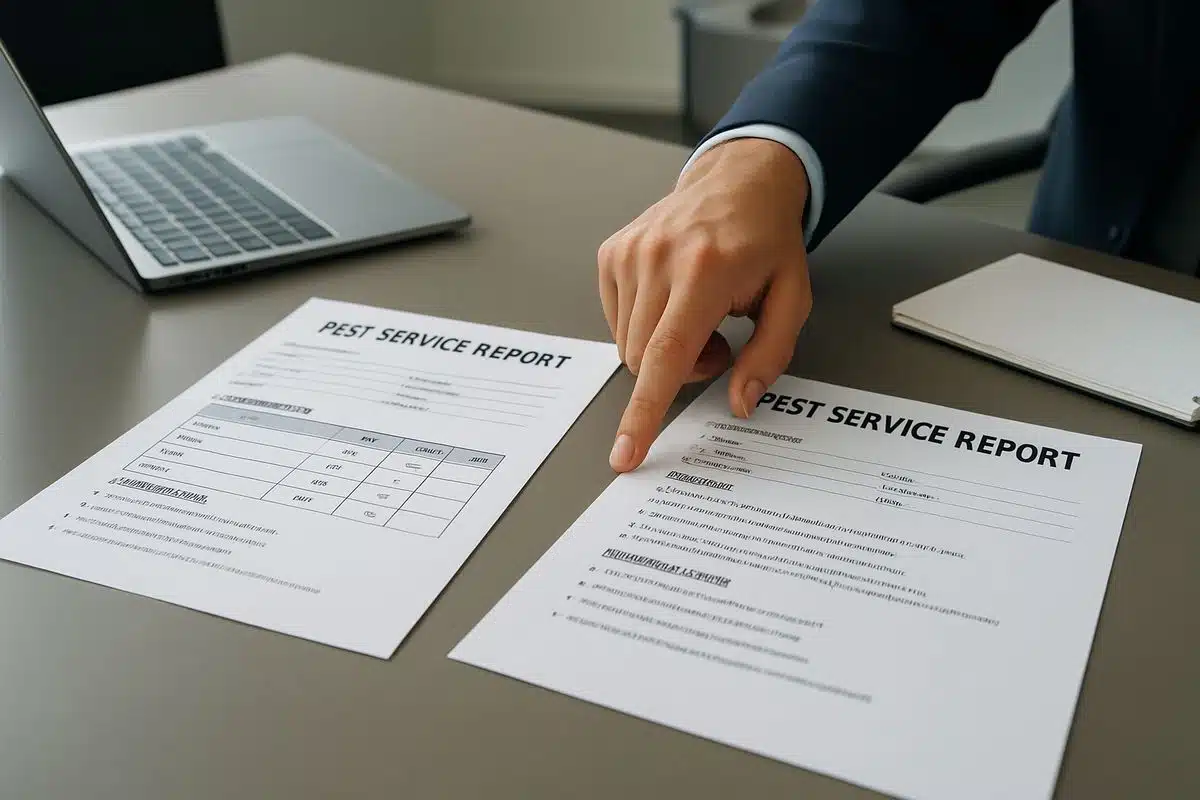
A strong sample report is specific, readable, and tied to the property. It names areas inspected, pests found, treatment used, and next actions. Better ones also include diagrams, photos, monitor references, or notes about sanitation and exclusion.
Here’s a quick checklist of what a sample report should show:
- Service date and site details
- Technician name
- Pest identified by type
- Findings by area
- Treatment method used
- Product and active ingredient
- Follow-up recommendations
- Next visit or callback terms
If the report is generic enough to fit any building in Dallas, it’s too generic to protect yours.
Which Vendor Is Easier to Hold Accountable?
That’s the question that really matters.
Better documentation makes it easier to verify visits, compare one technician’s work to the next, track recurring issues, enforce warranty terms, and justify changing vendors if service stalls. Weak documentation gives the provider room to dodge responsibility.
This is also where digital systems can help. About 22% of pest control companies have gone fully paperless in the office, and 70% of software users report efficiency gains. Efficiency isn’t just nice for the vendor. It usually means faster reports, cleaner service history, and fewer “we’ll have to look into that” moments for you.
Budget, Value, and Why Better Documentation Usually Saves Money
Price matters. Of course it does. But cheap pest control can get expensive fast when poor records lead to repeat infestations, duplicate treatments, failed inspections, resident complaints, or disputes over what was promised.
Good documentation reduces waste because it helps the company treat the right problem, in the right place, with the right method, then measure whether it worked. That is a much better use of money than repeated blind treatments.
When Paying More Is Worth It
Paying more is usually worth it when the property has higher stakes or more moving parts. Restaurants, luxury homes, multifamily sites, and properties with recurring roach issues all fall into that category.
In those cases, the added value isn’t just nicer paperwork. It’s cleaner accountability, better trend tracking, smarter follow-up, and better protection if something goes wrong. When failure costs more, stronger documentation is not a luxury.
When Basic Service Might Be Enough
Some lower-risk properties do not need enterprise-level reporting. A small office with occasional exterior pest activity may not need trap maps, detailed diagrams, and weekly logbook review.
But even basic service should still include clear service records, treatment details, written terms, and enough inspection notes to show the provider actually evaluated the site. “Basic” should never mean undocumented.
Your Pest Control Documentation Checklist Before You Sign
Before you hire a Dallas pest control provider, ask yourself one simple thing: if the problem comes back, will I have the records to prove what was found, what was done, and what they promised me?
That’s the standard.
You should have written inspection findings, clear pest identification, service reports after each visit, treatment logs with product details, follow-up notes, current licensing, proof of insurance, access to safety information, and a warranty that says exactly how reservice works. If any of that feels oddly hard to get before the sale, it will be harder after the sale.
Choose the company whose paperwork makes the service easier to trust, easier to verify, and easier to enforce. In this market, that’s often the better value, even if it isn’t the lowest quote.
Frequently Asked Questions
What is pest control documentation, exactly?
Pest control documentation is the written record of inspection findings, pest identification, treatment performed, products used, follow-up results, and any recommendations or warranty terms tied to the service. It’s the paper trail that proves the work happened and shows whether it was appropriate.
Should I expect documentation after every pest control visit?
Yes. At minimum, you should get a service report after every visit that explains what was found, what was done, and what happens next. For commercial properties, restaurants, and multifamily sites, the records should usually be more detailed.
Is an invoice enough to support a pest control warranty claim?
Usually not. An invoice proves you paid for service, but it often does not show pest activity, inspection findings, treatment details, or property conditions that affect warranty coverage. If a dispute comes up, that missing detail becomes a real problem.
What documents matter most for a roach problem?
The most useful records are written inspection notes, species identification, treatment logs, follow-up reports, and corrective-action recommendations. Roach problems usually require more than one visit, so trend tracking matters a lot.
Do homeowners need the same level of documentation as businesses?
Not always. Businesses, restaurants, and multi-unit properties usually need more detailed records because they face more compliance, liability, or tenant-related risk. But homeowners should still expect clear inspection notes, treatment details, and written warranty terms.
What’s the biggest documentation red flag when comparing pest companies?
A vague report that says little more than “service completed” is one of the biggest red flags. If the company can’t clearly document pest findings, treatment decisions, and next steps, it will be much harder to hold them accountable later.
