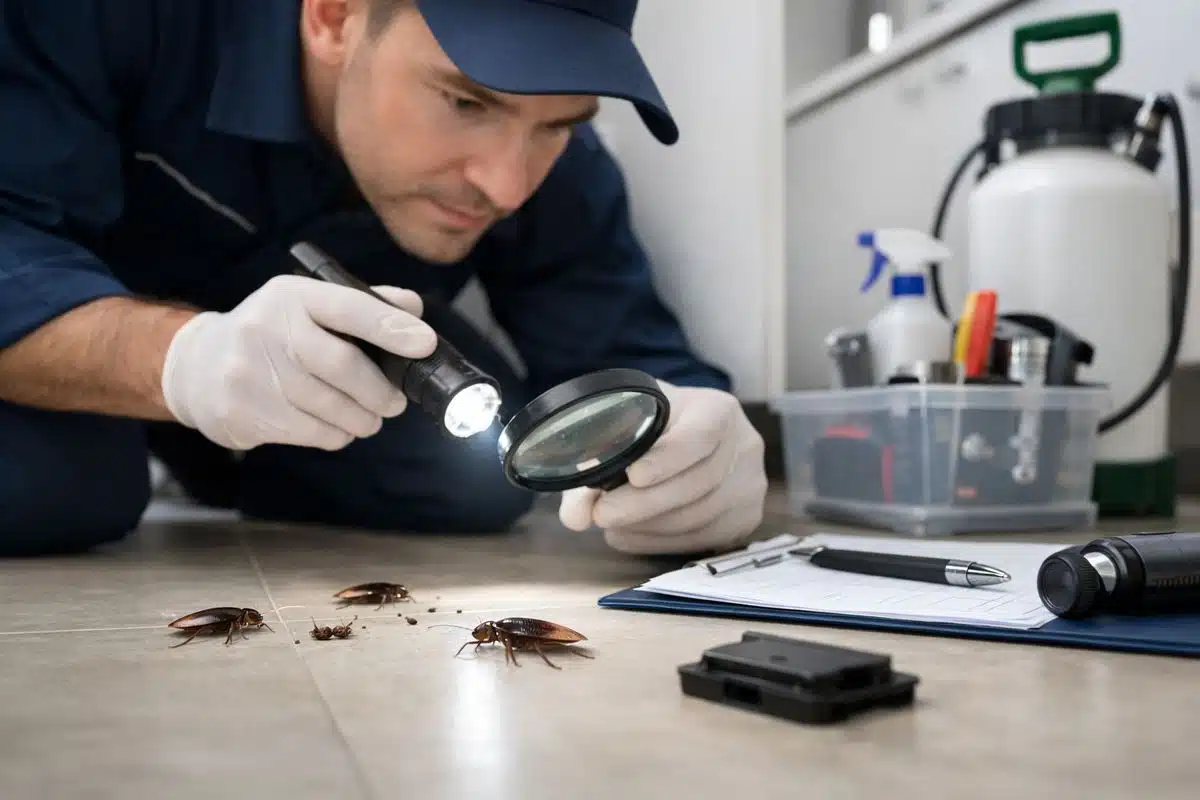
A good roach inspection saves you from paying for the wrong treatment. If you’re comparing vendors right now, this is the part that tells you who is actually diagnosing the problem and who is just showing up with a sprayer.
What to have ready before a roach inspection
A useful inspection starts before anybody steps through the door. A little prep helps you get more than a fast walk-through and a vague promise.
Make a short list of what you’ve seen
Write down where you noticed live roaches, droppings, egg cases, smear marks, or that stale, oily odor roaches leave behind. Note the timing too. If activity jumps at night, after rain, after a delivery, or right after the kitchen closes, that pattern matters.
That short list gives the inspection a head start. Roaches are good at hiding, so the clues you’ve already noticed help narrow down where the real hot zones are.
Pull together property and service history
Have past pest service records, recent treatment dates, renovation notes, leak repairs, and tenant or staff complaints in one place. If the problem keeps coming back every few months, that tells a different story than a brand-new issue after used equipment got moved in.
This is also where you start spotting repeat failure. A recurring problem usually means the source never got fixed, not that you just need more spray.
Clear access to key inspection zones
Move stored items away from sinks, walls, appliances, water heaters, and utility areas. If a kitchen line, closet corner, or laundry hookup is blocked, the inspection can miss the very place roaches are nesting.
That’s the catch. A blocked inspection often leads to a treatment plan that looks fine on paper but misses the actual source.
Step 1: Confirm the roach problem and identify the species
A real roach inspection starts with diagnosis, not treatment. Species matters because German roaches, American roaches, and other common roaches hide differently, spread differently, and respond to different treatment plans.
- Ask the inspector to confirm that the pest is actually a cockroach and not a beetle or water bug look-alike.
- Make sure the inspection includes species identification.
- Expect the treatment recommendation to change based on that ID.
Look for live roaches and fresh activity
Fresh activity is the giveaway. Live roaches, recent droppings, shed skins, egg cases, and smear marks tell you the infestation is active now, not just left over from an old problem.
A proper inspection should check the tight, dark areas where roaches spend the day hidden in cracks and crevices, not just open floors and countertops. Daytime sightings matter even more. If you’re seeing roaches in daylight, the infestation is already bigger than it looks.
Match the signs to the likely species
Species ID changes everything, from hiding spots to follow-up timing. German roaches usually cluster in kitchens and baths, close to warmth and moisture. American roaches show up more often in basements, drains, utility rooms, and pipe chases.
You may hear the word harborage. That just means the places roaches hide and gather between feedings. If the inspection doesn’t locate those hiding areas, the treatment plan is guessing. For a closer look at why that matters so much with German roaches, read about why this species needs a different plan.
Estimate how light or heavy the infestation is
A solid inspection should judge severity based on spread, amount of evidence, and how many rooms are involved.
- Check whether activity is limited to one area or spread across the property.
- Note if signs appear in customer-facing or living areas, not just utility spaces.
- Treat daylight sightings as a red flag for a heavier infestation.
German cockroaches can reproduce fast enough to create thousands of offspring in less than a year, which is why early severity calls matter so much.
Step 2: Inspect the rooms and equipment where roaches actually hide
Roaches do not hang out in the middle of the room waiting to be discovered. A real inspection happens in warm, dark, tight spaces, with hands-on checking behind, under, and inside things.
- Start with the highest-risk rooms.
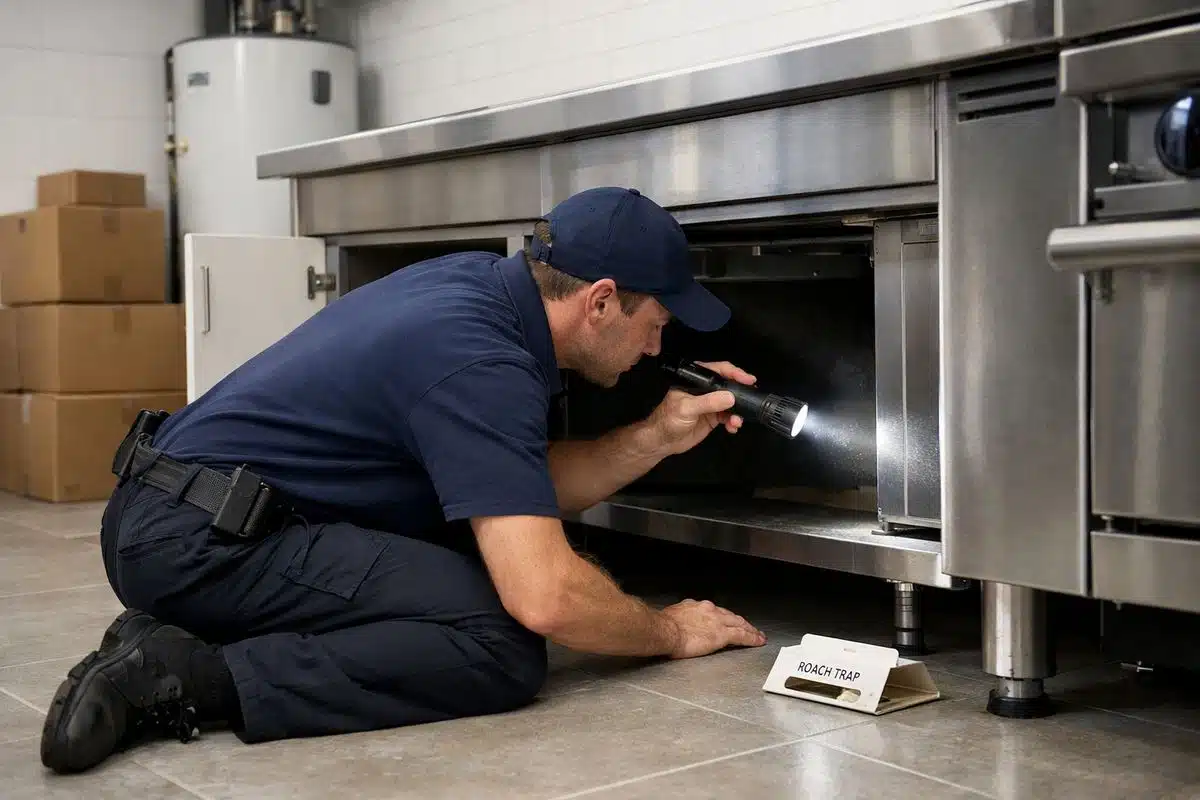
- Open access panels, cabinet interiors, and equipment gaps where possible.
- Check hidden voids, not just visible surfaces.
Check kitchens, bathrooms, and laundry areas first
These rooms combine food, moisture, and heat, which is exactly what roaches want. Sinks, dishwasher edges, refrigerator motors, cabinet hinges, pantries, toilets, and washer hookups should all be part of the inspection.
In restaurants and similar spaces, this matters even more because hygiene-sensitive commercial areas face stricter compliance pressure and less room for error.
Inspect behind, under, and inside equipment
This is where weak inspections fall apart. Behind ovens, under prep lines, inside cabinet voids, around water heaters, under ice machines, and around refrigerator motors are classic hiding spots.
One concrete example says it all: inspectors in Fresno found a live cockroach in a paper towel dispenser, and a colony emerged from inside it. That sounds extreme, but honestly, it’s exactly why surface-level inspections miss things.
Review storage, clutter, and cardboard harborage
Cardboard works like a cheap apartment complex for roaches. It gives shelter, holds moisture, and sits close to food deliveries, paper goods, or break-room snacks.
Storage rooms, stacked boxes, and utility closets deserve a real inspection, not a glance from the doorway. If you run a food business, this is also where smarter vendor questions matter most, especially around what to ask before hiring pest service for a food operation.
Step 3: Find what’s feeding the infestation
A useful roach inspection should explain why the infestation is surviving. “You have roaches” is not a diagnosis.
- Identify food sources.
- Identify water sources.
- Note sanitation patterns that keep the colony going.
Check for food debris and grease buildup
Crumbs under appliances, grease around cook lines, pet food, cabinet spills, trash residue, and break-room messes all count. Even a very clean-looking property can have hidden food sources in the spots nobody checks until move-out day.
Roaches can contaminate food and food-contact surfaces, so this part of the inspection is about more than annoyance. It’s a health issue.
Look for moisture and plumbing issues
Leaks under sinks, condensation on pipes, standing water, overflowing drain pans, damp mop closets, and wet utility areas all deserve attention. When food is limited, moisture is often what keeps roaches alive.
Think of it like this: removing crumbs helps, but fixing water is often what changes the outcome.
Note sanitation patterns, not just one messy moment
A good inspection should separate a busy-day mess from a repeated condition. One trash bag left out during lunch rush is different from a standing pattern of grease buildup, soaked cardboard, and neglected floor edges.
That bigger picture fits integrated pest management, which means combining cleanup, sealing, monitoring, and targeted treatment instead of relying on spray alone.
Step 4: Check how roaches are getting in and moving through the property
If entry points and travel routes get ignored, treatment keeps failing. Roaches do not stay politely in one room.
- Inspect likely entry gaps.
- Trace movement routes through walls and utilities.
- Review how new roaches may be arriving.
Inspect gaps around doors, windows, and utility lines
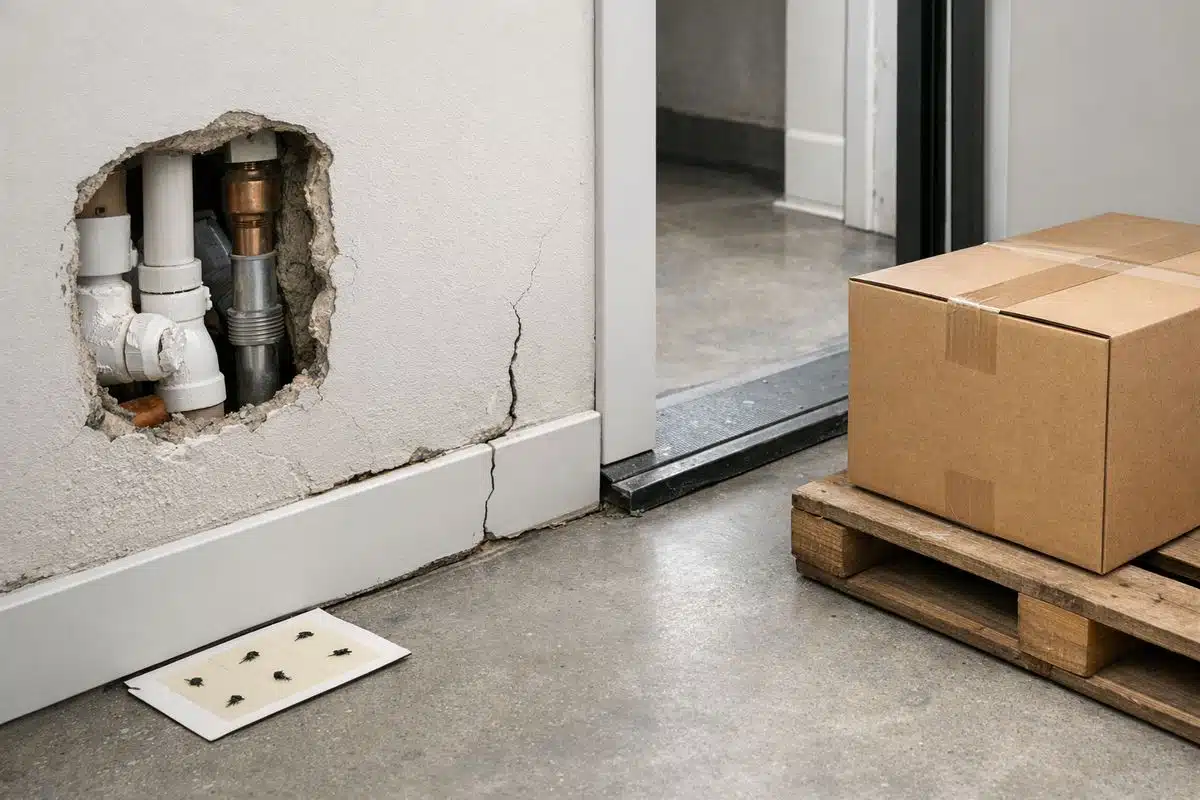
Check cracks, loose thresholds, wall gaps, dryer vents, and unsealed pipe openings. Exclusion simply means sealing the routes pests use to get inside.
Even clean properties get roaches this way. They can come in through bags, cartons, used equipment, and gaps around utilities.
Trace movement between units, walls, and shared systems
In apartments, mixed-use buildings, and commercial properties, roaches move through plumbing chases, wall voids, shared kitchens, and trash rooms. Lease lines do not stop them.
If you manage multiple units, this part of the inspection should never be skipped. One untreated source unit can keep re-seeding the whole problem.
Review delivery, storage, and hitchhiking risks
Roaches often arrive in boxes, pallets, grocery bags, used appliances, or furniture. A good inspection should decide whether the infestation is breeding onsite, getting reintroduced, or both.
That distinction affects how often follow-up service is needed, which is worth comparing against the difference between a one-and-done visit and a recurring plan.
Step 5: Check for connected problems that can change treatment
Roach problems often point to larger issues. A solid inspection should catch them before treatment starts.
- Look for secondary pests.
- Flag structural or sanitation failures.
- Note health and compliance concerns.
Look for flies, rodents, and drain-related issues
Mouse droppings, fly activity, sewage odors, and bad drains often share the same root causes as roaches. Spray-only service will not fix a building problem, and that matters when you’re comparing bids.
In some cases, health departments have required consecutive reports showing no roach activity before reopening after closure.
Flag health, food-safety, or tenant-impact concerns
Cockroach allergens from droppings and shed skins can trigger respiratory symptoms, especially in kids and dense housing. Treatment can lower those allergen levels, not just kill visible bugs.
For restaurants and similar properties, the stakes are higher. Immediate closure can happen when inspectors find active infestation in food areas.
Separate cosmetic cleanup from actual risk
Wiping counters and removing visible insects is not the same as solving the infestation. Clean surfaces can still hide active colonies behind walls, under appliances, or inside voids.
It’s like mopping the floor while the pipe behind the wall keeps leaking.
Step 6: Get a treatment plan that matches the inspection findings
This is where you find out if the inspection was real. The report should lead to a specific plan, not a vague promise to spray and come back if needed.
- Ask for a written summary.
- Match treatment to species and site.
- Set expectations for prep and follow-up.
Ask for a mapped summary of activity and causes
You should get a clear record of where activity was found, what species is likely involved, how severe it looks, what is attracting it, and what building conditions need correction.
The inspection is the blueprint. If pricing comes before diagnosis, that’s a bad sign.
Match treatment methods to the site and species
A proper plan may include baits, dusts, insect growth regulators, crack-and-crevice applications, sticky monitors, and non-chemical fixes. It should not default to broad spray everywhere.
This is also where it helps to compare treatment logic, not just price. If you want a benchmark, what fair local pricing usually looks like makes more sense after the inspection findings are on paper. For a plain-language example of species-based service planning, this roach control overview gives a helpful baseline.
Set expectations for prep, follow-up, and timing
You should be told what to move, what to clean, who needs notice, when reinspection happens, and what success will look like. Roach control is usually a process, not a one-visit magic trick.
Common problems that can derail treatment after the inspection
Even a decent inspection can lead to bad results if the follow-through breaks down.
Incomplete access during the inspection
Skipped utility rooms, locked closets, blocked appliance gaps, or unopened tenant units can throw off the whole plan. Missing one active zone is often enough to keep the infestation going.
Treating symptoms instead of sources
Killing visible roaches without fixing moisture, food residue, or entry gaps is like mopping up water without fixing the leak. It looks productive for a day and solves nothing.
No follow-up monitoring or verification
Sticky traps, return visits, and written verification matter. In higher-stakes properties, proof matters just as much as treatment, especially when reopening, tenant complaints, or repeat service are on the line.
What you should expect after a complete roach inspection
By the end of a complete inspection, you should know where roaches are hiding, what is attracting them, how they are moving, and what happens next. That clarity is the whole point.
A clearer vendor comparison
A thorough inspection makes vendor comparison much easier. You can judge method, diagnosis, and follow-through instead of just comparing who offered the cheapest fastest appointment.
A practical next step to try this week
Before the next estimate, check under one sink, behind one fridge, and around one utility line. Look for droppings, moisture, or gaps. That ten-minute check will make the next roach inspection sharper, and it may tell you more than another sales pitch.
Frequently Asked Questions
How long should a roach inspection take?
For a typical home, expect more than a quick 10-minute glance. Larger homes, restaurants, and multi-unit properties should take longer because more rooms, equipment, and access points need checking.
Should a company inspect before quoting treatment?
Yes. A real quote should come after inspection, or at least after gathering enough details to judge species, severity, and spread. Otherwise, pricing is mostly guesswork.
What if you only see roaches at night?
That still counts. Roaches are usually nocturnal, so night sightings are common. Share the timing and location because those details help narrow down active harborages.
Can a clean property still have roaches?
Yes. Roaches can hitchhike in boxes, deliveries, used appliances, and bags. Cleanliness helps, but clean properties still get infestations when entry points or hidden moisture are present.
Is spraying alone enough after a roach inspection?
Usually not. The best results come from combining targeted treatment with cleanup, moisture correction, sealing gaps, and follow-up monitoring. Spray-only service often misses the reason the infestation keeps returning.
