If you’re comparing providers and wondering whether a one-time roach treatment is enough, the short answer is usually no. One visit can absolutely knock roach numbers down fast, but lasting control usually depends on what happens after that first service, how the company treats the source, and whether your property has conditions that let roaches rebound.
The Short Answer: Is One-Time Roach Treatment Enough?
Most of the time, no.
A one-time roach treatment can be useful as an initial intervention. It can reduce visible activity, calm down a kitchen that suddenly has nighttime sightings, or give a homeowner quick relief before a bigger plan starts. But roaches are not a pest you judge by what you see on the surface. They hide deep in voids, reproduce quickly, and often survive in places a basic treatment never reaches.
That’s why people so often feel like the first service “didn’t work.” In many cases, it worked exactly as expected, it just was never designed to finish the entire problem. Researchers and pest professionals keep coming back to the same point: German cockroach control should not rely on a single one-time treatment because the recommended approach starts with inspection, monitoring, sanitation, and then targeted treatment as needed.
If you’re hiring in DFW, especially for an apartment building, restaurant, or larger home with repeat sightings, you should treat “one-time” as a service format, not a promise of complete elimination.
When a Single Treatment Might Work
There are situations where one visit may be enough. They’re just narrower than most marketing makes them sound.
A single treatment has the best shot when the issue is new, isolated, and light. Think a few larger outdoor roaches wandering in after heavy rain, or a small number of sightings in one area with no droppings, no odor, no daytime activity, and no signs they’ve established a nest indoors. In that case, a targeted service plus sealing and moisture correction may solve the issue.
Single-family homes with limited activity also have an advantage because there’s less chance of reinfestation from adjacent units. Even then, the provider should still explain what they found, why they believe the infestation is minor, and what would trigger follow-up if that assessment turns out to be wrong.
The key is evidence. A company should be able to say, clearly, “Here’s why we think this is isolated.” If they can’t, the one-time label is probably just a low-entry sales offer.
Why Most Infestations Need More Than One Visit
Roaches don’t all die at once, and they rarely live only where you can reach them in a single appointment.
Egg cases can survive the first round. Hidden harborages get missed. Food and water remain available. In apartments, condos, and commercial spaces, roaches may simply keep moving in from untreated nearby areas. That is why follow-up is not a nice extra. It is often the part that makes the first visit matter.
For German cockroaches in particular, follow-up timing matters a lot. UF/IFAS guidance notes that bait applications may need to be repeated every 1 to 2 weeks and treatment should continue until monitor counts drop to zero with no nymphs or egg cases reported. That’s a very different standard from “we sprayed once and left.”
Why Roaches Come Back After Treatment
Roaches coming back does not automatically mean the company used the wrong product. Often, the real problem is that the infestation was interrupted, not eliminated.
That distinction matters when you’re comparing quotes. A cheap service that cuts activity for seven days can look good at first. A more careful provider may talk about inspection, baiting, moisture correction, follow-up, and monitoring, which sounds slower but is usually the real path to control.
Egg Cases Survive the First Round
Roach egg cases, called oothecae, are one of the biggest reasons a one-time treatment disappoints people. They protect developing young from many treatment methods, especially if the treatment focused on exposed adults.
For German roaches, this matters a lot. One egg case can hold roughly 30 to 40 nymphs, and some sources put the range a bit higher. Research shows that German cockroach eggs hatch in about 28 days, and one egg case can contain 30 to 50 nymphs. So when roaches reappear 2 to 4 weeks after service, that often points to hatching, not necessarily a failed first visit.
This is also why timing matters. A provider who never discusses hatch cycles is skipping one of the main reasons follow-up exists in the first place.
Hidden Harborages Get Missed
Roaches are experts at living where basic treatments don’t reach.
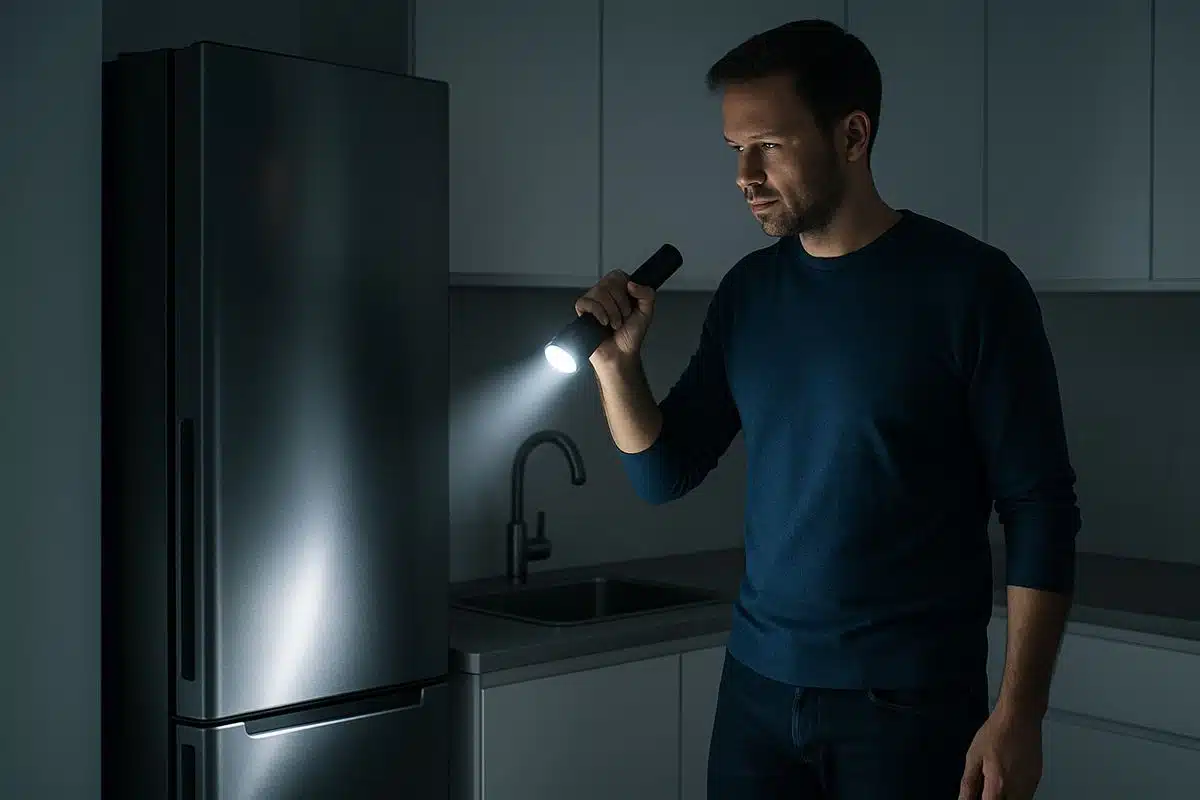
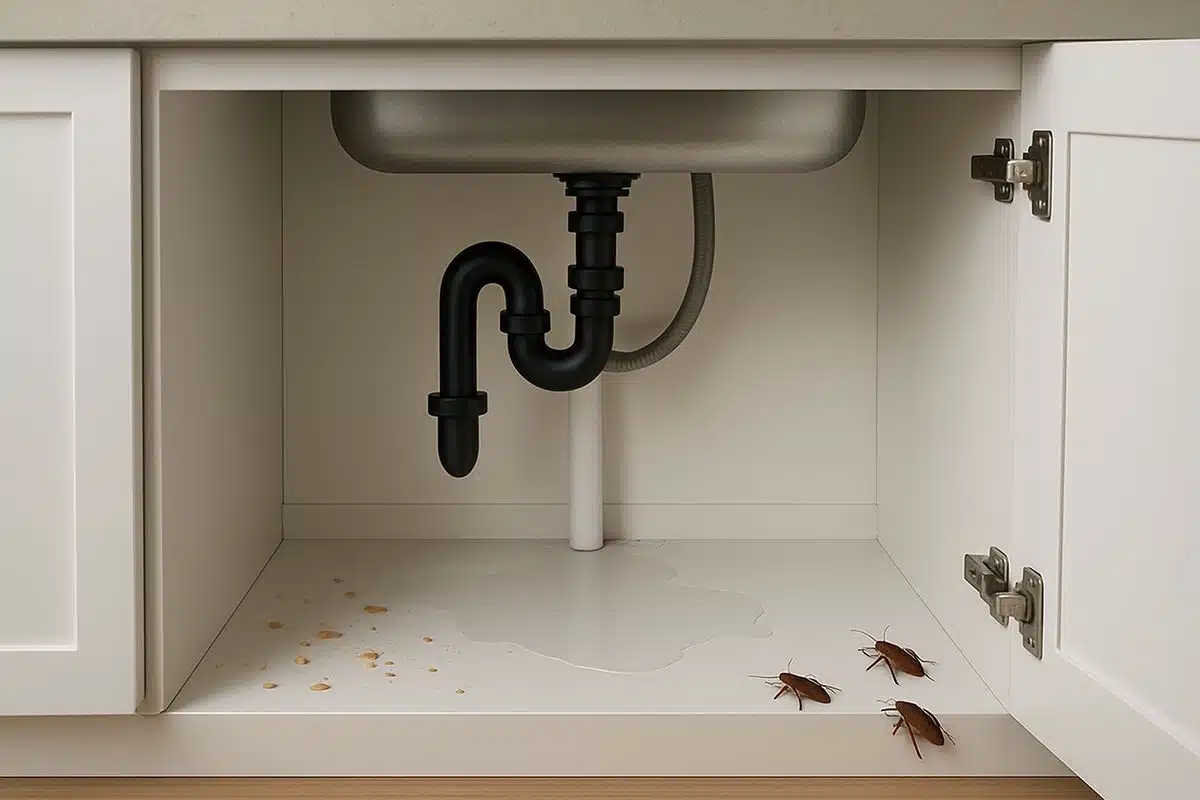
Common harborages include wall voids, appliance motors, plumbing penetrations, cabinet gaps, electrical outlets, storage clutter, and the warm spaces around dishwashers and refrigerators. You may see one roach on the counter, but the active population could be behind the kick plate, under the sink, inside a wall void, and around the motor housing of the fridge.
The University of Kentucky notes that cockroach control is best done with a combination of techniques, and a one-time spray or random treatment will fail if key harborage areas are missed. That lines up with what experienced property managers already know: visible roaches are the tip of the problem.
Roaches Migrate From Nearby Units or Shared Systems
This is where single-unit treatment often falls apart.
In apartments, condos, restaurants, shopping centers, and other multi-tenant properties, roaches move through wall voids, plumbing lines, electrical conduits, floor drains, and shared utility paths. In practical terms, that means your beautifully treated unit can get repopulated by a neighboring problem.
Research and field guidance repeatedly point to the same issue: in apartments, condos, and commercial plazas, cockroaches can move through shared plumbing lines, electrical conduits, drop ceilings, and wall voids, so treating only one unit often leads to reinfestation.
If you’re managing a building, this is why isolated service calls often turn into an expensive loop. For a deeper look at that challenge, it helps to understand what actually works in shared housing environments.
Food and Water Sources Are Still There
Roaches are survivors, but water is usually the pressure point.
They can live longer without food than without water, which is why leaks, condensation, wet mop closets, floor drains, grease buildup, and standing water under sinks matter so much. Research notes that cockroaches can survive weeks without food but only days without water. If a provider never mentions moisture, they are missing one of the biggest drivers of persistence.
This does not mean the customer is being blamed. Good pest control companies talk about conditions because conditions are part of treatment. A leak under the dishwasher is not a side issue. It is one of the reasons the infestation is still alive.
What Actually Makes Roach Control Last
Long-term roach control is usually less about one product and more about a system. Inspection, species ID, bait placement, growth regulation, sanitation, exclusion, and follow-up all work together.
That sounds more involved because it is. But it is also how professionals separate real control from temporary suppression.
Inspection First, Not Spray First
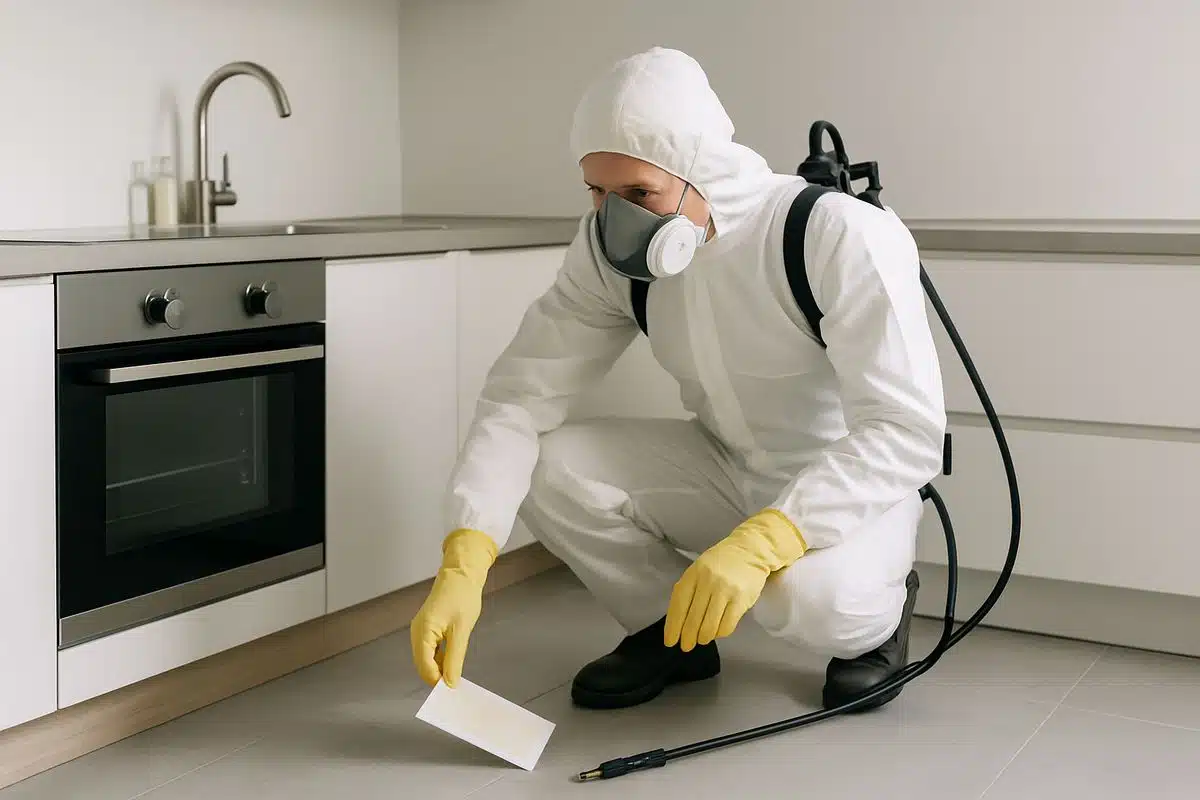
A real inspection should answer five basic questions: what species is present, how heavy the infestation is, where activity is concentrated, what conditions are supporting it, and whether surrounding rooms or units are involved.
That sounds obvious, but plenty of companies skip it. They show up, spray baseboards, and call it treatment. The problem is baseboards are not where most roaches live, especially German roaches.
Assessment-based treatment is not just a best practice, it’s directly supported by extension guidance. One-time or routine calendar-based pesticide use should be avoided, and products should be applied only after cockroach presence is confirmed by monitoring or inspection and after nonchemical measures are implemented.
If the company can’t explain what species they found and why they chose the treatment method, keep shopping.
Baits vs. Sprays: What Works Better Long Term?
For lasting control, baits usually beat broad spray-only approaches.
Why? Because properly placed bait gets eaten and carried back into the population. Roaches die after exposure, often in hidden areas, and secondary transfer can help suppress more of the infestation. Broad repellent sprays, especially consumer-grade ones, often kill what’s exposed while driving the rest deeper into walls or away from treated zones.
The research here is pretty consistent. A January 2025 study found that six liquid and gel cockroach bait products killed at least 80% of adult male German cockroaches within 28 days. Field results are more variable, but the direction is clear: baits are a serious long-term tool, not a backup plan.
UF/IFAS is even more direct, stating that surface sprays and baseboard sprays do not produce 100% timely control because early-stage nymphs stay in harborages and feed indirectly.
That doesn’t mean sprays never have a place. Targeted crack-and-crevice work can help. But if a company’s entire plan is “we spray everything,” that is not a sophisticated roach program.
The Role of Insect Growth Regulators and Dusts
Insect growth regulators, usually called IGRs, help disrupt the roach life cycle. They do not work like knockdown sprays. Instead, they interfere with development and reproduction, which makes them especially useful when eggs and immature roaches are part of the problem.
That slower, layered approach is exactly why they’re valuable. UF/IFAS states that baiting, insect growth regulators, and HEPA-vacuuming are the most effective treatment options for cockroach suppression.
Dusts also have a place, especially in wall voids, cabinet voids, plumbing penetrations, and inaccessible cracks where liquids and gels are not ideal. The catch is application quality. The University of Kentucky notes that boric acid dust can remain potent almost indefinitely if it stays dry, but it works best as a very light, barely visible deposit. Too much dust, and roaches avoid it.
So when evaluating a provider, listen for specifics. “We may use a dust in wall voids around plumbing penetrations” is a real plan. “We use strong chemicals” is not.
Sanitation, Exclusion, and Moisture Control
This is the part some companies skip because it takes explanation. It shouldn’t.
Roach control is not just what gets applied. It is also what gets removed, sealed, dried out, and cleaned up. That includes fixing leaks, sealing pipe gaps, improving food storage, reducing cardboard clutter, cleaning grease films, and making sure trash is contained properly.
Good providers don’t dump this on you as a blame list. They explain it as part of the treatment system. In fact, sanitation and exclusion are considered essential after treatment, including sealing pipe gaps, fixing leaks, removing crumbs and grease, and keeping bait areas free from spray cleaners.
If you want a benchmark for what a structured service model should look like, compare it with how professionals frame the trade-offs between recurring service and one-and-done visits.
One-Time Spray vs. Ongoing Roach Service
If you’re evaluating vendors, this is where the real comparison begins. Not price alone. Scope.
A one-time service and an ongoing service plan are not interchangeable products. They solve different problems.
What You Usually Get With a One-Time Treatment
Most one-time treatments include one inspection, one application, and either very limited follow-up or none at all. Some companies add a short warranty window. Others don’t. Some market one-time service aggressively even when the infestation clearly needs more than that, because it lowers the entry price and gets the job booked.
That doesn’t automatically make one-time service dishonest. It can be appropriate for light, isolated issues. But for active German roach infestations, heavy kitchen activity, or multi-unit environments, one visit is often just a front-end event.
The risk is that buyers compare the number, not the plan. A $179 service that excludes follow-up, excludes adjacent units, and expires before eggs hatch is not actually cheaper if you end up paying again two weeks later.
What a Quality Follow-Up Plan Looks Like
A good follow-up plan has timing, purpose, and escalation built in.
Usually, that means returning within a window tied to roach biology, often 1 to 2 weeks for heavier German roach infestations, then adjusting based on what monitors, sightings, droppings, and technician findings show. The provider may refresh bait, inspect previously active harborages, add dusts in voids, address newly reported areas, and update recommendations for sanitation or repairs.
Monitoring matters here. Sticky traps, visual evidence, and documented counts help show whether the problem is actually shrinking or just shifting.
If you’re comparing service agreements, ask to see how they define success. For commercial clients especially, written service records and trend tracking matter more than verbal reassurance.
How Long It Usually Takes to Get Roaches Under Control
Honest answer: visible improvement can happen quickly, but full control takes time.
It’s normal to see some roaches after treatment. In fact, seeing more roaches in the first 24 to 48 hours after a professional exterminator visit can be normal because hidden roaches are flushed out. That’s unpleasant, but not automatically bad news.
For German roaches, visible activity should often drop by about 70 to 80% within the first week, with major improvement expected within five weeks. Severe infestations, poor sanitation, high clutter, and multi-unit migration can stretch that timeline longer.
So if a provider promises total elimination in a day, honestly, that’s a red flag. Roach control is often measurable quickly, but durable control is a multi-week process.
How to Tell Whether You Have a Minor Problem or a Real Infestation
This matters because it changes what kind of service is reasonable to buy.
A homeowner with two large roaches in the garage after a storm does not need the same plan as an apartment manager getting daytime sightings in multiple kitchens. Knowing where you fall on that spectrum helps you ask better questions and sort real providers from low-information sales pitches.
Signs You May Be Dealing With German Cockroaches
German roaches are the species buyers should worry about most when someone tries to sell “one and done.”
They are small, tan to light brown, and usually have two dark stripes behind the head. They’re typically found in kitchens, utility areas, bathrooms, break rooms, near dishwashers, refrigerators, coffee stations, sinks, and any place with warmth, moisture, and food.
They also reproduce fast. Research shows German cockroaches can produce 3 to 6 generations per year, which is one reason they escalate so quickly once established. A provider who identifies German roaches and still acts like one quick spray will solve it is not taking the biology seriously.
Warning Signs the Problem Is Larger Than It Looks
Some signs point to a bigger infestation almost immediately.
Watch for droppings that look like pepper or coffee grounds, a musty or oily odor, repeat sightings around warm appliances, activity in more than one room, and roaches during the daytime. That last one matters. UF/IFAS says if German cockroaches are seen during the daytime, it is a strong sign of a very large infestation that will require multiple control tactics.
Repeated reappearance after store-bought products is another clue. Usually, that means the visible insects were never the whole problem.
Why Business and Multi-Unit Properties Need a Different Approach
Restaurants, apartment communities, assisted living facilities, warehouses, and food businesses have a different risk profile.
The stakes are higher, the infestation paths are more complex, and documentation matters more. Roaches can travel between tenants, show up during audits, affect online reviews, create resident complaints, and trigger health concerns. In low-income and urban settings especially, durable control matters because more than 25 million people in the U.S. live with asthma, and cockroach allergens are a known trigger in many environments.
Business owners should also understand that service expectations differ by property type. If you’re comparing vendors across home and commercial settings, it helps to see how treatment standards change between residential and business environments.
Questions to Ask Before Hiring a Roach Exterminator
This is where smart buyers protect themselves.
The goal is not to sound impressive on the phone. The goal is to force clarity. A strong company should be able to answer these questions calmly, specifically, and in writing if needed.
What Treatment Method Will You Use, and Why?
Ask the company to explain the actual method, not just the product category.
Do they plan to use baiting, crack-and-crevice treatment, IGRs, void dusts, sticky trap monitoring, exclusion recommendations, or just blanket spraying? Do they identify the species first? Can they explain why their method fits your property?
You’re looking for logic. A provider who says “we use an integrated plan based on where activity is concentrated” is far more credible than one who says “we have a strong spray.”
This is also a good time to compare what they say with independent guidance, such as industry standards for cockroach-focused treatment methods.
How Many Visits Are Included in the Price?
Front-end price means very little if you don’t know what it buys.
Ask how many visits are included, when follow-ups occur, whether bait replenishment is covered, what happens if sightings continue after eggs hatch, and what causes additional charges. Some cheap quotes become expensive because every return visit is billed separately.
Buyers who want a fuller list of vendor-screening questions should also review the things worth asking before you sign any pest agreement.
What Happens If Roaches Come Back?
This question gets straight to the risk.
Does the company offer a retreatment policy? Is there a guarantee? What voids the guarantee? Are sanitation issues, neighboring units, or structural gaps excluded? How long does coverage last? Is it written into the agreement, or just something the sales rep says on the phone?
A vague guarantee is not much protection. The stronger companies put terms in writing and explain them plainly. If you need help decoding that language, it’s worth reviewing how pest companies define coverage when the problem returns.
Have You Handled My Property Type Before?
Experience matters, but only if it matches your property.
A company that does great work in single-family homes may not be the right fit for a restaurant, warehouse, apartment community, or luxury property with strict service expectations. Ask for examples of similar properties, similar infestation types, and similar service conditions.
For restaurants and food businesses, the bar should be especially high. Roaches are not just a nuisance there, they’re an operational and reputation problem.
Red Flags That a Pest Control Company May Not Be Worth the Risk
You do not need to be an entomologist to spot a weak provider. You just need to notice when the company avoids specifics.
Here are the warning signs that should make you slow down.
“We’ll Spray and See What Happens”
That phrase, or anything close to it, is a problem.
It usually means no meaningful inspection, no species identification, no written plan, no discussion of harborages, and no strategy for what happens next. Roach work should not be improvisational. Even if the exact treatment gets adjusted later, the company should still explain the starting strategy.
Spray-only thinking is especially weak for German roaches. Extension guidance has warned for years that spraying exposed surfaces is not enough because young roaches remain hidden and keep the infestation going.
No Discussion of Prep, Sanitation, or Moisture
If a company never mentions conditions that support roaches, that is not customer-friendly. It is incomplete.
Real providers talk about prep because access matters. They talk about sanitation because competing food sources reduce bait performance. They talk about leaks because moisture keeps infestations alive. Research on real homes shows that bait performance can be affected by sanitation, food and water availability, seasonal variation, and competition from other resources.
A good provider explains this without turning it into a blame lecture.
Cheap Quotes With Weak Guarantees
A low quote is not a deal if it excludes the parts that make treatment succeed.
Watch for offers that do not include follow-ups, expire before the hatch cycle plays out, exclude attached units, or promise retreatment only under narrow conditions the company can easily deny later. Buyers often focus on the invoice number and miss the risk transfer buried underneath it.
If you’re comparing a cheap one-time offer against a more expensive multi-visit plan, ask yourself a simple question: which one still protects me if the first round only reduces the problem?
No Documentation, Reporting, or Monitoring
This matters most in commercial and multi-unit work, but it matters in homes too.
Without documentation, you cannot tell whether the infestation is declining, shifting, or coming in from somewhere else. Without monitoring, treatment becomes guesswork. Without service notes, property managers have no paper trail for resident complaints, vendor accountability, or recurring problem areas.
If a provider treats documentation like paperwork nobody needs, they are telling you something about how they operate.
What You Can Do Before and After Treatment to Improve Results
Even the best technician cannot overcome a bad setup.
This doesn’t mean you need to deep-clean the building for a week before service. It means you should do the few things that actually help the treatment reach the problem and keep working afterward.
Before Service: Prep the Right Way
Start with access. Clear under sinks, around dishwashers, behind stoves if your provider asks, and around utility penetrations where the technician needs to inspect and place treatment. Reduce loose clutter, especially cardboard, paper bags, and crowded storage that creates hiding spots.
Clean food residue, but do not go overboard with heavy cleaners right where bait will be placed afterward. Store food and pet food in sealed containers. Put away dishes. Empty overflowing trash. Follow any company-specific prep instructions closely, because different treatment plans require different access points.
If pets or children are in the space, confirm exactly what needs to be moved and when reentry is allowed. Good companies explain this clearly ahead of time.
After Service: Don’t Sabotage the Treatment
This is where people accidentally reduce results.
Do not spray over bait placements with store-bought repellents. Do not fog the house with bug bombs. Do not immediately scrub every treated crack and crevice. The University of Kentucky specifically says total-release foggers are not recommended for cockroach control because they rarely reach hidden voids and can drive roaches deeper into harborages.
Also, avoid premature cleanup of treated areas. Guidance notes that mopping, sweeping, or wiping treated baseboards, cracks, and cupboards too soon can reduce effectiveness.
Keep normal sanitation routines going, but don’t remove the treatment itself.
Simple Fixes That Help Break the Roach Cycle
Some fixes do more than people think.
Repair leaks under sinks and behind appliances. Seal wall gaps around plumbing. Add door sweeps where exterior gaps exist. Store dry goods in tight containers. Clean under and behind appliances where grease and crumbs collect. Keep trash lids closed and empty trash consistently. Reduce standing water around mop sinks, ice machines, and utility areas.
These are not side chores. They are part of the control plan because they remove the reasons roaches stay.
Common Mistakes People Make With One-Time Roach Treatment
A lot of wasted money in pest control comes from buying the wrong service for the actual problem.
These are the mistakes that show up again and again.
Choosing Based on Price Alone
The cheapest quote often leaves out follow-up, monitoring, warranty clarity, or treatment depth. That is why it looks cheaper.
A low-entry price can make sense for a minor issue. But if you have German roaches, repeated sightings, or a shared-wall property, the lowest quote may be the one most likely to turn into two or three more invoices later.
Expecting Instant, Total Elimination
Roach control is not always clean-looking in the first few days.
You may see more activity at first as hidden roaches move out of harborages. You may still see nymphs after eggs hatch. Early sightings do not automatically mean failure. Some field guidance lays out a realistic timeline where days 1 to 3 may bring more visible roaches, weeks 1 to 2 may still show nymphs, and weeks 3 to 6 should become much quieter.
What matters is the trend, not one unpleasant night.
Treating Only the Visible Roaches
Killing what you see is satisfying, but it is not the same as eliminating the infestation.
Roaches you see on counters are often only a fraction of the population. The nest, eggs, and most active harborages are usually somewhere else. That is why random sprays and casual DIY treatment so often fail. They target exposure, not source.
Ignoring the Building-Level Problem
This mistake is common in apartments, condos, restaurants, and commercial strips.
One kitchen may be the place where activity gets noticed, but not the place where the infestation begins or ends. Shared drains, neighboring tenants, utility chases, and voids can keep feeding the problem back into the treated space.
If the property structure allows movement, control has to account for movement.
Cost: Is Repeated Service Actually More Expensive?
Not always. In many cases, it is cheaper than repeated failure.
This is where buyers need to think in total cost, not invoice cost.
One-Time Treatment Pricing vs. Multi-Visit Plans
A one-time treatment usually costs less upfront. That part is true. But lower price and better value are not the same thing.
A stronger multi-visit plan may include a better inspection, species-specific treatment, bait replenishment, follow-up timed to hatch cycles, monitoring, written notes, and a meaningful service guarantee. If the alternative is paying for two or three failed one-time visits, the more complete plan often costs less in practice.
The right comparison is not one invoice against another. It’s likely outcome against total spend.
The Hidden Costs of Incomplete Control
Incomplete control gets expensive fast, especially outside a single-family home.
There are resident complaints, staff frustration, downtime, reputation damage, negative reviews, failed audits, contaminated product risk, and repeated service disruptions. In restaurants and food businesses, the hidden costs can dwarf the original treatment price.
For building operators, recurring infestations also drain time. Every repeat complaint creates more coordination, more access issues, more documentation needs, and more vendor oversight.
When Paying More Up Front Makes Sense
Paying more upfront makes sense when the provider is buying down risk.
That usually means better inspection, a tailored treatment plan, clearer warranty terms, property-type experience, better documentation, and a realistic follow-up schedule. It also makes sense when failure is expensive, such as in restaurants, luxury homes, multi-unit housing, healthcare-adjacent environments, or any business where complaints travel fast.
If the provider charges more because they do more, and they can explain exactly what that means, the premium may be justified.
Best Recommendations by Situation
Not every property needs the same answer. Here’s the practical version.
If You’re a Homeowner With a New or Light Roach Problem
A one-time visit may be reasonable if the activity is truly light, isolated, and not consistent with a German roach infestation. You should still insist on a real inspection, clear species ID, and a written explanation of what would trigger follow-up.
If you book one-time service, monitor afterward. Watch for droppings, daytime sightings, repeat kitchen activity, or reappearance in 2 to 4 weeks. If any of that happens, move quickly to a structured plan instead of repeating random spot treatments.
If You’re Dealing With German Roaches in a Kitchen or Utility Area
Skip the fantasy of a one-and-done fix.
This is where you want a bait-led, multi-step program with scheduled follow-ups, monitoring, moisture correction, and targeted void or crack-and-crevice treatment when appropriate. Ask how the provider handles hatch cycles, what they do if activity persists, and how they avoid interfering with bait effectiveness.
German roaches are the species most likely to punish shortcuts.
If You Manage Apartments, Condos, or Multi-Unit Housing
Treat it as a building problem, not a unit problem.
That means coordinated inspections, attention to shared plumbing and wall systems, resident communication, tracking repeat hotspots, and treatment plans that include adjacent or connected spaces when evidence supports it. Researchers studying affordable housing are clear that the real benchmark is whether families stay roach-free later on, not just whether roaches are knocked down at first.
For these properties, isolated service calls without coordination are usually expensive procrastination.
If You Run a Restaurant or Food Business
You need a documented, repeatable, inspection-heavy program.
That means monitoring, sanitation coordination, attention to drains and moisture, targeted treatment in cracks and voids, service records, trend tracking, and recurring professional oversight. Restaurant roach work is not the same as residential kitchen work, and the provider should be able to show that they know the difference.
How to Decide if a One-Time Roach Treatment Is Worth Booking
Use one-time service only when the facts support it.
If the issue is light, isolated, and clearly not part of a larger infestation, one visit may be worth booking. But the minimum standard should still include species identification, explanation of the source, guidance on conditions, and a clear follow-up path if activity returns.
If the problem involves German roaches, daytime sightings, multiple rooms, repeat activity after prior treatment, or shared-wall properties, skip the cheap optimism. Book a structured plan instead.
A Quick Buyer Checklist
Use this checklist when comparing providers:
- Species identified before treatment
- Infestation source explained clearly
- Follow-up visits included or defined
- Guarantee provided in writing
- Warranty exclusions explained plainly
- Experience with your property type confirmed
- Monitoring or documentation included
- Moisture and sanitation discussed
- Adjacent-unit risk addressed if relevant
If a company cannot confidently answer those points, keep looking.
The Bottom Line for DFW Property Owners
In DFW, heat, density, shared infrastructure, and long active seasons make recurrence more likely than many buyers expect. That’s true in homes, but even more true in restaurants, apartment communities, and commercial properties where roaches have more ways to hide and move.
So here’s the plain answer: a one-time roach treatment can reduce the problem, but it usually won’t solve the whole problem unless the infestation is small and truly isolated. The smarter buy is the provider who can explain the biology, inspect thoroughly, treat the source, and protect you if the roaches come back.
Frequently Asked Questions
Can one-time roach treatment work for a small problem?
Yes, sometimes. It has the best chance when the issue is new, low-level, and limited to a small area with no signs of nesting or reproduction. Even then, the provider should explain why they believe it’s isolated and what follow-up steps apply if sightings return.
Why am I still seeing roaches after treatment?
Some post-treatment activity is normal. Roaches may come out of hiding after service, and egg cases can hatch later. If sightings continue at a high level after 2 to 4 weeks, or appear in multiple rooms with fresh droppings, the treatment plan likely needs follow-up.
Are baits better than sprays for roaches?
For long-term control, often yes. Baits usually perform better because they target feeding behavior and reach roaches in hidden areas. Spray-only approaches, especially repellent sprays, may kill visible roaches while pushing the rest deeper into harborages.
How many visits does it usually take to get rid of German roaches?
It often takes multiple visits, not one. The exact number depends on infestation size, sanitation, moisture, access, and whether nearby units are involved. Heavy infestations in kitchens or multi-unit properties usually need an initial treatment plus follow-ups over several weeks.
Is a monthly contract always necessary for roaches?
No. A single-family home with a properly treated, fully eliminated infestation may not need monthly service forever. But active infestations, German roach problems, and multi-unit or commercial properties often do need recurring service, at least until monitoring confirms the issue is under control.
What’s the biggest mistake buyers make when choosing a roach exterminator?
Choosing based on the lowest price without checking what’s included. Weak one-time offers often leave out the very things that make treatment work, such as follow-up visits, monitoring, warranty clarity, and treatment tailored to the species and property type.
