
TL;DR
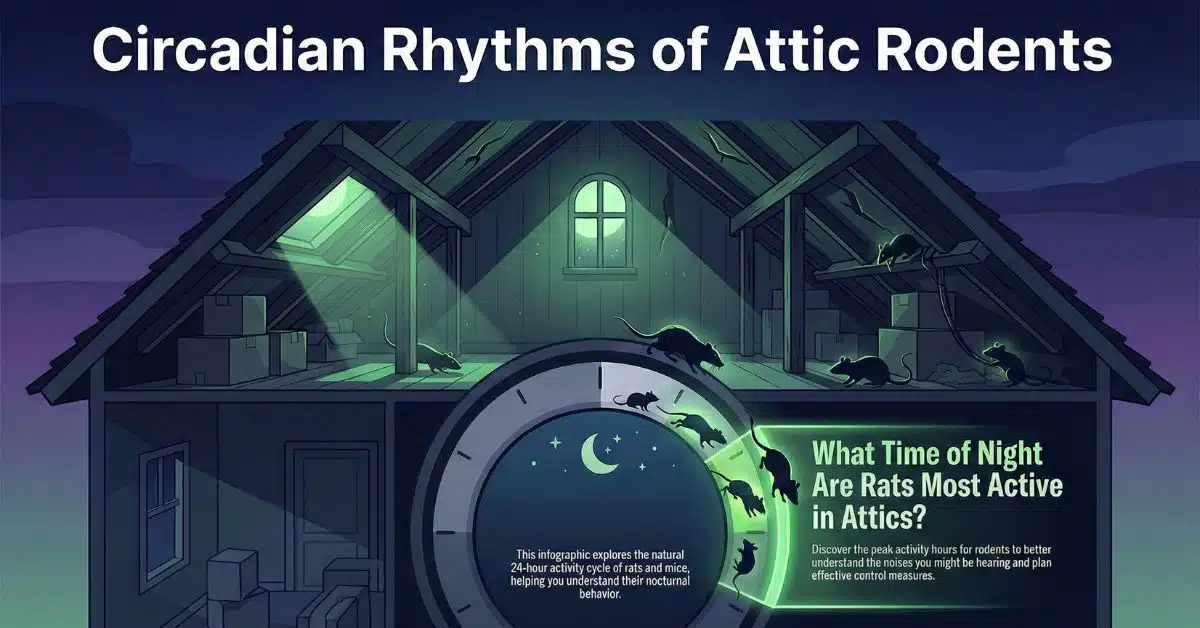
Rats are nocturnal and are most active in attics late at night, especially between midnight and 2 AM, when homes are quiet and dark. Hearing consistent scratching, thumping, or gnawing during these hours usually means rats are nesting in your attic, not just passing through.
Ongoing nighttime noise often signals an established rodent problem that requires professional removal and exclusion to prevent electrical damage, contamination, and repeat infestations.
Video Version of This Article:
If you are lying in bed and suddenly hear scratching, scurrying, or thumping above your ceiling, you are not alone. Homeowners across North Texas regularly ask the same question, what time of night are rats most active in attics?
Understanding when rats move, why they choose nighttime, and what that activity means for your home can help you catch a problem early before serious damage sets in.
Rats in attics are not just a nuisance. They chew wiring, contaminate insulation, and multiply quickly. The sooner you recognize their habits, the faster you can take action.
Quick Checklist Before We Dive In
- Explain why rats are nocturnal and how that affects attic activity
- Break down the peak hours rats are most active at night
- Identify sounds and behaviors homeowners commonly notice
- Connect nighttime activity to real risks inside the home
- Show when DIY efforts fall short and professional help makes sense
- Guide readers toward next steps and local resources in DFW
Why Rats Are Nocturnal in the First Place
Rats are naturally nocturnal animals. Over thousands of years, they adapted to avoid predators and human activity by moving mostly at night. Darkness gives them cover, quieter conditions, and fewer disturbances.
Inside an attic, nighttime is ideal. The house settles, lights go off, and noise drops. That is when rats feel safest traveling, feeding, nesting, and chewing. Even in well lived in homes, attics become calm, dark environments once everyone goes to bed.
This behavior explains why many homeowners never see rats during the day but clearly hear them at night.
The Most Common Hours Rats Are Active in Attics
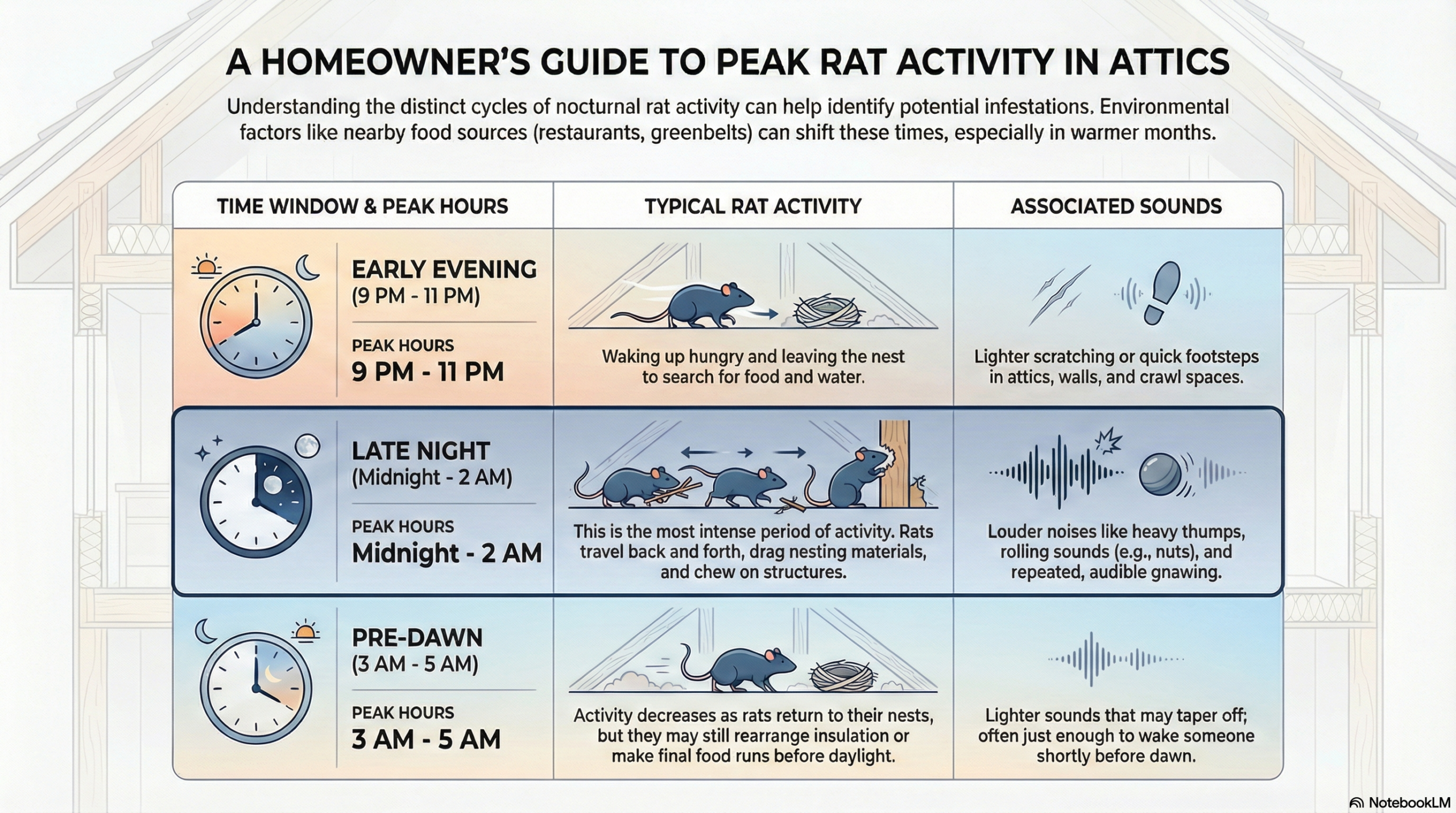
While rats can move at any point after dark, there are clear peak activity windows.
Early Evening: Around 9 PM to 11 PM
This is often the first burst of movement. Rats wake up hungry and begin leaving their nests to search for food and water. If your attic connects to wall voids or crawl spaces, this is when you may hear lighter scratching or quick footsteps.
Homes near restaurants, greenbelts, alleyways, or older sewer lines may notice activity starting earlier, especially during warmer months.
Late Night: Midnight to 2 AM
This is typically the loudest and most noticeable time. Rats are fully active, traveling back and forth, dragging nesting material, and chewing.
If you hear heavier thumps, rolling sounds, or repeated gnawing, this window is usually why. Larger rats like roof rats and Norway rats are especially active during these hours.
Pre Dawn: 3 AM to 5 AM
Activity often tapers off but does not fully stop. Rats may return to nests, rearrange insulation, or make final food runs before daylight.
Many homeowners report being woken up shortly before their alarm clock by attic noise, which lines up with this final movement cycle.
What Those Noises Actually Mean
Different sounds at night often point to different rat behaviors.
- Light scratching or tapping usually means movement across joists or insulation
- Thumping or rolling suggests larger rats or nesting material being dragged
- Repetitive gnawing indicates chewing on wood, wires, or stored items
- Squeaking can signal multiple rats or breeding activity
Consistent noise on multiple nights almost always means an established infestation, not a single lost rodent.
Why Attics Are a Prime Target for Rats
Rats do not choose attics by accident. They offer everything rats need.
- Warmth during winter and shade during summer
- Insulation for nesting
- Hidden access points along rooflines and vents
- Minimal human disturbance
In North Texas, roof rats are especially common. They are excellent climbers and often enter homes via tree branches, power lines, or small gaps near the roof. Once inside, the attic becomes home base.
Seasonal Changes in Nighttime Activity
The time and intensity of rat activity can shift with the seasons.
Fall and Winter
As temperatures drop, rats seek warmth. Nighttime attic activity often increases and becomes louder as they build nests and chew more aggressively.
Spring
Spring often brings breeding season. More rats means more movement, more noise, and faster damage.
Summer
Activity may start later at night, but rats remain active. Attics that retain heat can still attract rodents due to safety and nesting materials.
Why Ignoring Nighttime Rat Noise Is Risky
It is tempting to wait and see if the noise stops. Unfortunately, rat problems rarely fix themselves.
Unchecked attic infestations can lead to:
- Chewed electrical wiring, increasing fire risk
- Contaminated insulation and air quality issues
- Structural damage to wood framing
- Rapid population growth within weeks
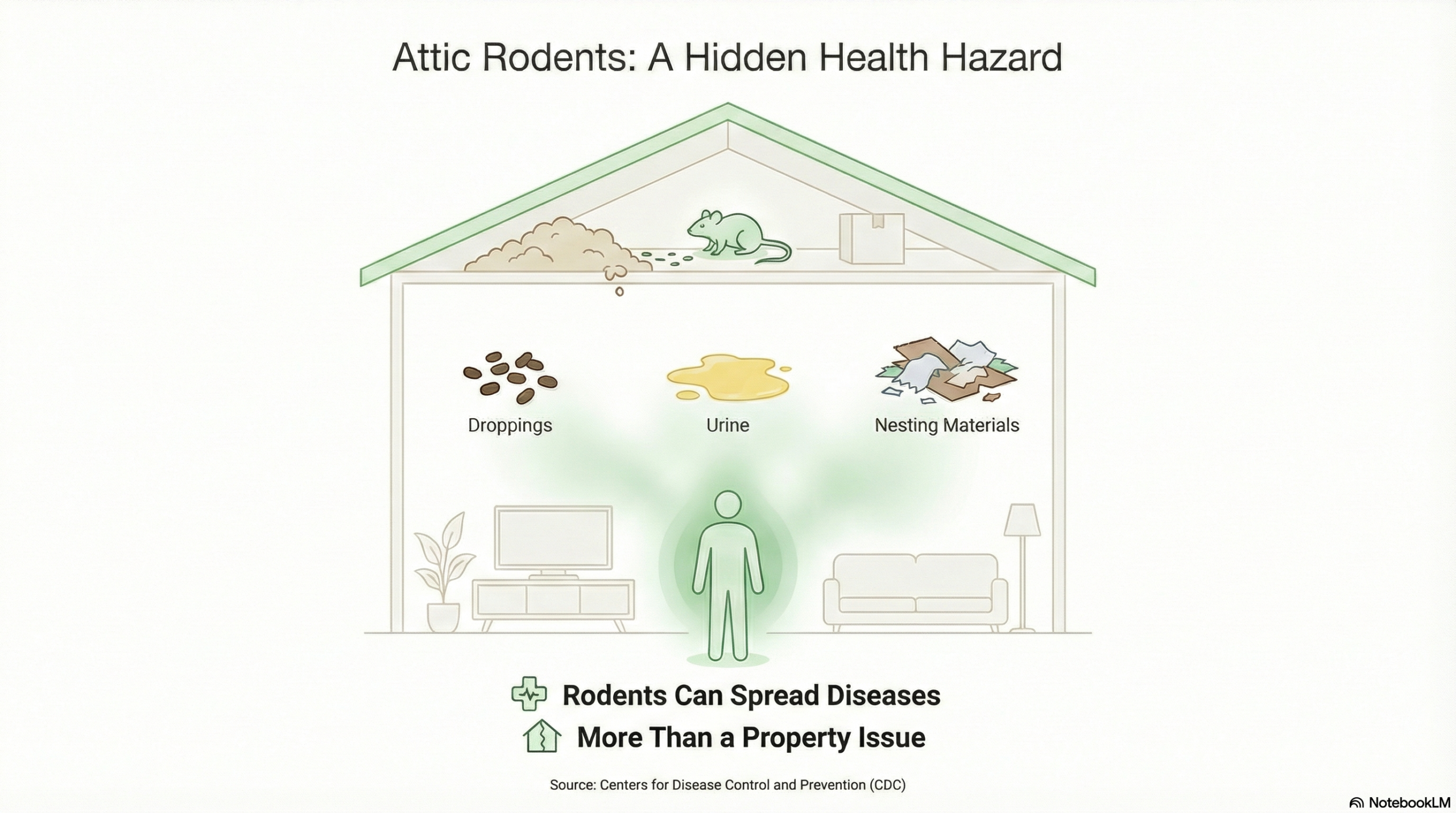
According to the Centers for Disease Control and Prevention, rodents can spread diseases through droppings, urine, and nesting materials. This makes attic infestations a health concern, not just a property issue.
Why DIY Traps Often Fail in Attics
Many homeowners try store bought traps once they hear rats at night. While traps can catch individual rats, they rarely solve the full problem.
Common DIY issues include:
- Missing hidden entry points
- Trapping without removing nesting areas
- Leaving food sources accessible
- Failing to prevent new rats from entering
Without sealing the structure and addressing how rats got in, attic activity often returns.
Professional Rat Control Makes the Difference
A professional rat exterminator focuses on more than removal. The goal is long term control.
At Preferred Pest Management, effective rat control includes:
- Identifying entry points along the roof and exterior
- Removing rats safely and humanely
- Installing exclusion materials to block future access
- Addressing attic contamination when needed
If you suspect rats based on nighttime activity, learning more about our professional rat exterminator services can help you understand the full process
For homeowners ready to stop repeat infestations, our rodent exclusion service focuses on sealing and reinforcing vulnerable areas
When to Call for Help
You should strongly consider professional help if:
- Noise happens multiple nights per week
- Sounds are getting louder or more frequent
- You notice droppings, odors, or ceiling stains
- DIY traps have not solved the issue
Early intervention can save thousands in repairs and cleanup.
If nighttime attic activity is becoming a recurring problem, Preferred Pest Management provides rat removal and rodent control in Plano, including inspection, targeted trapping, exclusion, and follow-up options. If rodents have contaminated insulation, read our guide on whether insulation needs replacement after rats are in the attic.
Serving Homeowners Across DFW

Rats do not respect city limits. Attic infestations happen throughout Dallas Fort Worth, especially in areas with mature trees, older homes, and dense neighborhoods.
Preferred Pest Management serves homeowners across the entire DFW metroplex. If you are unsure whether your area is covered, you can view our Dallas Fort Worth pest control service area here.
Take Action Before the Noise Gets Worse
If rats are most active in your attic late at night, that is your warning sign. The longer they stay, the more damage they cause.
Catching the problem early makes removal easier, repairs smaller, and prevention more effective. If nighttime attic noises are becoming a regular part of your routine, it is time to have the situation evaluated by professionals who understand rodent behavior in North Texas homes.
Frequently Asked Questions About Rats in Attics
What time of night are rats most active in attics?
Rats are nocturnal and are usually most active late at night, with peak attic activity commonly occurring between midnight and 2 AM. This is when homes are quiet and rats feel safest moving, feeding, and nesting.
Why do I only hear rats in my attic at night?
At night, there is less noise and human activity, which allows rats to move freely without disturbance. Sounds like scratching, thumping, and chewing become more noticeable once the house settles.
Are scratching noises in the attic always rats?
Not always. Scratching can also be caused by mice, squirrels, or other wildlife. However, heavier thumps, repeated gnawing sounds, and consistent nighttime activity often point to rats rather than smaller animals.
Can rats in the attic cause damage to my home?
Yes. Rats commonly chew electrical wiring, damage wood framing, and contaminate insulation with droppings and urine. Over time, this can lead to fire risks, odors, and indoor air quality issues.
Will rats eventually leave the attic on their own if I do nothing?
It is unlikely. Once rats establish a nesting area in an attic, they tend to stay unless removed. Attics provide warmth, shelter, and safety, making them an ideal long term habitat.
What is the best way to stop rats from coming back into the attic?
Long term prevention typically requires professional removal combined with sealing entry points. Exclusion work blocks access along rooflines, vents, and gaps so new rats cannot re enter after removal.
What to Do After You Hear Rats at Night
Nighttime sounds can help confirm that something is active, but they do not tell you how long rodents have been present or whether they have contaminated insulation. Once active rats have been addressed, read our guide on whether attic insulation may need replacement after rats to understand when cleanup or insulation work may be appropriate.
If nighttime attic activity is becoming a recurring problem, Preferred Pest Management provides rat removal and rodent control in Plano, including inspection, targeted trapping, exclusion, and follow-up options.
Final Thought
Rats are most active in attics between late evening and early morning, especially from midnight to 2 AM. Hearing them consistently means they are settled in, not just passing through. Addressing the issue now protects your home, your health, and your peace of mind.
