TL;DR
Yes, in many cases you do need to replace insulation after rats have been in your attic. Rat droppings, urine, nesting materials, and oils contaminate insulation, reduce its effectiveness, and can create health risks.Spot cleaning or deodorizing rarely solves the problem long term. A proper inspection determines whether partial removal or full insulation replacement is necessary.
If you have recently dealt with rats or are hearing nighttime activity in your attic, this is one of the most common and important questions homeowners ask.
Why Rats Ruin Attic Insulation
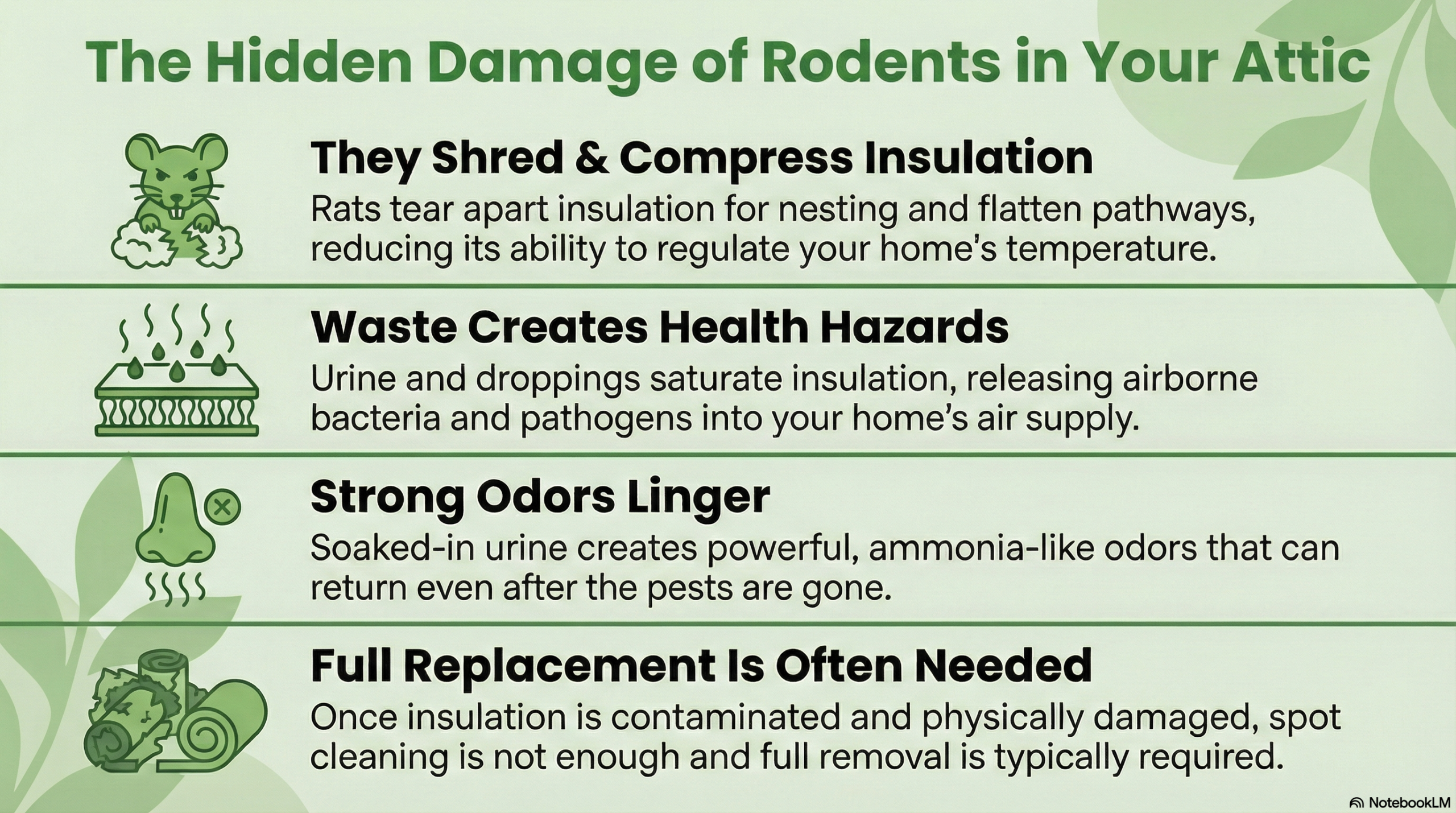
Rats do not just pass through attics quietly. Once inside, they live, nest, and use insulation as both shelter and a bathroom.
Common ways rats damage insulation include:
- Urinating repeatedly in the same areas
- Leaving droppings throughout the attic
- Shredding insulation for nesting material
- Compressing insulation by traveling the same paths
Over time, insulation absorbs these contaminants. Even if rats are removed, the insulation often remains compromised.
Health Risks of Contaminated Insulation
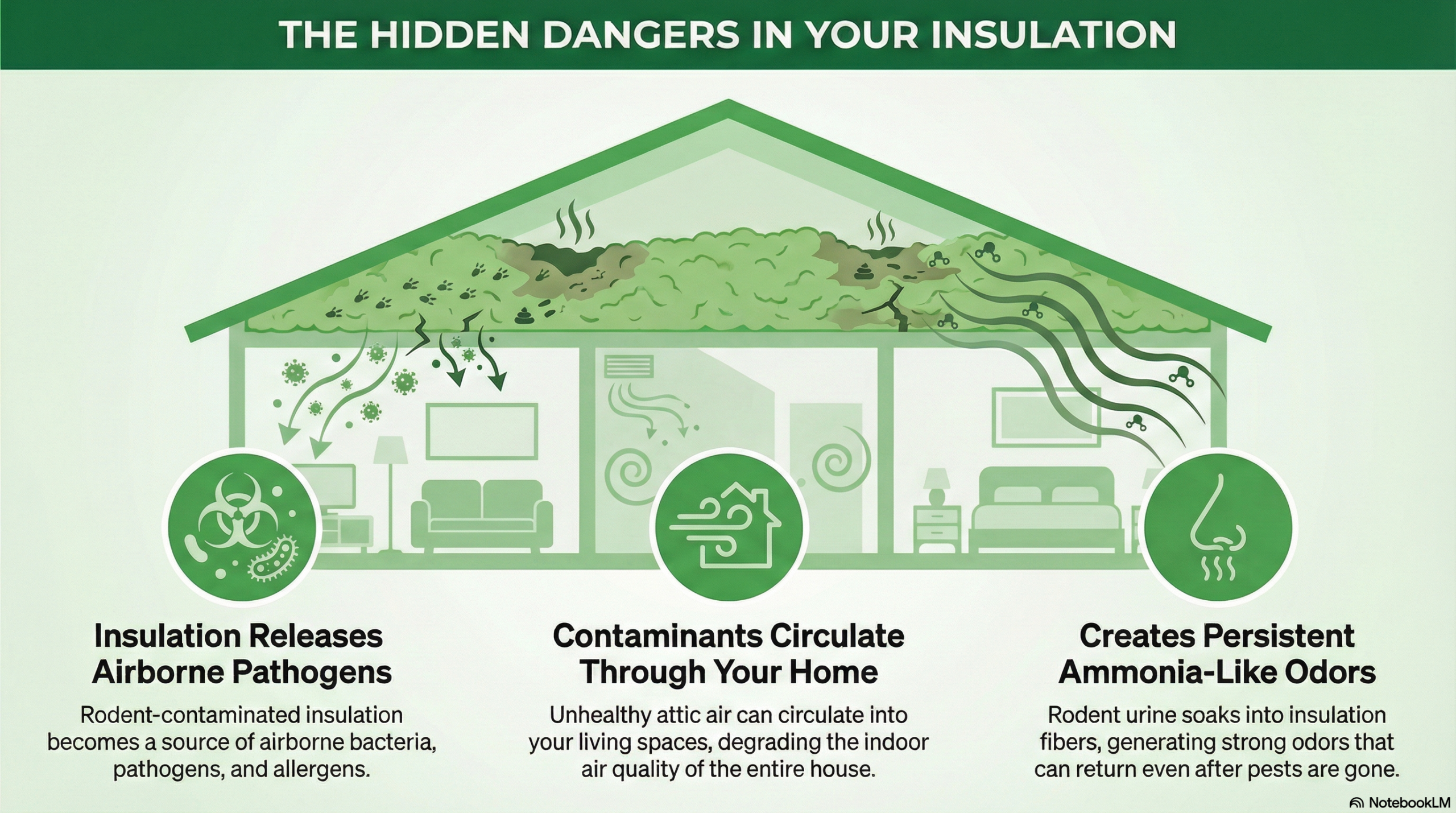
One of the biggest reasons homeowners ask, do I need to replace insulation after rats in attic spaces, is health.
Rat contaminated insulation can expose your household to:
- Airborne bacteria and pathogens
- Allergens that worsen asthma or respiratory issues
- Strong ammonia like odors from urine saturation
According to the Centers for Disease Control and Prevention, rodents can spread disease through urine, droppings, and nesting materials, especially when these materials dry and become airborne.
Because attic air circulates into living spaces, contaminated insulation can affect indoor air quality throughout the home.
When Insulation Should Be Replaced
In many situations, replacement is the safest option.
You should strongly consider insulation removal and replacement if:
- Large sections are soaked with urine
- Droppings are widespread
- Nesting material is embedded deep in insulation
- Odors persist even after rat removal
- Insulation is heavily compressed or damaged
In these cases, leaving insulation behind often leads to lingering smells and ongoing health concerns.
When Insulation Might Be Salvaged
Not every rat issue requires full attic insulation replacement.
Insulation may be salvageable if:
- The infestation was caught early
- Contamination is limited to a small area
- Droppings are minimal and localized
- Insulation structure remains intact
In these cases, targeted removal, sanitation, and deodorization may be enough. However, this should only be determined after a professional attic inspection.
Why DIY Cleaning Often Fails
Many homeowners attempt to vacuum droppings or spray disinfectants after rats are removed. Unfortunately, this rarely solves the real problem.
DIY approaches often fail because:
- Urine soaks deep into insulation fibers
- Odors return once humidity rises
- Bacteria remains trapped below the surface
- Disturbed insulation can release airborne contaminants
Without proper protective equipment and containment, DIY cleanup can actually increase exposure risks.
The Role of Professional Rat Removal
Before insulation work can even begin, rats must be fully removed and prevented from returning.
Professional rat control focuses on:
- Locating and sealing entry points
- Removing active rodents
- Identifying nesting zones
- Preventing re entry through exclusion
If rats are still gaining access to the attic, new insulation will quickly become contaminated again. This is why working with professional rat exterminator services is a critical first step.
Why Exclusion Matters Before Insulation Replacement
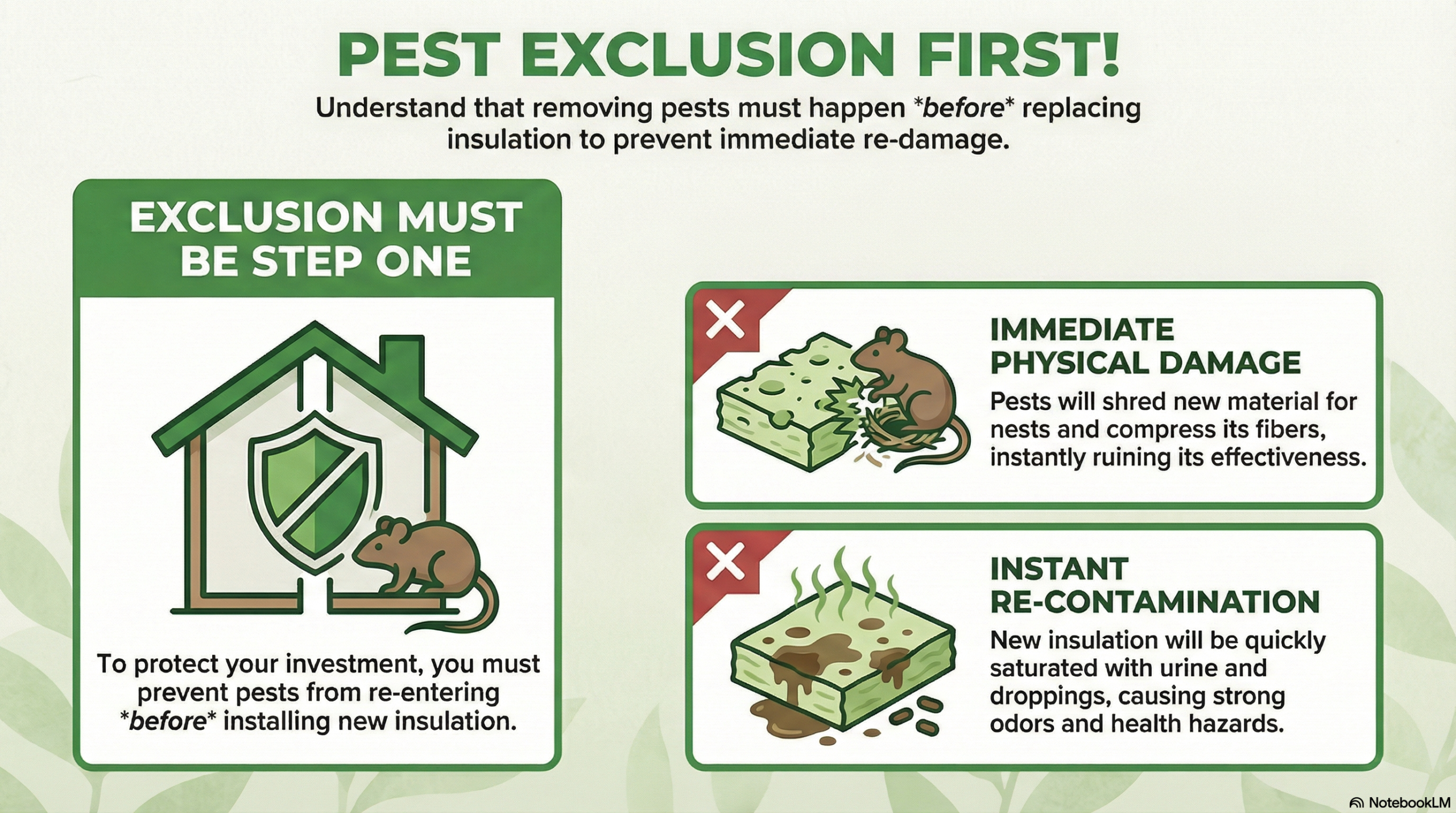
One of the most expensive mistakes homeowners make is replacing insulation before sealing the home.
A proper rodent exclusion service ensures:
- All roofline and vent gaps are sealed
- Entry points are reinforced
- Rats cannot return after cleanup
Without exclusion, insulation replacement becomes a temporary and costly fix.
Energy Efficiency and Comfort Concerns
Beyond health risks, damaged insulation impacts your home’s performance.
Rat damaged insulation can:
- Increase heating and cooling costs
- Create uneven temperatures between rooms
- Reduce overall attic efficiency
Replacing contaminated insulation often improves comfort and lowers energy bills, especially in North Texas homes where attic temperatures fluctuate dramatically.
Serving Homeowners Across DFW
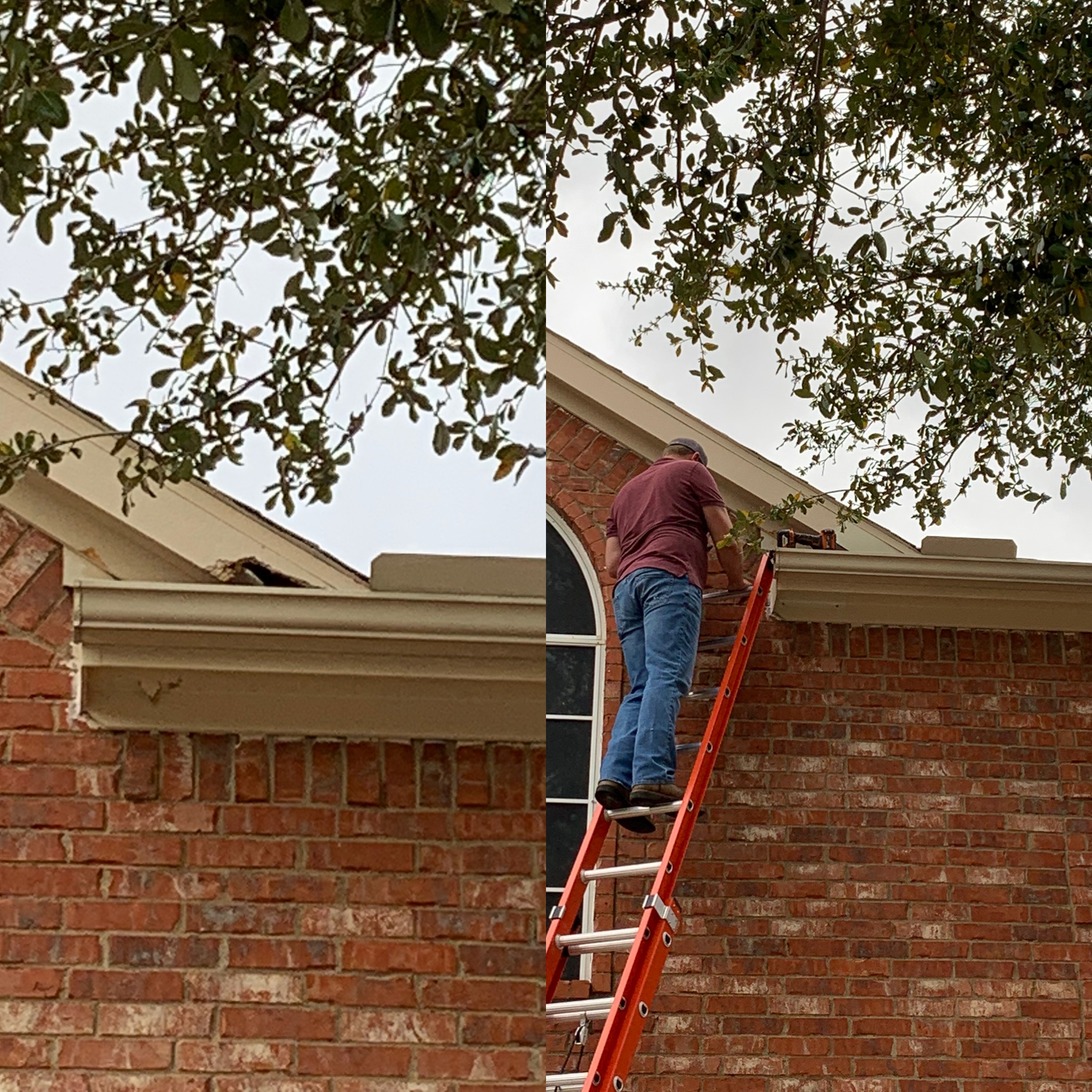
Attic rat infestations are common throughout the Dallas Fort Worth area, especially in neighborhoods with mature trees and older rooflines.
Preferred Pest Management helps homeowners across the metroplex evaluate rodent damage and next steps. You can view our full Dallas Fort Worth pest control service area to see if your location is covered.
What to Do Next If Rats Were in Your Attic
If you are asking, do I need to replace insulation after rats in attic spaces, the answer starts with a proper inspection.
A professional evaluation can determine:
- Whether insulation is contaminated
- How extensive the damage is
- What level of cleanup or replacement is needed
Addressing the issue early prevents long term odor, health, and structural problems.
Frequently Asked Questions About Insulation After Rats
Do I need to replace insulation after rats in attic spaces?
In many cases, yes. If insulation is contaminated with urine, droppings, or nesting materials, replacement is often recommended to protect health and air quality.
Can rat droppings in insulation make my family sick?
Yes. Rodent waste can carry bacteria and allergens that impact indoor air quality and respiratory health.
Will odors go away if rats are removed but insulation stays?
Odors often persist because urine soaks into insulation fibers. Removal is usually required to fully eliminate smells.
Should insulation be replaced before or after rat exclusion?
Always after. Entry points must be sealed first to prevent re contamination.
Make Sure the Rodent Activity Has Stopped First
Cleanup and insulation replacement are most effective after the active rodent problem has been addressed. If you are still hearing movement overhead, seeing fresh droppings, or noticing new damage, read our guide on when rats are most active in attics for signs that activity may still be ongoing.
For homeowners dealing with an active problem, learn more about Plano rat removal and rodent exclusion before scheduling extensive attic remediation or insulation work.
Before extensive attic cleanup or insulation replacement begins, active rodents and relevant entry points should be addressed. Sachse homeowners can learn more about rat removal and rodent exclusion in Sachse and what happens after an inspection.
Take Action Before Problems Linger
Replacing insulation after rats is not always required, but ignoring contamination can create lasting issues. The right approach protects your health, restores comfort, and prevents repeat infestations.
