
Spiders in North Texas do not disappear when it cools off. They move into garages, storage, and living spaces looking for insects and shelter. Most are not dangerous, but black widows need extra caution. Reduce hiding spots yourself, or ask our trained professionals to inspect if the webs keep coming back.
If you are tired of cobwebs in the corners or spiders in the bathroom, you are not alone. Late fall and early winter are a common time for this around Dallas-Fort Worth. The goal is not to panic. It is to know what you are seeing, close off the easy entry points, and get help when a venomous spider or a steady indoor problem is in play.
Preferred Pest Management provides spider control and web removal for homes across North Texas, including pest control in Plano. Below is a clear look at why spiders come inside, how to identify a black widow, what you can do, and how a professional visit works.
Why spiders move into North Texas homes
North Texas stays warm enough for spiders most of the year. When days shorten and nights get cooler, many of them look for a more stable place to hide. Your house offers food, water, and shelter, especially if there are cracks, poorly sealed windows, or gaps under doors.
Spiders follow their prey. If moths, flies, and other insects gather around porch lights, eaves, and windows, spiders will too.
Common spider species in this area include:
- House spiders
- Wolf spiders
- Black widows
- Brown recluses
Most spiders are harmless and help control other pests. Black widows and brown recluses can pose health risks, which is why it helps to identify what you are seeing and deal with a real problem promptly. For a closer look at common household species, we also have a guide on how to identify and remove common spiders in Plano.
Black widow spiders in North Texas
Black widows live throughout Texas, including the Dallas-Fort Worth area. They are not hunting people. They prefer quiet, protected spots and usually bite only when they are pressed against the skin or their web is disturbed. Texas A&M AgriLife Extension and the Texas Department of State Health Services treat widow spiders, including the black widow, and the brown recluse as the medically significant spiders in Texas.
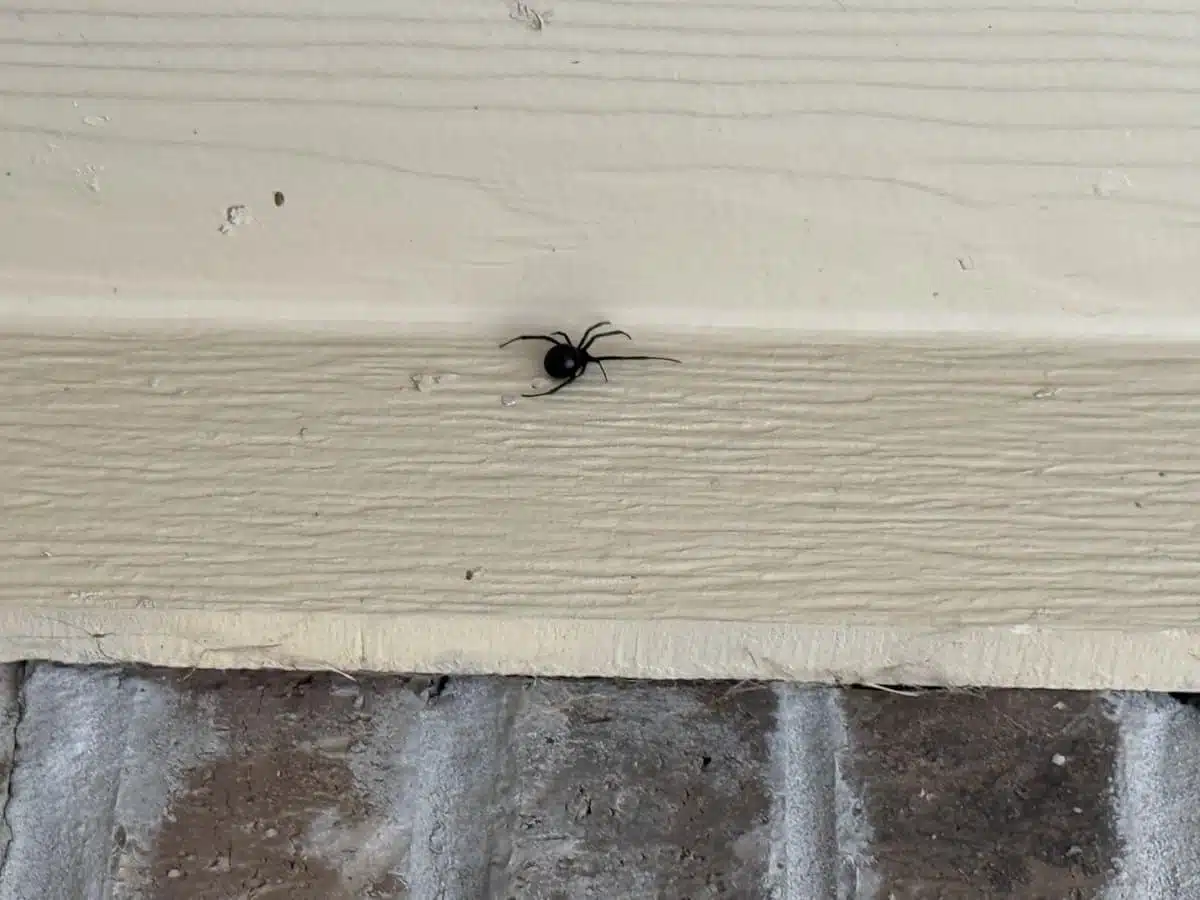
How to identify them, including look-alikes
The adult female is the one most people recognize. She is usually shiny black, with a rounded abdomen. On the underside, you will often see two reddish triangles that form an hourglass. AgriLife notes that the marking can be irregular, spot-like, or missing on some spiders, so the hourglass is a strong clue, not the only one.
Adult females average about an inch and a half long, including the legs. Adult males are much smaller. Males and younger widows often have orange, red, and white markings on the back and sides, so they do not always look like the classic black spider.
Texas also has the brown widow, a related species. It is usually tan or brown, with an orange or yellow hourglass, and it uses similar hiding spots.
Common look-alikes include ordinary cobweb or house spiders, sometimes called false widows. They can have a similar rounded body and a messy web, but they usually lack the red hourglass. Wolf spiders are hairy hunters that roam on the ground and do not hang in an irregular cobweb with an hourglass marking. If you are unsure, do not handle the spider. A clear photo from a safe distance is enough to start the conversation.
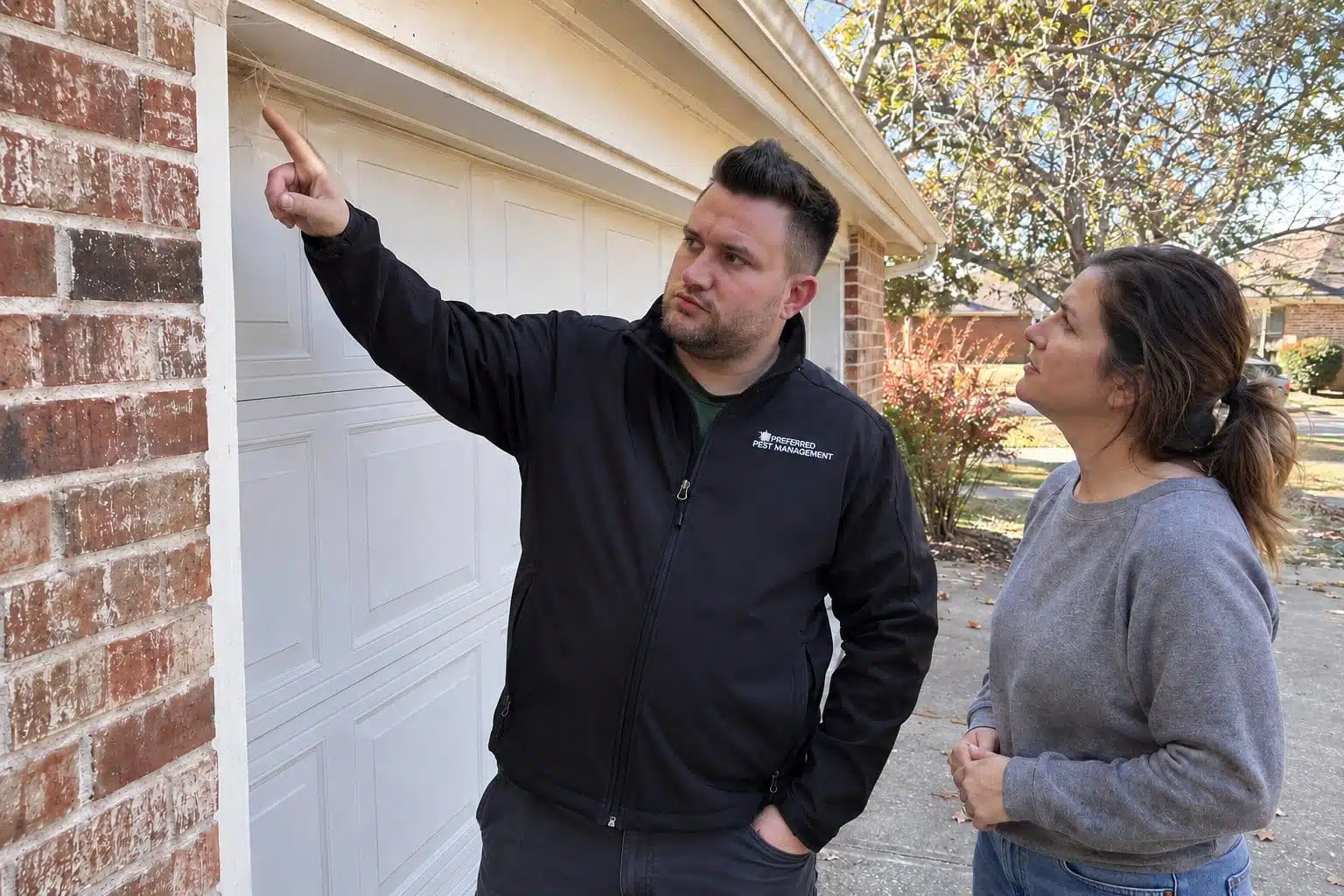
Where they hide around DFW homes
Widow spiders build strong, sticky, irregular webs in protected areas outdoors or in spaces that open to the outside. Around DFW homes, that often means:
- Garages, sheds, and cluttered storage corners
- Woodpiles and stacked materials
- Gas, electric, and other meter boxes
- Patio furniture, especially pieces that sit unused
- Shrubs and other dense landscaping against the house
- Eaves, porch rafters, and similar sheltered edges
- Sprinkler boxes and other utility boxes
They typically hang upside down in the web, which is often how the hourglass shows. Rounded egg sacs, about half an inch long, may hang in the same web.
This is a familiar pattern in Wylie garages and woodpiles, and in storage areas across nearby cities. The spider is using cover, not picking a town.
If one bites you
Black widows are not aggressive. Bites usually happen when someone reaches into a dark space, moves stored items, or presses the spider against the skin.
We are pest control professionals, not doctors, so we do not give medical advice on bites. If you think a black widow has bitten you, see a doctor or get medical care as soon as possible. You can also call the Poison Help line at 1-800-222-1222. If you can do it safely, take a photo of the spider so it can be identified, but do not risk another bite to get it.
What you can do at home
You can lower the chance of a surprise encounter without trying to handle the spider. Wear gloves when you move firewood, boxes, or patio furniture, and when you work around meter or sprinkler boxes. Look before you reach into a dark corner, a pair of shoes left in the garage, or a stack of stored items. Vacuum up webs and egg sacs, then empty the vacuum outdoors. Do not try to pick up a spider you cannot identify. The prevention steps later in this article, including moving woodpiles and cutting clutter, help here too.
How our trained professionals handle them
If you keep finding webs in those sheltered spots, or you think you have a black widow, do not disturb the retreat just to get a closer look. Tell us where the activity is, and if you have one, share a photo taken from a safe distance.
Our trained professionals start by mapping the problem areas, including garages, eaves, storage, and other protected spots. They identify what they can from the evidence, set a clear service scope with you, treat and clear approved areas, and review practical next steps so the same conditions are less inviting. Accessible web removal may be part of the scope, with limits where height or safety is an issue. No outdoor property can be promised completely free of spiders, and we will not pretend otherwise.
Signs of a spider problem
A single spider on the wall is not automatically an infestation. Look for a pattern:
- Frequent indoor sightings, especially in the same rooms
- Webs in corners, closets, garages, eaves, and window frames
- Egg sacs in those webs
- Insects gathering around lights, which can support more spiders
- A messy, irregular web in a quiet garage corner, meter box, or woodpile, which is worth a careful look for widows
If you are not sure what you are seeing, leave the spider alone and take a photo from a safe distance. That is more useful than guessing from memory.
How to keep spiders out of your home
Prevention still does a lot of the work. These steps help whether you are dealing with ordinary house spiders or trying to make the property less inviting to widows.
1. Seal entry points
Inspect your home for cracks, gaps, and openings that spiders could use to enter. Seal those spots with caulk or weather stripping, and check the gaps under doors and around poorly sealed windows.
2. Reduce clutter
Spiders use dark, undisturbed spaces. Keep storage areas easier to inspect, especially in attics, garages, and closets. Tight-lidded plastic containers beat open cardboard boxes.
3. Maintain your outdoor space
Trim back bushes, shrubs, and trees that sit against the house. Move woodpiles, debris, and unused materials away from the foundation and siding. The same habits help in a Sachse garage as much as they do around a Garland patio or storage shed. The details of the house matter more than the city name.
4. Use lighting more carefully
Spiders are attracted to the insects that gather at bright lights. Where you can, direct outdoor lights away from doorways, turn them off when they are not needed, and consider yellow "bug" lights, which attract fewer insects.
5. Keep your home clean
Regular vacuuming and dusting help remove webs, egg sacs, and spiders that are already inside. Pay attention to corners, baseboards, closets, and ceiling edges.
How professional spider control works
DIY steps can reduce spider activity, but they may not be enough when you are dealing with venomous species or webs that keep coming back. A professional visit looks at the spiders, the shelter they are using, and the insects attracting them, then recommends a plan for your property.
Our trained professionals map the problem areas, set a clear service scope with you, treat and clear approved areas, and review practical next steps. Accessible web removal may be included, with limits where height or safety is an issue. Before any work starts, you should understand the recommendation and approve the scope.
We offer a free inspection, same day availability, and 24 hour phone support. Our quarterly service means a visit every 3 months, and our spider service is backed by a 365 day guarantee.
When to contact Preferred Pest Management
Call or write when spiders are more than a one-time nuisance, when you think you have a black widow or brown recluse, or when you want a property-specific plan instead of guessing.
Good reasons to reach out:
- Webs keep coming back on the porch, eaves, or in the garage
- You have found a spider you think is a black widow, or you do not want to reach into the spots where one might be
- Indoor sightings are frequent, not occasional
- You have already cleaned, sealed, and reduced clutter, and the problem is still there
Start with our spider control page or the contact form. You can also call 214-978-3877. Ask for an inspection based on what you are seeing. No pressure.
Frequently asked questions
What types of spiders are common in Plano and North Texas?
House spiders, wolf spiders, black widows, and brown recluses are among the spiders people see in this area. Most household spiders are harmless. Black widows and brown recluses can pose health risks, so identification matters before you decide what to do next.
How do I know if I have a spider infestation?
Look for a pattern, not one spider. Frequent sightings in the same rooms, webs in corners or closets, and egg sacs are the usual signs. If those keep showing up, it is time to inspect the property more carefully or call for help.
How do I identify a black widow?
The adult female is usually shiny black, with a rounded abdomen and a reddish hourglass on the underside. Males and younger widows can have orange, red, and white markings and are easy to miss. Do not handle the spider to identify it. Take a photo from a safe distance if you can.
What should I do if I think a black widow bit me?
See a doctor or get medical care as soon as possible. We are pest control professionals, not doctors, so we do not give medical advice. You can also call the Poison Help line at 1-800-222-1222.
Are the treatments safe for my family and pets?
We will explain what we plan to use and how to prepare the home before we treat. Our technicians follow label directions and safety protocols. No treatment is a casual thing around kids and pets, so ask us any questions before you approve the work.
How long does it take to deal with a spider infestation?
It depends on how much activity is present and where the spiders are hiding. Many homes improve after the first service, and follow-up visits may be needed when the problem is larger or the conditions that attract spiders are still in place. We will set expectations before we start, rather than promise a single timeline for every house.
Can I prevent spiders from coming back?
You can reduce the chances a great deal by sealing entry points, cutting clutter, managing outdoor lighting, and keeping woodpiles and shrubs away from the house. No open property stays completely free of spiders, but those steps make a real difference.
Final takeaway
Most spiders in a North Texas home are a nuisance. Black widows deserve extra care, and they are manageable when you know where they hide and you do not take chances with a bite. Do the simple work first: seal gaps, reduce clutter, move woodpiles, and vacuum up webs. If that is not enough, or you think a black widow is on the property, start at our spider control page or contact us. Happy to help.